
Filter
287
Featured
246
14
6
Topics
142
86
59
27
26
24
20
18
16
15
13
11
11
11
10
10
9
9
9
9
8
7
7
7
7
6
6
6
6
6
6
6
5
5
5
5
5
4
4
4
4
4
4
4
4
4
4
4
4
4
4
4
4
3
3
3
3
3
3
3
3
3
3
3
3
3
3
3
3
2
2
2
2
2
2
2
2
2
2
2
2
2
2
2
2
2
2
2
2
2
2
2
2
2
2
2
2
2
2
2
2
2
2
2
2
2
2
2
2
2
1
1
1
1
1
1
1
1
1
1
1
1
1
1
1
1
1
1
1
1
1
1
1
1
1
1
1
1
1
1
1
1
1
1
1
1
1
1
1
1
1
1
1
1
1
1
1
1
1
1
1
1
1
1
1
1
1
1
1
1
1
1
1
1
1
1
1
1
1
1
1
1
1
1
1
1
1
1
1
1
1
1
1
1
1
1
1
1
1
1
1
1
1
1
1
1
1
1
1
1
1
1
1
1
1
1
1
1
1
1
1
1
1
Language
Document type
26
25
24
23
20
10
7
4
3
2
2
2
1
1
1
Countries
Authors & Publishers
Media focus
Publication Years
Methods applied
Journals
Output Type
ICT Facts and Figures
Geneva: ITU (2015), 8 pp.
"In 2015 there are more than 7 billion mobile cellular subscriptions worldwide, up from less than 1 billion in 2000. Globally 3.2 billion people are using the Internet of which 2 billion are from developing countries. ICTs will play an even more significant role in the post 2015 development agenda a
...
The Global Digital Divides: Explaining Change
Berlin, Heidelberg: Springer (2015), xxix, 386 pp.
"This book analyzes extensive data on the world’s rapidly changing and growing access to, use and geographies of information and communications technologies. It studies not only the spatial differences in technology usage worldwide, but also examines digital differences in the major world nations
...
Broadband Networks in the Middle East and North Africa: Accelerating High-Speed Internet Access
Washington, DC: World Bank (2014), xxi, 192 pp.
"[This publication] re-emphasizes the important contribution that broadband Internet can make and assesses the status of existing infrastructure in at least 18 MENA countries. While there is significant potential across the region, the take-up of broadband Internet has been slow and the price of bro
...
Global Internet Report 2014: Open and Sustainable Access for All
Geneva: Internet Society (2014), 144 pp.
Open Content: A Practical Guide to Using Creative Commons Licences
Bonn; Berlin; Köln: German Commission for UNESCO (DUK); Wikimedia Deutschland; North Rhine-Westphalian Library Service Centre (hbz) (2014), 78 pp.
"With this publication, we intend to provide interested individuals and organisations with practical guidelines for the use and application of open content licences: How do open content licences work? How do I choose the most suitable licence for my individual needs? Where can I find open content on
...

Sub-Saharan Africa: Universal Service Fund Study
London: GSMA (2014), 95 pp.
"The following report examines Universal Service Funds (‘USFs’) in 23 Sub-Saharan African (‘SSA’) countries These USFs are examined in a global context i.e., taking into account their characteristics and performance when measured against an additional 46 USFs in the Arab States, the Americas
...
Digital Inequality
"This chapter investigates the research on inequalities in society, and also considers the digital inequality beyond overly simplistic conceptions of access to technologies. Additionally, it describes how people's background characteristics relate to their web-use skills and what they do online. The
...
Baseline Study Report on Women Access to Information Through Mobile and Media Communication Services
"Out of a total 400 participants, 374 respondents, representing 93.5%, know how to use cell phones, while 26, representing 6.5%, have no knowledge whatsoever about cell phone usage. This finding is indicative of a relatively high knowledge of mobile phones utility. The result also indicates that Lon
...
Wissenskluft und Digital Divide
Baden-Baden: Nomos (2014), 121 pp.
"Der Band gibt eine fundierte, knappe und anschauliche Einführung in die theoretischen Grundlagen, methodischen Zugänge, empirischen Befunde und gesellschaftlichen Zusammenhänge der Wissenskluftforschung. Diese geht von wachsenden Wissensdifferenzen zwischen statushöheren und -niedrigeren Gruppi
...
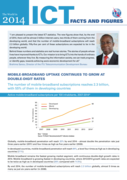
ICT Facts and Figures
Geneva: ITU (2014), 8 pp.
"The new figures show that, by the end of 2014, there will be almost 3 billion Internet users, two-thirds of them coming from the developing world, and that the number of mobile-broadband subscriptions will reach 2.3 billion globally. Fifty-five per cent of these subscriptions are expected to be in
...

The World Internet Project: International Report
Los Angeles: USC Annenberg School for Communication and Journalism, Center for the Digital Future, 5th ed. (2013), 87 pp.

The Digital Divide: The Internet and Social Inequality in International Perspective
London: Routledge (2013), 324 pp.
"This book provides an in-depth comparative analysis of inequality and the stratification of the digital sphere. Grounded in classical sociological theories of inequality, as well as empirical evidence, this book defines “the digital divide” as the unequal access and utility of internet communic
...


Wireless Networking in the Developing World
[authors], 3rd ed. (2013), 495 pp.

Mobile Leapfrogging and Digital Divide Policy: Assessing the Limitations of Mobile Internet Access
Washington, DC: New America Foundation (2013), 20 pp.
"This paper offers a critical perspective on the process of mobile leapfrogging. Drawing upon data on Internet access and device penetration from 34 countries, this paper first shows that while greater access to mobile technologies suggests the possibility of a leapfrog effect, the lack of 3G adopti
...

The World in 2013: ICT Facts and Figures
Geneva: ITU (2013), 8 pp.

Connecting People for Development: Why Public Access ICTs Matter
Seattle: University of Washington Information School, Technology & Social Change Group (2013), 240 pp.
"Libraries, telecenters, and cybercafés play a critical role in extending the benefits of information and communication technologies (ICTs) to a diverse range of people worldwide. However, their ability to contribute to development agendas has come into question in recent times. The Global Impact S
...

Toward Entrepreneurial Behavior in Underserved Communities: An Ethnographic Decision Tree Model of Telecenter Usage
Information Technology for Development, volume 19, issue 3 (2013), pp. 230-248
"This paper investigates the decision-making process of community members who decide on using telecenters for entrepreneurial endeavors. A qualitative approach through interviews with telecenter staff and users is used to assess the barriers and enablers to economic activity through use of telecente
...

Universal Access and Service: Toolkit
Geneva: ITU (2013), xvii, 106 pp.

Neither Here Nor There: Turkmenistan's Digital Doldrums
Ottawa: SecDev Group (2012), 21 pp.
"Turkmenistan is slowly emerging from decades of darkness. President Gurbanguli Berdymukhamedov has vowed to modernize the country by encouraging the uptake of new technology for economic development and more ef!cient governance. Hundreds of thousands of Turkmen citizens are now online. However, the
...
