
Filter
108
Featured
61
12
1
Topics
21
14
11
10
7
7
6
6
5
5
4
4
4
4
4
4
4
4
4
4
3
3
3
3
3
3
3
3
3
2
2
2
2
2
2
2
2
2
2
2
2
2
2
2
2
2
2
2
2
2
2
2
2
2
2
2
2
2
2
2
2
2
2
2
2
2
2
2
2
2
2
1
1
1
1
1
1
1
1
1
1
1
1
1
1
1
1
1
1
1
1
1
1
1
1
1
1
1
1
1
1
1
1
1
1
1
1
1
1
1
1
1
1
1
1
1
1
1
1
1
1
1
1
1
1
1
1
1
1
1
1
1
1
1
1
1
1
1
1
1
1
1
1
1
1
1
1
1
1
1
1
1
1
1
1
1
1
1
1
1
1
1
1
1
1
1
1
1
1
1
1
1
1
1
1
1
1
1
1
1
1
1
1
1
1
1
1
1
1
1
1
1
1
1
1
1
1
1
1
1
1
1
1
1
1
1
1
1
1
1
1
1
1
1
1
1
1
1
1
1
1
1
1
1
1
1
1
1
1
1
1
1
1
1
1
1
1
1
1
1
1
1
1
1
1
Language
Document type
39
10
7
4
3
2
2
1
1
1
1
1
1
Countries
Authors & Publishers
Media focus
Publication Years
Methods applied
Journals
Output Type

Bullets and Bulletins: Media and Politics in the Wake of the Arab Uprisings
Deep Insights
London: Hurst (2016), xi, 254 pp.
"Bullets and Bulletins takes a sobering and holistic look at the intersections between media and politics before, during, and in the wake of the Arab uprisings. It is a multi-disciplinary approach to the topic, with the research backed up by in-depth and rigorous case studies of the key countries of
...

Arab National Media and Political Change: "Recording the Transition"
New York: Palgrave Macmillan (2016), vi, 202 pp.
"Investigated from a journalistic perspective, this research addresses the role played by traditional national media in consolidating emerging democracies or in exacerbating their fragility within new political contexts. Also analyzed are the ways journalists report about politics and transformation
...
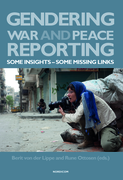
Gendering War and Peace Reporting: Some Insights – Some Missing Links
Göteborg: Nordicom (2016), 278 pp.

Freedom on the Net 2016. Silencing the Messenger: Communication Apps Under Pressure
Deep Insights
Washington, DC; New York: Freedom House (2016), 1021 pp.
"Internet freedom has declined for the sixth consecutive year, with more governments than ever before targeting social media and communication apps as a means of halting the rapid dissemination of information, particularly during antigovernment protests. Public-facing social media platforms like Fac
...

Attacks on the Press: Journalism on the World's Front Lines, 2015 Edition
New York: Committee to Protect Journalists (CPJ); Wiley (2015), 256 pp.


Freedom on the Net 2015: Privatizing Censorship, Eroding Privacy
Washington, DC; New York: Freedom House (2015), 986 pp.
"Internet freedom around the world has declined for the fifth consecutive year, with more governments censoring information of public interest and placing greater demands on the private sector to take down offending content. State authorities have also jailed more users for their online writings, wh
...

Libyan Television and its Influence on the Security Sector
Washington, DC: United States Institute of Peace (USIP) (2015), 8 pp.
"The Libyan security landscape is broadly divided into two camps: revolutionary-Islamist and institutionalist-conservative. The country’s resurgent media sector is split along similar lines. This polarization and related partistan reporting reinforce polarization among security sector actors and t
...
Filtering revolution: Reporting bias in international newspaper coverage of the Libyan civil war
Journal of Peace Research, volume 52, issue 3 (2015), pp. 384-400
"Reporting bias – the media's tendency to systematically underreport or overreport certain types of events – is a persistent problem for participants and observers of armed conflict. We argue that the nature of reporting bias depends on how news organizations navigate the political context in wh
...

"This report documents attacks against journalists and the offices and facilities of media outlets since the 2011 uprising, including threats, assaults, kidnappings, and killings and addresses the failure of the government to protect journalists and the media, and hold perpetrators of attacks on the
...

Assessment of Media Legislation in Libya
MedMedia; European Union (2015), 22 pp.
"Libya has no history of free and independent media, and this has not changed post-revolution. As it is therefore not possible to conduct a proper analysis of media legislation in the country, this report focuses on the subject in more general terms." (Executive summary)

Assessment of the Media Development Sector in the Southern Mediterranean Region
Deep Insights
MedMedia; European Union (2015), 32 pp.
"This research study examines and assesses the progress of media development work in the Southern Mediterranean region in the wake of the Arab Spring. It highlights the challenges faced by international agencies and presents examples of effective, innovative interventions that could help to shape be
...

Arabische Medien
Deep Insights
Konstanz; München: UVK (2015), 344 pp.
"Im Fokus des ersten Teils stehen transnationale Phänomene wie die Bedeutung des Satellitenfernsehens und der Sozialen Medien sowie die Rolle von Minderheiten, Gender und Islamisten in den Medien. Diese Beiträge geben den aktuellen Stand der Forschung wieder und reflektieren diesen. Im zweiten Tei
...
After the Revolution: Libyan and Tunisian Media Through the People’s Eyes
London: BBC Media Action (2015), 60 pp.
"Libya’s contested and, at times, chaotic political scene is reflected in its media, which represents a range of political and vested interests, sparking narrative and counter narrative. Ultimately, it has left people frustrated that they cannot access the information that they need. In Tunisia, t
...
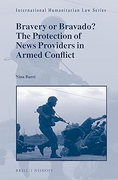
Bravery or Bravado? The Protection of News Providers in Armed Conflict
Brill (2015), xviii, 450 pp.
"During the last decade, the image of war correspondents in the news has shifted dramatically. Reports are no longer full of cheerleading stories of embedded journalists. Instead, stories of war reporters being attacked, kidnapped or injured prevail. Sadly, the former heroic witnesses to war have be
...

After the Arab Uprisings: The Prospects for a Media That Serves the Public
London: BBC Media Action (2015), 37 pp.
"This briefing suggests that national broadcasters may have the potential to help to bridge social divides, if they can be reformed to serve the interests of the public rather than the state. In addition to their extensive infrastructure and reach, these institutions also have a cultural standing th
...

After the Revolution: Libyan and Tunisian Media Through the People’s Eyes
London: BBC Media Action (2014), 60 pp.
"Libyans and Tunisians have grown weary of coverage that represents the interests of those who run or fund the channels and consequently place little trust in the media. Perhaps as a result of these limitations, the audiences are savvy and discerning consumers who “shop around” to access informa
...

Social Media and the Politics of Reportage: The 'Arab Spring'
Basingstoke, UK: Palgrave Macmillan (2014), xii, 141 pp.
"Social Media and the Politics of Reportage explores the journalistic challenges, issues and opportunities that have risen as a result of social media increasingly being used as a form of crisis reporting within the field of global journalism, with a focus on the protests during the 'Arab Spring'."
...

Freedom on the Net 2014. Tightening the Net: Governments Expand Online Controls
Washington, DC; New York: Freedom House (2014), 986 pp.
"Internet freedom around the world has declined for the fourth consecutive year, with a growing number of countries introducing online censorship and monitoring practices that are simultaneously more aggressive and more sophisticated in their targeting of individual users. In a departure from the pa
...
Broadband Networks in the Middle East and North Africa: Accelerating High-Speed Internet Access
Washington, DC: World Bank (2014), xxi, 192 pp.
"[This publication] re-emphasizes the important contribution that broadband Internet can make and assesses the status of existing infrastructure in at least 18 MENA countries. While there is significant potential across the region, the take-up of broadband Internet has been slow and the price of bro
...
