
Filter
76
Featured
43
7
1
Topics
17
10
6
6
5
5
4
3
3
3
3
3
3
3
3
3
3
2
2
2
2
2
2
2
2
2
2
2
2
2
2
2
2
2
2
2
2
2
2
2
2
2
2
2
2
2
2
2
2
1
1
1
1
1
1
1
1
1
1
1
1
1
1
1
1
1
1
1
1
1
1
1
1
1
1
1
1
1
1
1
1
1
1
1
1
1
1
1
1
1
1
1
1
1
1
1
1
1
1
1
1
1
1
1
1
1
1
1
1
1
1
1
1
1
1
1
1
1
1
1
1
1
1
1
1
1
1
1
1
1
1
1
1
1
1
1
1
1
1
1
1
1
1
1
1
1
1
1
1
1
1
1
1
1
1
1
1
1
1
1
1
1
1
1
1
1
1
1
1
1
1
1
1
1
1
1
1
1
1
1
1
1
1
1
1
1
1
1
1
1
1
1
1
Language
Document type
24
6
3
2
2
2
2
2
1
1
1
1
1
1
1
1
Countries
Authors & Publishers
Media focus
Publication Years
Methods applied
Journals
Output Type

Journalism and Media Education in Times of Conflict: Three Cases from the Arab Region
Arab Media & Society, issue 29 (2020), pp. 43-54
"This paper examines the journalism and media education programs in three countries in the Arab region (Libya, Syria, Yemen) that have been or are still in the throes of civil wars and/or polarization along conflicting political ideologies and control of different geographical zones. Based on an onl
...

"[...] The media is dominated through the links between the media outlets and the political parties. Most local publishers suspended their print editions, while the English language press has completely disappeared. TV channels are also strictly controlled by parties, each side operates its own prog
...

Jemen: Der vergessene Krieg
Bonn: Bundeszentrale für politische Bildung (bpb), Sonderausg. (2020), 261 pp.
"Said AlDailami untersucht die tiefen Konfliktlinien entlang von konfessionellen, regionalen und tribalen Zugehörigkeiten sowie wirtschaftlichen Interessen, um auszuloten, wie und wann Frieden möglich werden könnte. Zahlreiche äußere Mächte – wie Saudi-Arabien, die Vereinigten Arabischen Emi
...
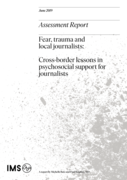
Fear, trauma and local journalists: Cross-border lessons in psychosocial support for journalists
International Media Support (IMS) (2019), 16 pp.
"95 per cent of journalists killed in armed conflict are locally based journalists. While there has been increasing focus on the physical and digital safety issues these journalists face, there has been less attention towards the need for psychosocial support. Addressing psychosocial needs of local
...

"Conflict in Yemen plays out along various fault lines—regional, sectarian, class, political, tribal, and ethnic—which are reflected in the hateful language employed on and offline to incite violence. The sectarian aspect of conflict in Yemen is relatively new, as prior to 2011, “religious coe
...

The State of Humanitarian Journalism
Humanitarian-journalism.net; University of East Anglia (2018), 36 pp.
"Very few international news organisations routinely cover humanitarian affairs. Only 12 news outlets reported on all four of the humanitarian events we analysed in 2016. Because of the high costs of producing regular, original journalism on humanitarian issues, commercial news organisations do not
...

ILYM, Irak Libye Yémen médias: Quel rôle pour les médias dans les pays en crise?
Paris: L'Harmattan (2017), 91 pp.

Guidebook: Conflict Sensitive Journalism for Yemeni Journalists
Taiz, Republic of Yemen: Studies & Economic Media Center (SEMC); International Media Support (IMS) (2017), 140 pp.
"This book, the first of its kind ever in Yemen, serves as a guide for Yemeni media professionals as well as a highly significant document that will go a long way in boosting their reporting skills in such a way that meets the standards of conflict sensitive journalism. It is also a compendium on a
...

Global Information Society Watch 2017: National and Regional Internet Governance Forum Initiatives (NRIs)
Deep Insights
"National and Regional Internet Governance Forums (NRIs) are the stars of the 2017 Global Information Society Watch. The story of NRIs began two years after the first global IGF held in 2006. In 2008, stakeholders from Kenya, Uganda, Tanzania and Rwanda organised national forums and a subsequent Eas
...


#HashtagSolidarities: Twitter Debates and Networks in the MENA Region
Berlin: Stiftung Wissenschaft und Politik (SWP) (2016), 62 pp.
"This study identified three local or subregional incidents that led to heated debates on Twitter: a video shared on Twitter of the sexual assault of a woman on Cairo’s Tahrir Square in June 2014, anti-fracking protests in southern Algeria in early 2015, and Saudi Arabia’s military intervention
...

"The 45 country reports gathered here illustrate the link between the internet and economic, social and cultural rights (ESCRs). Some of the topics will be familiar to information and communications technology for development (ICT4D) activists: the right to health, education and culture; the socioec
...

Arabische Medien
Deep Insights
Konstanz; München: UVK (2015), 344 pp.
"Im Fokus des ersten Teils stehen transnationale Phänomene wie die Bedeutung des Satellitenfernsehens und der Sozialen Medien sowie die Rolle von Minderheiten, Gender und Islamisten in den Medien. Diese Beiträge geben den aktuellen Stand der Forschung wieder und reflektieren diesen. Im zweiten Tei
...

Global Journalism Practice and New Media Performance
Basingstoke: Palgrave Macmillan (2014), 283 pp.
"Global Journalism Practice and New Media Performance provides an overview of new and traditional media in their political, economic and cultural contexts while exploring the role of journalism practice and media education. The authors examine media systems in 16 countries, including China, Russia a
...
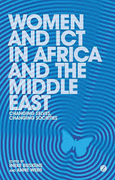
Women and ICT in Africa and the Middle East: Changing Selves, Changing Societies
London: Zed Books (2014), 338 pp.

Global Information Society Watch 2014: Communications Surveillance in the Digital Age
Association for Progressive Communications (APC); Hivos (2014), 283 pp.
"This Global Information Society Watch tracks the state of communications surveillance in 57 countries across the world – countries as diverse as Hungary, India, Argentina, The Gambia, Lebanon and the United Kingdom. Each country report approaches the issue from a different perspective. Some analy
...

"According to the Danida website "The Danish Arab Partnership Programme (DAPP) is a long-term programme with the dual objectives of 1) supporting local reform processes in the Middle East and North Africa (MENA region) and 2) Establishing a basis for improved dialogue, understanding and cooperation
...

The Global Information Technology Report 2013: Growth and Jobs in a Hyperconnected World
Geneva: World Economic Forum; INSEAD (2013), 413 pp.
"Through the methodological framework of the Networked Readiness Index (NRI), the report measures the extent to which 144 economies, from both the developed and developing worlds, take advantage of ICTs and other new technologies to increase their growth and well-being. The NRI identifies the most r
...


