
Filter
198
Featured
163
9
Topics
26
20
20
20
17
15
14
14
12
12
10
8
8
8
7
7
7
7
7
6
6
6
6
5
5
5
5
4
4
4
4
4
4
3
3
3
3
3
3
3
3
3
3
3
3
3
3
3
3
2
2
2
2
2
2
2
2
2
2
2
2
2
2
2
2
2
2
2
2
2
2
2
2
2
2
2
2
2
2
2
2
2
1
1
1
1
1
1
1
1
1
1
1
1
1
1
1
1
1
1
1
1
1
1
1
1
1
1
1
1
1
1
1
1
1
1
1
1
1
1
1
1
1
1
1
1
1
1
1
1
1
1
1
1
1
1
1
1
1
1
1
1
1
1
1
1
1
1
1
1
1
1
1
1
1
1
1
1
1
1
1
1
1
1
1
1
1
1
1
1
1
1
1
1
1
1
1
1
1
1
1
1
1
1
Language
Document type
52
11
5
3
3
1
1
1
1
1
1
Countries / Regions
Authors & Publishers
Media focus
Publication Years
Methods applied
Journals
Output Type

Digit@l China: Überwachungsdiktatur und technologische Avantgarde
München: Beck (2023), 190 pp.
"Mit parteistaatlicher Unterstützung avancierten die großen IT-Unternehmen Chinas seit Ende der 1990er Jahre schnell zu den Motoren der am dynamischsten wachsenden Digitalwirtschaft der Welt. Sie adaptierten zunächst Produkte und Geschäftsmodelle aus dem Ausland, gingen danach aber eigene Wege.
...

The Unfreedom Monitor: El Salvador Country Report
Amsterdam: Global Voices Advox (2023), 24 pp.
"This report analyses two major incidents: the disclosure that Pegasus spyware has been used against journalists from independent media outlets and representa tives of civil society, and Bukele’s legal advisor’s threats against two women journalists for not revealing anonymous sources included i
...

The Unfreedom Monitor: Myanmar Country Report
Amsterdam: Global Voices Advox (2023), 18 pp.
"By learning about both the repression and resistance sides of Myanmar’s Spring Revolution, it is evident that digital technology is playing a critical role in this revolution. The military is using every possible technology to repress people, inject fear into society and manipulate it. The revolu
...

"An increasing number of states resort to various tools to control the dissemination of information on the internet. The government of Kazakhstan has also become adept at employing censorship methods to silence alternative voices and prevent the public from seeing undesirable critical content. Yet s
...

Online Repression and Tactical Evasion: Evidence from the 2020 Day of Anger Protests in Egypt
Democratization, volume 30, issue 2 (2023), pp. 325-345
"Following the 2011 Arab Spring, autocrats have sought to limit citizens’ ability to publicize offline protests over social media. In this article, we explore how users adjust to these restrictions. To do so, we analyse 33 million tweets sent from Egypt during the “Day of Anger” protests in Se
...
The Unfreedom Monitor: Hungary Country Report
Amsterdam: Global Voices Advox (2023), 32 pp.
"Incidents that illustrate how digital authoritarianism works in Hungary can be grouped into three categories: gaining control over critical digital infrastructure, silencing and intimidation of dissenting voices, and the use of law to undermine people’s rights. The report demonstrates how these d
...

Disruptions as Opportunities: Governing Chinese Society with Interactive Authoritarianism
Ann Arbor: University of Michigan Press (2023), xv, 283 pp.
"[This book] addresses the long-standing puzzle of why China outlived other one-party authoritarian regimes with particular attention to how the state manages an emerging civil society. Drawing upon over 1,200 survey responses conducted in 126 villages in the Sichuan province, as well as 70 intervie
...

The Unfreedom Monitor: India Country Report
Amsterdam: Global Voices Advox (2022), 28 pp.
"India’s “techade” does show signs of digital authoritarianism that can potentially have farreaching implications for politics, civil liberties and society. At the same time, these are not new challenges for the country. In the past, the Indian government has attempted to surveil, monitor, and
...

The Unfreedom Monitor: Morocco Country Report
Amsterdam: Global Voices Advox (2022), 27 pp.
"Journalists and independent press are tried and prosecuted with harsh charges that reach up to 20 years of imprisonment under the Penal Code, rather than the Press Code of 2016, which abolished imprisonment for criticising the monarch. The government closely monitors and controls media content thro
...
The Unfreedom Monitor: Turkey Country Report
Amsterdam: Global Voices Advox (2022), 27 pp.
"Since its ascent to power twenty years ago, the ruling AKP has tightened the screws on all forms of freedom of expression, both online and offline. It has introduced draconian laws, imposed internet restrictions, blocked content, and has arrested and intimidated critics on an unprecedented level. I
...
Iranians on #SocialMedia
Washington, DC: Atlantic Council (2022), 40 pp.
"This report explores the social media habits of Iranian netizens and how the Islamic Republic is repressing the online space." (Publisher description)

The Unfreedom Monitor: Brazil Country Report
Amsterdam: Global Voices Advox (2022), 19 pp.
"Under the presidency of Jair Bolsonaro, Brazil, Latin America's largest democracy, has seen unprecedented increases in threats to citizens’ fundamental rights. Digital rights have not been an exception. Technoauthoritarianism in Brazil must be viewed as a multifaceted development and one that is
...

The Unfreedom Monitor: Zimbabwe Country Report
Amsterdam: Global Voices Advox (2022), 28 pp.
"The government of Zimbabwe and the ruling ZANU PF party are bent on ensuring that the status quo is preserved at all costs. As evidenced by findings in the Civic Media Observatory, the digital sphere has been identified as a threat to the country’s national security, insofar as deposing the curre
...

Controlling China’s Digital Ecosystem: Observations on Chinese Social Media
China Leadership Monitor, issue 72 (2022), 10 pp.
"Nowhere is the effort to control the flow of digital information more extensive and sustained than it is in China. The Chinese Communist Party (CCP) uses a wide range of tools and strategies to achieve two related, but distinct, goals of digital information control: to shape public knowledge and to
...

Iron Net: Digital Repression in the Middle East and North Africa
London: European Council on Foreign Relations (ECFR) (2022), 25 pp.
"Saudi Arabia and the UAE are the leading exponents of digital authoritarianism in the Middle East. The two states have intensified their collaboration with China and Israel to gain greater access to advanced technologies. The EU has responded to concerns about the risks of new technologies with a r
...

Freedom on the Net 2022: Countering an Authoritarian Overhaul of the Internet
Washington, DC: Freedom House (2022), 46 pp.
"1. Global internet freedom declined for the 12th consecutive year. The sharpest downgrades were documented in Russia, Myanmar, Sudan, and Libya. Following the Russian military’s illegal and unprovoked invasion of Ukraine, the Kremlin dramatically intensified its ongoing efforts to suppress domest
...

The Return of Digital Authoritarianism: Internet Shutdowns in 2021
Deep Insights
Access Now; KeepItOn (2022), 32 pp.
"With a gradual return to normalcy following the outbreak of the global COVID-19 pandemic, we saw a dramatic resurgence of internet shutdowns in 2021. During this year, Access Now and the #KeepItOn coalition documented at least 182 internet shutdown incidents around the world in 34 countries, as com
...

The Unfreedom Monitor: A Methodology for Tracking Digital Authoritarianism Around the World
Amsterdam: Global Voices Advox (2022), 71 pp.
"This briefing document provides an overview of key developments in digital authoritarianism in 11 countries and explains the theoretical framework and methodology behind The Unfreedom Monitor project. The document also provides a basis for expanding this research to other countries to deepen our un
...
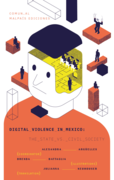
"The stories that make up this text offer an approach to the resistances and resiliencies that have arisen in Mexico, covering different manifestations of digital violence in the voices of people representing initiatives and communities that have been victimized through technologies that the state h
...
