
Filter
541
Featured
378
22
14
Topics
64
63
51
49
38
30
30
27
25
25
23
23
19
16
16
16
14
14
13
13
10
10
9
8
8
8
8
8
8
7
7
6
6
6
6
5
5
5
5
5
5
5
5
5
5
5
4
4
4
4
4
4
4
4
4
4
4
4
3
3
3
3
3
3
3
3
3
3
3
3
3
3
3
3
3
3
3
2
2
2
2
2
2
2
2
2
2
2
2
2
2
2
2
2
2
2
2
2
2
2
2
2
2
2
2
2
2
2
2
2
2
2
2
2
2
2
2
2
2
2
2
1
1
1
1
1
1
1
1
1
1
1
1
1
1
1
1
1
1
1
1
1
1
1
1
1
1
1
1
1
1
1
1
1
1
1
1
1
1
1
1
1
1
1
1
1
1
1
1
1
1
1
1
1
1
1
1
1
1
1
1
1
1
1
1
1
1
1
1
1
1
1
1
1
1
1
1
1
1
1
1
1
1
1
1
1
1
1
1
1
1
1
1
1
1
1
1
1
1
1
1
1
1
1
1
1
1
1
1
1
1
1
1
1
1
1
1
1
1
1
1
1
1
1
1
1
1
1
1
1
1
1
1
1
1
1
1
1
1
1
1
1
1
1
1
1
1
1
1
1
1
1
1
1
1
1
1
1
Language
Document type
84
39
32
24
9
5
5
5
4
3
2
2
2
1
Countries / Regions
Authors & Publishers
Media focus
Publication Years
Methods applied
Journals
Output Type

Press Freedom: Safety of Journalists and Impunity
Paris: UNESCO (2007), 87 pp.

Killing the Messenger: Journalists at Risk in Modern Warfare
Praeger (2006), xv, 161 pp.
"Killing the Messenger reveals the dangerous new face of war and journalism. Covering armed conflicts has always been dangerous business, but in the past, press heroes like Ernie Pyle and Edward R. Murrow faced only the danger of random bullets or bombs. Today’s war correspondent is actually in th
...

Live from Africa: A Handbook for African Radio Journalists
Johannesburg: Institute for War & Peace Reporting (IWPR) (2006), 131 pp.
"The handbook reviews reporting on general, political and human rights issues. It has sections on location recording and computerbased audio editing. It provides guidance on safety and security and sensitive reporting in conflict areas, as well as libel issues. Developed out of the radio journalism
...
Dangerous assignment
American Journalism Review, volume 27, issue 6 (2005), pp. 44-51
"Iraq has proven to be a particularly hazardous posting for journalists. More media workers have been killed there than during the two-decades-long war in Vietnam. And 15 have died at the hands of American forces." (Introduction)

Live news: Guide de survie à l’usage des journalistes
Key Guides
Brussels: Fédération Internationale des Journalistes (FIJ) (2005), 139 pp.
"La FIJ mène depuis de nombreuses années une campagne pour le renforcement de la sécurité et pour la défense des journalistes autochtones et des freelances, car ce sont eux qui sont exposés aux risques les plus importants et qui bénéficient du moins de protection. Les choses commencent à bo
...
The Protection of Journalists in Armed Conflicts
"The problem of the protection of journalists is closely linked to that of freedom of information and was first considered as early as 1893/94. In 1927 a conference of press experts held in Geneva adopted various resolutions for their submission to member states. These resolutions addressed a range
...

Video for Change: A Guide for Advocacy and Activism
London: Pluto Press; Witness (2005), 323 pp.
"This book is an invitation—an invitation to discover the potential of a simple video camera and the power it holds to spark social change. Every day, all around the world, activists draw upon video in creative, strategic ways and use the results to ensure that silent voices are heard and importan
...

The Safety of Journalists: An Assessment of Perceptions of the Origins and Implementation of Policy at Two International Television News Agencies
Rhodes University, Master Thesis (2005), vi, 135 pp.
"This study examines the perceptions of journalists working for two international television news agencies about this safety policy called the ‘Joint code of practice for journalists working in conflict zones’. This policy was adopted in November 2000 by five major television companies including
...

Media at War: The Iraq Crisis
London: Sage (2004), 188 pp.
"International media coverage of the war in Iraq provoked public scrutiny as well debate amongst journalists themselves. Media at War offers a critical overview of the coverage in the context of other preceding wars, including the first Gulf War, and opens up the debate on the key questions that eme
...
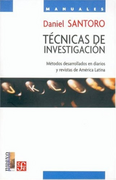
Técnicas de investigación: Métodos desarrollados en diarios y revistas de América Latina
Nuevo Periodismo (2004), 287 pp.
"En los últimos años, la investigación periodística creció en América Latina haciendo grandes aportes a las instituciones democráticas y revelando graves casos de corrupción. Este manual de la Fundación Nuevo Periodismo Iberoamericano ofrece las herramientas fundamentales para la investigac
...

Reporting for Change: A Handbook for Local Journalists in Crisis Areas
London: Institute for War & Peace Reporting (IWPR) (2004), 270 pp.
"This handbook [...] is a practical, hands-on manual designed to help local journalists in societies undergoing major crisis and change. It outlines the core internationally recognised standards of journalism and provides essential guidance on many of the basic techniques of reporting. The handbook
...

Media, Violence and Terrorism
Paris: UNESCO (2003), xiii, 133 pp.

Live News: A Survival Guide for Journalists
Brussels: International Federation of Journalists (IFJ) (2003), 135 pp.
"The IFJ has campaigned for many years for greater safety and for a focus on the in-country journalists and freelances who are at greatest risk and who have the least protection. With the creation of the International News Safety Institute (see pages 103-105), that is beginning to happen. This book
...

On Assignment: A Guide to Reporting in Dangerous Situations
New York: Committee to Protect Journalists (CPJ) (2003), 65 pp.
"Aimed at reporters in conflict zones and hostile areas, this report provides an overview of security issues and includes information on training courses, protective equipment, and insurance policies. It also offer useful tips on assessing, minimizing and managing risk. This guide should be read not
...
Antipress Violence and the Crisis of the State
International Journal of Press/Politics, volume 7, issue 3 (2002), pp. 90-109
"Although it is an issue of immediate interest to reporters and press organizations, antipress violence has not elicited a great deal of scholarly attention. While in the context of developed democracies, studies have concluded that violence against the press has significantly diminished in the twen
...
Danger and Deadlines: Journalists' Rights on the Palestine Peace Agenda
Brussels: International Federation of Journalists (IFJ) (2002), 13 pp. + approx. 40 pp.

Practical Guide for Journalists
Paris: Reporters Without Borders; UNESCO (2002), 104 pp.
"This guide is both ambitious and modest. Ambitious because it wants to help journalists working in war situations. Modest because we have no miracle solution to offer. But the suggestions you will find in this guide, based on an all too often ignored common sense, should help many reporters to stee
...

Remaking the pen mightier than the sword: An evaluation of the growing need for the international protection of journalists
Georgia Journal of International & Comparative Law, volume 30 (2002), pp. 505-542
"It is the goal of this note to explore this problem with a particular emphasis on potential methods by which the international community can work to protect the press. In order to better understand this problem as it exists today, this note begins with a historical analysis of the development of in
...

Reporting the Future: A Handbook for Afghan Journalists
London: Institute for War & Peace Reporting (IWPR) (2002), 57 pp.
"The Handbook for Afghan Journalists is designed to help Afghan journalists in three ways. First, it serves as an explanation in their own language to many of the ideas and concepts behind international journalism. Second, it provides practical guidance on many of the basic techniques of journalism.
...
