
Filter
695
Breadcrumb:
Audience & User Surveys
Featured
597
20
Topics
213
128
114
69
65
54
40
39
35
35
31
30
25
21
21
21
17
17
17
15
13
12
12
12
12
11
11
10
10
10
10
10
10
9
9
9
9
9
9
8
8
8
7
7
7
7
7
7
7
7
7
7
6
6
6
6
6
6
6
6
6
6
6
5
5
5
5
5
5
5
5
5
5
5
5
4
4
4
4
4
4
4
4
4
4
4
4
4
4
4
4
4
4
4
4
4
4
4
4
4
4
4
4
4
4
4
4
4
4
4
4
4
4
4
3
3
3
3
3
3
3
3
3
3
3
3
3
3
3
3
3
3
3
3
3
3
3
3
3
3
3
3
3
3
3
3
3
3
3
3
3
3
3
3
3
3
3
3
3
3
3
3
3
3
3
3
2
2
2
2
2
2
2
2
2
2
2
2
2
2
2
2
2
2
2
2
2
2
2
2
2
2
2
2
2
2
2
2
2
2
2
2
2
2
2
2
2
2
2
2
2
2
2
2
2
2
2
2
2
2
2
2
2
2
2
2
2
2
2
2
2
2
2
2
2
2
2
2
2
2
2
2
2
2
2
2
2
2
2
2
2
2
2
2
2
2
2
2
1
1
1
1
1
1
1
1
1
1
1
1
1
1
1
1
1
1
1
1
1
1
1
1
1
1
1
1
1
1
1
1
1
1
1
1
1
1
1
1
1
1
1
1
1
1
1
1
1
1
1
1
1
1
1
1
1
1
1
1
1
1
1
1
1
1
1
1
1
1
1
1
1
1
1
1
1
1
1
1
1
1
1
1
1
1
1
1
1
1
1
1
1
1
1
1
1
1
1
1
1
1
1
1
1
1
1
1
1
1
1
1
1
1
1
1
1
1
1
1
1
1
1
1
1
1
1
1
1
1
1
1
1
1
1
1
1
1
1
1
1
1
1
1
1
1
1
1
1
1
1
1
1
1
1
1
1
1
1
1
1
1
1
1
1
1
1
1
1
1
1
1
1
1
1
1
1
1
1
1
1
1
1
1
1
1
1
1
1
1
1
1
1
1
1
1
1
1
1
1
1
1
1
1
1
1
1
1
1
1
1
1
1
1
1
1
1
1
1
1
1
1
1
1
1
1
1
1
1
1
1
1
1
1
1
1
1
1
1
1
1
1
1
1
1
1
1
1
1
1
1
1
1
1
1
1
1
1
1
1
1
1
1
1
1
1
1
1
1
1
1
1
1
1
1
1
1
1
1
1
1
1
1
1
1
1
1
1
1
1
1
1
1
1
1
1
1
1
1
Language
Document type
45
33
16
13
11
5
4
3
3
2
2
1
1
Countries
Authors & Publishers
Media focus
Publication Years
Methods applied
Journals
Output Type

Contemporary Media Use in Turkey
Broadcasting Board of Governors (BBG); Gallup (2014), 42 slides
"Turkish media market is highly sophisticated but media outlets are subject to severe political pressure. Young Turks are turning increasingly to the Internet and social media to compensate. Internet already rivals TV as key information source. Kurdish speakers use the same outlets as other Turks, b
...


Uses and Gratifications of Christian Television Viewers: A Case for Luntha TV in Malawi
Balaka (MW): Montfort Media (2014), 160 pp.
"This study sought to find out the specific uses and gratifications of Christian television viewers with a view of providing relevant information base for the re-launch of Luntha TV in Malawi. The population of this study was Christian television viewers from 10 denominations in and around Area 18 i
...

"Nationally, Turkish media consumers fall into three basic groups: About half (48.0%) tend to only watch TV news; about one-third (32.0%) mostly watch TV and use the Internet to get news, and two in 10 (20.0%) are “super users” who get news from a variety of media platforms. Super-users are more
...

Digital News Report 2014
Oxford: Reuters Institute for the Study of Journalism (2014), 93 pp.
"The use of smartphones and tablets has jumped significantly in the past year, with fewer people using their computers for news. More than a third of online news users across all countries (39%) use two or more digital devices each week for news and a fifth (20%) now say their mobile phone is their
...
Face-To-Face Survey Overview Summary Results
London: Balancing Act (2014), 50 pp.
"Mobile ownership in all of the four surveys [in Ghana, Nothern Nigeria, Senegal and Tanzania] was around 90%, making the mobile phone the most widely owned device media device, both used as a media carrier (radio) and a media in its own right (Internet, SMS) [...] Radio remains the dominant medium
...
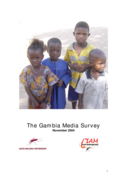
The Gambia Media Survey
Gates Malaria Partnership; Center for Innovation Against Malaria (2014), 56 pp.
"A national survey was completed in November 2004, designed to measure: media access and use; knowledge of Malaria, its prevention and cure; reach of the radio programme Bolongodala. The sample achieved represented the adult (15+) population of the Gambia estimated to be 768,200. Mandinka is the mos
...

"While radio is still in the lead for news consumption in Nigeria, the use of digital media and mobile continues to grow rapidly. The new research also reveals that Nigerian personal mobile phone ownership has increased significantly in 2014 to 83.0%, up from 73.1% in 2012. Mobile web is the leading
...

Contemporary Media Use in Egypt
Broadcasting Board of Governors (BBG); Gallup (2014), 32 slides


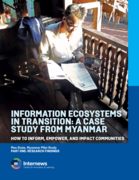
Information Ecosystems in Transition: A Case Study from Myanmar. How to Inform, Empower and Impact Communities. Part One: Research Findings
Internews (2014), 56 pp.
"The research focuses on three themes. Firstly, it identifies and maps the information environment in Mon State in terms of technology and media use across urban, rural, non-conflict, and former conflict geographic areas. Secondly, the flow of news and information is examined to see how individuals
...
Media Survey Findings: Nationwide National Opinion Survey, Wave III, September 2014
Internews (2014), 36 pp.
Key findings include: 35% of people interviewed had family members working outside of Nepal; 86% of households had a working mobile phone (92.5% in urban; 84.3% in rural areas); 49% had a working television (79.5% in urban; 42.3% in rural areas); 45% a working radio (46.1% in urban; 45.3% in rural a
...

Community / Audience Survey Report Eastern Samar, Philippines: Summary of Key Findings with a Brief Analysis and Discussion
Internews (2014), 5 pp.
"The purpose of the survey was to understand the listenership and value of Radio Bakdaw, the information needs of the community and sources people would use to address specific information needs." (Page 1)

"Russians are keen news consumers. Most (79.0%) access some type of news at least daily, and nearly all (95.4%) do this at least weekly. Nearly all Russians (95.5%) are turning to television – which continues to dominate the media market in 2013 – for their news each week. However, as more Russi
...

The Media's Role in Citizen Engagement: Evidence from Burma
London: BBC Media Action (2014), 8 pp.
"This research presents a picture of a public in Burma that, to varying degrees, lacks knowledge, confidence, motivation and opportunity to participate in governance processes and make their voices heard. However, the study provides objective evidence that a relationship exists between people’s me
...

Der Buchmarkt in Slowenien
Erlangen: Universität Erlangen-Nürnberg, Buchwissenschaft (2014), 24 pp.
"Die Faszination des slowenischen Buchmarkts ergibt sich aus mehreren Merkmalen. Zum einen handelt es sich europaweit gesehen um den kleinsten abgrenzbaren Buchmarkt, wenn man von Island absieht. Kleinstaaten wie Liechtenstein, Monaco oder San Marino gehören sprachlich zu dem größeren deutschen b
...

The Arab World Online 2014: Trends in Internet Usage in the Arab Region
Dubai: Dubai School of Government (DSG), Governance and Innovation Program; bayt.com (2014), 21 pp.
"Our research indicates that today, there are more than 135 million individuals using the Internet in the 22 Arab countries. This is coupled with a mobile penetration rate of around 110 percent on a regional level; and more than 71 million active users of social networking technologies." (Page 1)

