
Filter
695
Breadcrumb:
Audience & User Surveys
Featured
597
20
Topics
213
128
114
69
65
54
40
39
35
35
31
30
25
21
21
21
17
17
17
15
13
12
12
12
12
11
11
10
10
10
10
10
10
9
9
9
9
9
9
8
8
8
7
7
7
7
7
7
7
7
7
7
6
6
6
6
6
6
6
6
6
6
6
5
5
5
5
5
5
5
5
5
5
5
5
4
4
4
4
4
4
4
4
4
4
4
4
4
4
4
4
4
4
4
4
4
4
4
4
4
4
4
4
4
4
4
4
4
4
4
4
4
4
4
3
3
3
3
3
3
3
3
3
3
3
3
3
3
3
3
3
3
3
3
3
3
3
3
3
3
3
3
3
3
3
3
3
3
3
3
3
3
3
3
3
3
3
3
3
3
3
3
3
3
3
3
2
2
2
2
2
2
2
2
2
2
2
2
2
2
2
2
2
2
2
2
2
2
2
2
2
2
2
2
2
2
2
2
2
2
2
2
2
2
2
2
2
2
2
2
2
2
2
2
2
2
2
2
2
2
2
2
2
2
2
2
2
2
2
2
2
2
2
2
2
2
2
2
2
2
2
2
2
2
2
2
2
2
2
2
2
2
2
2
2
2
2
2
1
1
1
1
1
1
1
1
1
1
1
1
1
1
1
1
1
1
1
1
1
1
1
1
1
1
1
1
1
1
1
1
1
1
1
1
1
1
1
1
1
1
1
1
1
1
1
1
1
1
1
1
1
1
1
1
1
1
1
1
1
1
1
1
1
1
1
1
1
1
1
1
1
1
1
1
1
1
1
1
1
1
1
1
1
1
1
1
1
1
1
1
1
1
1
1
1
1
1
1
1
1
1
1
1
1
1
1
1
1
1
1
1
1
1
1
1
1
1
1
1
1
1
1
1
1
1
1
1
1
1
1
1
1
1
1
1
1
1
1
1
1
1
1
1
1
1
1
1
1
1
1
1
1
1
1
1
1
1
1
1
1
1
1
1
1
1
1
1
1
1
1
1
1
1
1
1
1
1
1
1
1
1
1
1
1
1
1
1
1
1
1
1
1
1
1
1
1
1
1
1
1
1
1
1
1
1
1
1
1
1
1
1
1
1
1
1
1
1
1
1
1
1
1
1
1
1
1
1
1
1
1
1
1
1
1
1
1
1
1
1
1
1
1
1
1
1
1
1
1
1
1
1
1
1
1
1
1
1
1
1
1
1
1
1
1
1
1
1
1
1
1
1
1
1
1
1
1
1
1
1
1
1
1
1
1
1
1
1
1
1
1
1
1
1
1
1
1
1
Language
Document type
45
33
16
13
11
5
4
3
3
2
2
1
1
Countries
Authors & Publishers
Media focus
Publication Years
Methods applied
Journals
Output Type

Benchmarking Demand: Turkey’s Contested Internet
Philadelphia, PA: Annenberg School for Communication, Center for Global Communication Studies (CGCS) (2015), 35 pp.
"The data in this report was collected between December 20, 2014 and February 2, 2015 and represents the views of 1161 respondents from that time. The goal of the project is to understand how people in Turkey perceive and value the debate over Internet freedoms in Turkey and how they employ the Inte
...
Afghan Media in 2014: Understanding the Audience
Altai Consulting; Internews (2015), 169 pp.
"In 2014, competition in the Afghan media sector has increased in order to attract diminishing advertising revenue. This has led to increased professionalization and a certain degree of segmentation with the introduction of specialist, niche channels. The pace of development of new outlets has slowe
...

Media Scene: Middle East (Focus on UAE & KSA)
Paris: Publicitas (2015), 38 slides
Media Messaging and its Impact on Afghan Women: Survey Report
Cooperation for Peace and Unity; Afghan Women Rights (2015), 48 pp.
"Television remains the most popular medium in all provinces surveyed and among the different groups of respondents. It is also the most preferred source of information, followed by Radio. A great majority of the population watches TV on a daily basis. More than half of the population spends between
...

Mediennutzung und Lebenswelten: Ergebnisse der ARD/ZDF-Langzeitstudie Massenkommunikation
Media Perspektiven, issue 10 (2015), pp. 427-441
"Radio und Fernsehen sind unverändert die Leitmedien in allen Lebenswelten. Sie bleiben die meistgenutzten Medien in allen Milieus. Das Internet hat in den avantgardistischen Milieus der Performer und des expeditiven Milieus die höchste Reichweite. Tageszeitungen erreichen diese Milieus nur noch i
...

Uso del internet en el Perú
Lima: GfK Perú (2015), 30 pp.
"El número de usuarios de Internet en el Perú llega al 42%. Esta cifra se incrementa cuando se considera únicamente el ámbito urbano (50%) y se reduce considerablemente en el entorno rural, donde la conectividad llega a sólo 18%." (Página 6)
De l’utilisation des médias au Mali
Berlin; Bamako: Media in Cooperation and Transition (MiCT); Friedrich-Ebert-Stiftung (FES) (2015), 89 pp.
"En février et en mars 2015 Media in Transition and Cooperation (MiCT) et la Fondation Friedrich Ebert à Bamako (FES) en coopération avec l’Institut d’Economie rurale malien ont procédé à une analyse de l’usage des médias à Bamako et dans sept chefs-lieux régionaux ainsi que dans troi
...

Online Video Forecasts 2015
London: ZenithOptimedia (2015), 85 pp.
"This report gives forecasts for online video spend and consumption, where available, for 40 markets in which online video is at varying stages of development. From markets such as Singapore, where 85% of the population claims to access online video (according to GlobalWebIndex, 2014), to countries
...

"Six in 10 respondents (62%) access news media daily. Radio remains the leading source of news but is declining in importance as television and the Internet build their audiences. A solid majority (57%) of Africans demand press freedom, endorsing the media’s right to publish what it wants without
...
Afghanistan at a Glance: Findings from the World Poll. Media Use for News in Afghanistan
Gallup; Broadcasting Board of Governors (BBG) (2015), 40 slides
"Afghanistan had the highest rate of suffering in the world for 2013 and 2014. Those with a post-secondary education are the most avid media users for news overall. Highly educated Afghans were more likely to use TV, radio, Internet, SMS, and social media on a daily basis for news than other segment
...

Distant Suffering Online: The Unfortunate Irony of Cyber-Utopian Narratives
International Communication Gazette, volume 77, issue 7 (2015), pp. 637-653
"The internet is often celebrated for the abundant opportunities it appears to offer citizens to become more informed about and inspired to act on issues related to international development and distant suffering. But to what extent do users actually make use of such opportunities? And what social p
...

¿La estrategia de medios de tu compañía tiene la dirección adecuada? Estudio de la publicidad en los medios de comunicación masiva en México: Eficiencia, alcance, impacto y experiencia
Mancera; Ernst & Young (2015), 34 pp.
"Actualmente, México se compone en mayor medida de una población joven. Esto implica un beneficio considerable para el desarrollo económico del país; no obstante, la evolución hacia una sociedad encabezada por adultos mayores presenta un futuro lleno de desafíos, no solo económicos, sino publ
...
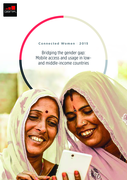
Bridging the Gender Gap: Mobile Access and Usage in Low- and Middle-Income Countries. Connected Women 2015
GSMA; Altai Consulting (2015), 128 pp.
"Women on average are 14% less likely to own a mobile phone than men, which translates into 200 million fewer women than men owning mobile phones. Women in South Asia are 38% less likely to own a phone than men, highlighting that the gender gap in mobile phone ownership is wider in certain parts of
...

Confianza en la comunicación: Estudio de opinión pública nacional - urbano rural
Lima: GfK Perú (2015), 15 slides
"7 de cada 10 peruanos confía en la radio, siendo el medio de comunicación con mayor credibilidad, por encima de la televisión e incluso que amigos o familiares." (Slide 2)

The Relationship of Young Slovak Catholics to the Media
Communication Today, volume 6, issue 2 (2015), pp. 62-76
"The article discusses the relationship of young engaged Catholics in Slovakia to the various media outlets which they follow. It attempts to reveal which media outlets are considered to be inspiring and thought-provoking and how are they perceived and evaluated by their followers. The author draws
...

"As in much of the Arab World, satellite TV is almost ubiquitous in Iraq, present in 97.3% of households (versus 35.1% with radio and 50.4% with the Internet). Ethnic Kurds and those with a college degree are much more likely t han other Iraqis to have Internet access at home; those living in Anbar
...
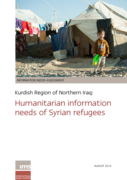
Kurdish Region of Northern Iraq: Humanitarian Information Needs of Syrian Refugees
International Media Support (IMS) (2015), 18 pp.
"The assessment concludes that there is not ‘one magic answer’ to the question of which media channel is the most effective – rather a variety of channels must be used to reach as many people as possible. While TV scores high among both refugees and host population as a preferred media channel
...

Media Use in Afghanistan
Broadcasting Board of Governors (BBG); Gallup (2015), 2 pp.
"The Afghan media scene has experienced tremendous growth in the post-Taliban period, buoyed by international involvement and the passage of a series of laws lending some protection to journalists. Though Reporters Without Borders listed Afghanistan’s media environment 128 out of 179 countries in
...

Media Use in Iraq and Iraqi Kurdistan
Broadcasting Board of Governors (BBG); Gallup (2015), 40 slides
"Key Takeaways: Iraq is divided and in transition. You cannot have an actionable understanding of media habits without analyzing specific "target" audiences. All media platforms matter, depending on the audience." (Slide 33)
