
Filter
184
Featured
146
15
3
Topics
31
30
26
20
16
15
13
12
10
10
10
8
8
7
7
6
6
6
6
6
6
6
6
6
5
4
4
4
3
3
3
3
3
3
3
3
3
3
3
3
2
2
2
2
2
2
2
2
2
2
2
2
2
2
2
2
2
2
2
2
2
2
2
2
2
2
2
2
2
2
2
2
2
1
1
1
1
1
1
1
1
1
1
1
1
1
1
1
1
1
1
1
1
1
1
1
1
1
1
1
1
1
1
1
1
1
1
1
1
1
1
1
1
1
1
1
1
1
1
1
1
1
1
1
1
1
1
1
1
1
1
1
1
1
1
1
1
1
1
1
1
1
1
1
1
1
1
1
1
1
1
1
1
1
1
1
1
1
1
1
1
1
1
1
1
1
1
1
1
1
1
1
1
1
Language
Document type
52
34
33
27
17
5
4
2
2
1
1
Countries / Regions
Authors & Publishers
Media focus
Publication Years
Methods applied
Journals
Output Type

Media and Conflict: Afghanistan as a Relative Success Story
Washington, DC: United States Institute of Peace (USIP) (2008), 8 pp.
"The development of media in post-Taliban Afghanistan has been relatively successful (compared with both the Taliban regime and other countries subject to international intervention) in establishing free and responsible expression despite the lack of electricity, harsh terrain, absence of viable med
...
Working with Media in Areas Affected by Ethnopolitical Conflict
Examining Peace-Oriented Media in Areas of Violent Conflict
International Communication Gazette, volume 70, issue 6 (2008), pp. 487-503
"While the relationship between war and media is examined in literature, the cases of the positive use of mass communication channels in the reconciliation of post-conflict societies are virtually unknown. The goal of this study is to respond to the gap in literature by examining theoretical evidenc
...

Radio for Peace Building: Project Evaluation Report
Washington, DC; Brussels: Search for Common Ground (2008), 35 pp.

The Missing Link: Fostering Positive Citizen-State Relations in Post-Conflict Environments
Deep Insights
Washington, DC: World Bank, Communication for Governance and Accountability Program (CommGAP) (2008), 117 pp.
"Donor policies place great emphasis on the importance of state-building in post-Conflict states, and many donors also recognize the relevance civil society and a professional media sector have for successful transformation processes, says this report. However, operationally and conceptually these a
...

Donors and Media Development: Reports from Afghanistan to Zimbabwe
New York: Open Society Institute (2007), 140 pp.
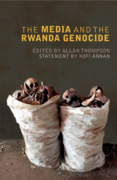
The Media and the Rwanda Genocide
Deep Insights
London; Kampala; Ottawa: Pluto Press; Fountain Publishers; International Development Research Centre (IDRC) (2007), xvi, 463 pp.
"This book examines the crucial role the media played in the 1994 Rwanda genocide, bringing together local reporters and commentators from Rwanda, Western journalists, and media theorists. Part One (eight articles) describes and analyzes "Hate Media in Rwanda", mainly, but not exclusively, focusing
...

Media and Conflict in Bolivia: Fostering a Constructive Role for the Media in a Situation of Vulnerable Governability
Copenhagen: International Media Support (IMS) (2007), 54 pp.
"In order to work towards a more constructive role for the media in Bolivian society in the present context, this report suggests a strategy which could focus on the following four areas: advocacy for changes in the legal framework; spaces for debate and reflection; strengthening the quality of jour
...

Die Projekte der DW-Akademie in Afghanistan: Medien stärken heißt Demokratie fördern
Bonn: Deutsche Welle DW Akademie (2007), 39 pp.
"Als Partner des staatlichen Rundfunks Radio Television Afghanistan (RTA) leistet der Auslandssender Deutsche Welle (DW) einen wichtigen Beitrag zum Demokratisierungsprozess in Afganistan. Denn freie, unabhängige und verlässliche Medien sind in einer Demokratie unverzichtbar. Sie versorgen die Men
...

Press Freedom Post-Conflict: A Cause of Instability or Foundation of Democratic Development?
Copenhagen: International Media Support (IMS) (2007), 25 pp.
"As outlined in the introductory presentation the paths to state failure are various. It is conceivable that corruption, inefficiency and the erosion of state control of the legitimate use of force could lead to the gradual erosion of state capacity. More common, as in the cases of Somalia, Liberia,
...

Developing Media in Stabilization and Reconstruction Operations
Key Guides
Washington, DC: United States Institute of Peace (USIP) (2007), 20 pp.
"This report [...] recommends that interveners take the following series of steps as they generate a strategy for media development in post-conflict zones.
Predeployment Phase: Mapping and Strategizing: map out the existing media landscape; identify the postwar condition of the media infrastructure
...

Media in Sudan at a Crossroads: Assessment and Outline of a Strategy for Media Support
Copenhagen: Association for Media Development in South Sudan (AMDISS); Article 19; International Media Support (IMS) (2007), 78 pp.
"This assessment describes and contextualises a series of challenges for an environment conducive to freedom of expression brought about by the Comprehensive Peace Agreement (CPA) signed in 2005 and the changes to the political framework in Sudan. The aim is to establish a comprehensive overview of
...

Internationale Medienhilfe als Beitrag zur Demokratisierung eines Transformationsstaates: Anforderungen an die Neugestaltung eines Rundfunkssystems am Beispiel des Kosovos
München: GRIN Verlag (2007), 94 pp.
"Die Förderung von Meinungspluralismus war stets ein Ziel beim Wiederaufbau des Mediensektors im Kosovo, dieser sollte durch ein hohe Anzahl an Rundfunkanbietern gewährleistet werden. Jedoch bedeutet Anbieterpluralismus nicht automatisch Meinungspluralismus. Im Kosovo führt die Menge an Sendern n
...

Prejudice, Conflict and Media. Reducing Intergroup Prejudice and Conflict Using the Media: A Field Experiment in Rwanda
Harvard: Harvard University, Weatherhead Center for International Affairs (2007), 64 pp.
"Can the media reduce intergroup prejudice and conflict? Despite the high stakes of this question, understanding of the mass media’s role in shaping prejudiced beliefs, norms, and behaviors is very limited. A year-long field experiment in Rwanda tested the impact of a radio soap opera about two Rw
...

Voices of War: Conflict and the Role of the Media
Copenhagen: International Media Support (IMS) (2006), 30 pp.
Media Assistance to Postgenocide Rwanda
In: Promoting Democracy in Postconflict Societies
Boulder, Colo.; London: Rienner (2006), pp. 211-235


Building a Community Radio Network in Afghanistan
In: Promoting Democracy in Postconflict Societies
Boulder, Colo.; London: Rienner (2006), pp. 257-272
"The experience of establishing community stations in Afghanistan provides four distinct, but interrelated lessons [...] The project has demonstrated that international organizations can promote community stations in impoverished, war-tron societies that have had no experience of independent or comm
...

Why Templates for Media Development Do Not Work in Crisis States: Defining and Understanding Media Development Strategies in Post-War and Crisis States
Deep Insights
London: London School of Economics and Political Science (LSE) (2006), 36 pp.
"This document examines how media policy can be adapted to developing countries affected by crises and war. Based on the outcome of discussions at a workshop, areas the document covers include: the role of the media in fragile states; training journalists; media challenging the state. Recommendation
...
