
Filter
202
Featured
99
2
1
Topics
72
24
14
13
9
7
7
6
6
5
4
4
3
3
2
2
2
2
2
2
2
2
2
1
1
1
1
1
1
1
1
1
1
1
1
1
1
1
1
1
1
1
1
1
1
1
1
1
1
1
1
1
1
1
1
1
1
1
1
1
1
1
1
1
Language
Document type
9
4
3
3
1
Countries / Regions
Authors & Publishers
Media focus
Publication Years
Methods applied
Journals
Output Type
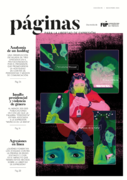
[Anatomía del acoso digital contra periodistas en Colombia]
Páginas para la Libertad de Expresión (FLIP, Colombia), issue 9 (2024), 24 pp.
"Durante año y medio, la FLIP y Linterna Verde monitoreamos la conversación que giró alrededor del periodismo y le pusimos la lupa a tres momentos virales para entender qué hay detrás de cada ataque digital: El conocido hashtag #CaracolMiente, que surgió después de que el presidente Gustavo P
...
Safety of Journalists in the Run-Up to the 2023 Elections in Zimbabwe
"In March 2023, a Zimbabwean government official caused a storm after threatening journalists with arrests for reporting on an Al Jazeera documentary that exposed alleged money laundering, gold smuggling and other criminal activities in the country. Journalists and media groups interpreted these utt
...

“It Comes With the Job”: How Journalists Navigate Experiences and Perceptions of Gendered Online Harassment
International Journal of Communication, volume 17, issue 2023 (2023), pp. 5128-5148
"This article examines how online abuse is experienced and tackled by journalists in Portugal, and addresses the prevalence of online harassment and violence against women journalists and their perceptions of the issue. Theoretically, the article bridges the research on online harassment and gender
...
The erosion of media freedom in Ghana: A signal democratic backsliding?
Media, Culture & Society, volume 46, issue 1 (2023), pp. 112-129
"Ghana is a poster child of the consolidation of liberal democracy in Africa, the signal evidence of which is the freedom of the Ghanaian media as the fourth estate of the realm. However, recent developments in the media landscape of the country, such as sustained death threats, assaults, use of unw
...
Conceptualizing Journalists’ Safety around the Globe
Digital Journalism, volume 11, issue 7 (2023), pp. 1211-1229
"Killings, as the most extreme form of violence against journalists, receive considerable attention, but journalists experience a variety of threats from surveillance to gendered cyber targeting and hate speech, or even the intentional deprivation of their financial basis. This article provides a co
...
“Don’t Touch Me”: Sexual Harassments, Digital Threats, and Social Resistance Toward Kuwaiti Female Journalists
In: The Palgrave Handbook of Gender, Media and Communication in the Middle East and North Africa
Cham: Palgrave Macmillan (2023), pp. 373-390
"This study examines the obstacles and challenges faced by female journalists in Kuwait. It explores a set of interrelated factors that discourage women from working in the media, such as gender inequality, sexual harassment, threats, social resistance, and cultural barriers. The study uses a mixed
...
Journalism in Cameroon: A High-Risk and Dangerous Profession?
In: The Routledge Companion to Journalism in the Global South
London; New York: Routledge (2023), pp. 461-476
"These are challenging times for practicing journalism safely in Cameroon. Death in pretrial detention is one extreme form of silencing journalists, although arbitrary arrests, intimidation, harassment, and trumped-up charges are also used, not only during turbulence and armed conflicts, but also in
...
Uncensored journalism in censored times: Challenges of reporting on Azerbaijan
Journalism, volume 24, issue 2 (2023), pp. 313–327
"Azerbaijan is an authoritarian regime, whose government maintains a tight grip over the media landscape. Independent and opposition media are regularly persecuted, with journalists and their family members intimidated by law enforcement agencies via arrests, beating, threats and other forms of pers
...
Resisting the Individualization of Risk: Strategies of Engagement and Caution in Journalists’ Responses to Online Mobs in the United States and Germany
Digital Journalism, volume 11, issue 10 (2023), pp. 1906-1923
"Increasing levels of toxicity, harassment, trolling, and doxxing targeting journalists are a global problem that adversely affects journalism and democratic life. This study offers a comparative analysis of journalistic responses to online violence in the United States and Germany, based on 87 inte
...

Egypt’s #MeToo Moment: Using Social Media to Help Address Violence Against Women in Egypt
In: Violence Against Women in the Global South: Reporting in the #MeToo Era
Cham: Palgrave Macmillan (2023), pp. 173-199
"Adjusting the focus to the time and research of the present, this chapter analyzes two case studies that occurred before and after the revitalization of the global #MeToo movement in 2017. The selected cases investigate how women have used social media platforms to combat VAW. The first case is Daf
...
Hostility Toward the Press: A Synthesis of Terms, Research, and Future Directions in Examining Harassment of Journalists
Digital Journalism, volume 11, issue 7 (2023), pp. 1230-1249
"While there is an upsurge of research examining hostility toward the press from those external to the newsroom, there continues to be a lack of critical and robust theoretical foundation and agenda for such inquiry in countries considered to have a democratically free press. Therefore, the objectiv
...
“Not Their Fault, but Their Problem”: Organizational Responses to the Online Harassment of Journalists
Journalism Practice, volume 17, issue 4 (2023), pp. 859-874
"Journalists are increasingly reporting that online harassment has become a common feature of their working lives, contributing to experiences of fatigue, anxiety and disconnection from social media as well as their profession. Drawing on interviews with American newsworkers, this study finds at lea
...
Harassment’s Toll on Democracy: The Effects of Harassment Towards US Journalists
Journalism Practice, volume 17, issue 8 (2023), pp. 1607-1626
"Journalists in democratically “free” countries have faced harassment from those external to the newsroom for decades, though that has recently increased in the United States by many accounts. To assess the effects of such harassment in the United States, 32 journalists were interviewed and more
...
Harassed and Hushed: Bangladeshi Women Journalists’ Experiences of Gender Discrimination and Sexual Harassments
Athens Journal of Mass Media and Communications, volume 9, issue 3 (2023), pp. 185-202
"A large number of Bangladeshi women journalists are facing gender discrimination and sexual harassment in the workplace. This is one of the contributing factors in excluding women journalists’ voices from the public sphere. Drawing on the feminist approach of structure and agency theory, the stud
...

Anti-Media Discourse and Violence Against Journalists: Evidence From Chávez’s Venezuela
International Journal of Press/Politics, volume 28, issue 3 (2023), pp. 469-492
"Can political leaders’ anti-media rhetoric encourage violence against journalists and undermine media freedom in democracies? While there is evidence that anti-media public discourse can amplify negative attitudes and behaviors towards the media, there is still uncertainty as to whether and how p
...

The growing norm of sexual harassment in Pakistan’s mainstream and ethnic news media
Media Asia, volume 50, issue 3 (2023), pp. 397-417
"Across time, in a variety of forms and spaces -from homes and workplaces to digital domains of social media- women have become victims of sexual harassment. Over the last couple of years, the world has witnessed appalling cases followed under the #MeToo campaign that has inspired an increasing numb
...
Becoming a Target: Journalists’ Perspectives on Anti-Press Discourse and Experiences with Hate Speech
Journalism Practice, volume 18, issue 2 (2023), pp. 283-300
"In many parts of the world, journalists work in increasingly hostile environments. To better understand the characteristics and implications of hostility against the press in a hybrid regime, this study explores how journalists in Serbia perceive and experience anti-press hate speech. Based on 20 i
...
Online Harassment of Journalists in Zimbabwe: Experiences, Coping Strategies and Implications
In: New Journalism Ecologies in East and Southern Africa: Innovations, Participatory and Newsmaking Cultures
Cham: Palgrave Macmillan (2023), pp. 95-111
"This chapter examines the safety risks faced by Zimbabwean journalists as they conduct their day-to-day professional work in online spaces. Given that journalists in Africa are increasingly utilising and adopting social media tools for news production and distribution, it is timely to examine the d
...

Southern European Journalists’ Perceptions of Discursive Menaces in the Age of (Online) Delegitimization
Politics and Governance, volume 11, issue 2 (2023), pp. 210-220
"In a new communication context, factors such as the rise of hate speech, disinformation, or a precarious financial and employment situation in the media have made discursive menaces gain increasing significance. Threats of this kind challenge the legitimacy of institutional news media and professio
...
