Filter
63
Breadcrumb:
COVID-19 Pandemic: Economic, Political and Social Effects
Featured
56
3
Topics
15
9
9
6
5
4
4
4
3
3
3
3
3
3
2
2
2
2
2
2
2
2
2
2
2
2
2
2
2
2
2
2
1
1
1
1
1
1
1
1
1
1
1
1
1
1
1
1
1
1
1
1
1
1
1
1
1
1
1
1
1
1
1
1
1
1
1
1
1
1
1
1
1
1
1
1
1
1
1
1
1
1
1
1
1
1
1
1
1
1
1
1
1
1
1
1
1
1
1
1
1
1
1
1
1
1
1
1
1
1
1
1
1
1
1
Language
Document type
11
5
3
3
2
Countries
Authors & Publishers
Media focus
Publication Years
Methods applied
Journals
Output Type
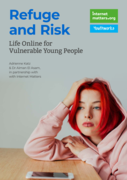
Refuge and Risk: Life Online for Vulnerable Young People
London: Youthworks; Internet Matters (2021), 38 pp.
"Young people’s behaviour online is influenced less by rules about online safety than about how they feel. It is influenced by emotional needs, pre-existing vulnerabilities and the support around them.
Implications for professionals
1. These messages from young people can help those working in ser
...


Pastoral Creativity Amid the COVID-19 Pandemic: Global Experiences
Deep Insights
Bangkog, Manila: Asian Research Center for Religion and Social Communication; Logos (Divine Word) Publications (2021), ix, 243 pp.
"The content of the book is organized into four sections. The first three sections are essays recounting real-world experiences of pastoral agents. These essays are roughly divided into three sub-groups. The first group of essays focus on the parish setting and the ministries that each parish attemp
...

Jenseits des Erwartungshorizonts: Pandemie und kollektives Gedächtnis
Aus Politik und Zeitgeschichte, issue 40-41 (2021), pp. 42-49
"Nichts scheint ferner zu liegen, als während einer Pandemie über Gedächtnis nachzudenken. Wir stecken noch mittendrin. Aber das gesellschaftliche Erinnern und Vergessen von Pandemien hat die Erfahrung von Covid-19 stark vorgeprägt. Praktiken des historischen Erinnerns, des Archivierens und Gede
...

Digital Skills Insights
Geneva: ITU (2021), xii, 142 pp.
"The eight articles in the publication can be broadly grouped into two main sets. The first set discusses the different types of digital skills required from a more academic perspective, in particular in the context of the pandemic and post-pandemic period, as countries accelerate their move towards
...

Contra viento y marea: Testimonios de educación de personas jóvenes y adultas (EPJA) en el contexto de pandemia
Quito: Asociación Latinoamericana de Educación Radiofónica (ALER); DVV International (2021), 56 pp.
"Con esta sistematizacón nos proponemos una re-visita sobre la situación de la educación de personas jóvenes y adultas en 4 países de la subregión andina, a saber, Colombia, Ecuador, Péru y Venezuela a partir de los testimonios de estudiantes, docentes, facilitadores/as voluntarios/as, person
...

Pandemic in the Internet age: From second wave to new normal, recovery, adaptation and resilience
Geneva: ITU (2021), ix, 96 pp.
"ICTs have an enormous role to play in helping society adapt to the dislocations caused by the pandemic. This enhanced role comes in addition to the already central part that digital technologies have assumed in driving innovation, digital disruption and economic growth and development, particularly
...

How the COVID-19 Fight Has Hurt Digital Rights in East Africa
Kampala: CIPESA (2021), 12 pp.

Six Stories of Resilience: Digital Technologies as Drivers of Development in the COVID-19 Era
Asia Foundation (2021), 32 pp.
"This white paper discusses how digital technologies are building COVID resilience, shaping and accelerating the recovery, and diffusing within Asia Pacific region (APAC) in ways that are likely to persist in a post-COVID world. Section 1 presents the role of digital technologies in the Sustainable
...
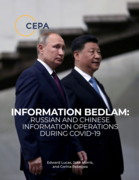
Information Bedlam: Russian and Chinese Information Operations During Covid-19
Center for European Policy Analysis (CEPA) (2021), 20 pp.
"Based on a literature review through January 2021, evaluated at an expert seminar, this policy brief provides a baseline analysis of changing tactics, narratives, and distribution strategies in Russian and Chinese information operations (IOs) relating to the covid-19 pandemic. Key findings: China c
...

The Impact of Disinformation on Democratic Processes and Human Rights in the World
Brussels: European Parliament, Directorate General for External Policies of the Union (2021), 54 pp.
"Disinformation undermines human rights and many elements of good quality democracy; but counter-disinformation measures can also have a prejudicial impact on human rights and democracy. COVID-19 compounds both these dynamics and has unleashed more intense waves of disinformation, allied to human ri
...


"This report, and the survey findings behind it, provides a unique insight into the perspectives of EdTech experts regarding the impact of the Covid-19 pandemic on education in Africa. It is based on the findings of a survey of the eLearning Africa network, which attracted approximately 1650 respons
...


"Todo se inició, en verdad, cuando tuve el encargo, en mi calidad de consultor internacional, de realizar una serie de entrevistas en torno a la desinformación en Venezuela con expertos venezolanos en temas comunicacionales y políticos. Las transcripciones de aquellas notas de voz, que se hiciero
...


Teleworking During the COVID-19 Pandemic and Beyond: A Practical Guide
Geneva: International Labour Organization (ILO) (2020), 41 pp.
"The purpose of the guide is to provide practical and actionable recommendations for effective teleworking that are applicable to a broad range of actors; to support policymakers in updating existing policies; and to provide a flexible framework through which both private enterprises and public sect
...

"COVID-19 has prompted widespread school closures and physical distancing measures and made online platforms and communities essential to maintaining a sense of normalcy. Children and their families are turning to digital solutions more than ever to support children’s learning, socialization and p
...

Comunicación, sociedad y salud en contexto de pandemia
Deep Insights
Chasqui: Revista Latinoamericana de Comunicación (Quito), issue 145 (2020), pp. 41-300

"En el caso de la población rural, prácticamente 70 % percibe que no tiene suficiente información, en el caso de la población urbana este porcentaje es menor a 50 %. Confrontando esta información con los medios y la disponibilidad, la explicación más razonable es que no se trata necesariament
...