
Filter
1034
Featured
650
29
3
Topics
240
216
96
80
72
71
63
60
57
48
48
44
43
37
36
36
29
28
27
27
26
24
24
23
23
22
22
21
21
20
20
19
18
17
16
15
14
14
14
14
13
13
12
12
12
12
11
11
11
10
10
10
9
9
9
9
9
9
9
9
9
8
8
8
8
8
8
8
8
8
8
8
8
8
8
8
8
7
7
7
7
7
7
7
7
7
7
6
6
6
6
6
6
6
6
6
6
6
6
6
6
5
5
5
5
5
5
5
5
5
5
4
4
4
4
4
4
4
4
4
4
4
4
4
4
4
4
4
4
4
4
4
3
3
3
3
3
3
3
3
3
3
3
3
3
3
3
3
3
3
3
3
3
3
3
3
3
3
3
3
3
3
3
3
3
3
3
3
3
3
3
3
3
3
3
3
3
3
3
2
2
2
2
2
2
2
2
2
2
2
2
2
2
2
2
2
2
2
2
2
2
2
2
2
2
2
2
2
2
2
2
2
2
2
2
2
2
2
2
2
2
2
2
2
2
2
2
2
2
2
2
2
2
2
2
2
2
2
2
2
2
2
2
2
2
2
2
2
2
2
2
2
2
2
2
2
2
2
2
2
2
2
2
2
2
2
2
2
2
2
2
1
1
1
1
1
1
1
1
1
1
1
1
1
1
1
1
1
1
1
1
1
1
1
1
1
1
1
1
1
1
1
1
1
1
1
1
1
1
1
1
1
1
1
1
1
1
1
1
1
1
1
1
1
1
1
1
1
1
1
1
1
1
1
1
1
1
1
1
1
1
1
1
1
1
1
1
1
1
1
1
1
1
1
1
1
1
1
1
1
1
1
1
1
1
1
1
1
1
1
1
1
1
1
1
1
1
1
1
1
1
1
1
1
1
1
1
1
1
1
1
1
1
1
1
1
1
1
1
1
1
1
1
1
1
1
1
1
1
1
1
1
1
1
1
1
1
1
1
1
1
1
1
1
1
1
1
1
1
1
1
1
1
1
1
1
1
1
1
1
1
1
1
1
1
1
1
1
1
1
1
1
1
1
1
1
1
1
1
1
1
1
1
1
1
1
1
1
1
1
1
1
1
1
1
1
1
1
1
1
1
1
1
1
1
1
1
1
1
1
1
1
1
1
1
1
1
1
1
1
1
1
1
1
1
1
1
1
1
1
1
1
1
1
1
1
1
1
1
1
1
1
1
1
1
1
1
1
1
1
1
1
1
1
1
1
Language
Document type
290
71
47
27
24
16
11
10
8
8
6
6
6
4
3
3
3
3
2
1
1
1
Countries / Regions
Authors & Publishers
Media focus
Publication Years
Methods applied
Journals
Output Type
Os Angolanos rejeitam as restrições governamentais sobre o direito à informação
Afrobarometer (2023), 11 pp.
"De acordo com a mais recente pesquisa do Afrobarometer, os Angolanos concordam amplamente que a imprensa deve agir como um fiscalizador do governo, investigando os seus erros e os casos de corrupção para os reportar. Os cidadãos valorizam a liberdade de imprensa e rejeitam a noção de que a inf
...
"The survey data show that most Zimbabweans treasure a media that is free from the shackles of government interference and that acts as a watchdog over government, investigating and reporting on its mistakes and corruption. Despite this dominant preference, only a minority think the country currentl
...

The State of Press Freedom in Southern Africa 2023
Harare: Media Institute of Southern Africa (MISA) (2023), 78 pp.
"The report has, in summary, shown that although there are positive developments across the Southern African region, meeting the international standards is still work in progress and in some instances, states are regressing. There is evidence of a plethora of challenges that hinder the practice of i
...
Repressed media and illiberal politics in Turkey: The persistence of fear
Southeast European and Black Sea Studies, volume 23, issue 1 (2023), pp. 159-177
"This article examines the historical roots of the role of successive Turkish governments’ fear of media and Turkish media’s fear of government authority with respect to the development of press freedom over the long run and closely analyzes the historical pressures imposed on journalists throug
...
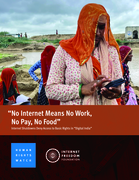


The Trouble with Press Freedom in Kenya
Potsdam: Friedrich Naumann Foundation (2023), 15 pp.
"This policy paper highlights significant threats to press freedom in Kenya despite legal protections and media development progress. These challenges encompass various aspects, including legal, political, economic, and internal issues within the media industry. Both civil society and the internatio
...
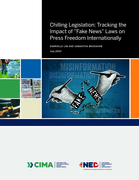
Chilling Legislation: Tracking the Impact of “Fake News” Laws on Press Freedom Internationally
Washington, DC: Center for International Media Assistance (CIMA) (2023), 20 pp.
"The proliferation of misinformation, disinformation, and mal-information (MDM) poses serious challenges to democracy, public safety, and national security. Conversely, these very worries could be used as a front for unjustified ends. There is a global trend toward legislation that may risk infringi
...

Whose Media Freedom is Being Defended? Norm Contestation in International Media Freedom Campaigns
Journal of Communication, volume 73, issue 2 (2023), pp. 87-100
"This article analyses how international advocacy campaigns approach and define media freedom, and what influences this process. It does this through a two-year case study of the Media Freedom Coalition—an intergovernmental partnership of over 50 countries—that included 55 interviews with key st
...


Dicing with death: Analyzing the killings of Pakistani journalists with a focus on Arshad Sharif case
Journal of ISOSS, volume 9, issue 2 (2023), pp. 631-642
"Journalists in Pakistan are losing their lives during the course of their duty. This study identifies the factors and actors behind the killings of Pakistani journalists and the role of stakeholders and media owners in compromising journalists’ safety, under the lens of social responsibility theo
...
Constraints on Journalistic Practices in the Arab World Post–Arab Spring and Post-Covid-19
In: The Routledge Companion to Journalism in the Global South
London; New York: Routledge (2023), pp. 179-186
"Over a decade ago, the 2011 Arab Spring uprisings erupted in six Arab countries. They were accompanied, initially, by high hopes for democratic transformation and reform (Lynch, 2012). These hopes and aspirations also included widening the margin of freedom of expression in general and press freedo
...


Handbook on Laws and Regulations Affecting Freedom of Expression, Media Freedom and Digital Rights in Zambia
Lusaka: Media Institute of Southern Africa (MISA) (2022), vi, 74 pp.
"The handbook is an advocacy tool that details laws and regulations that enable and impact freedom of expression, media freedom, work of human rights defenders and activists in Zambia." (Publisher description)

Afghan Media under the Taliban: Restrictions and Violations
Afghanistan Human Rights and Democracy Organization (AHRDO) (2022), 48 pp.
"[...] Since returning to power in August 2021, the Taliban has imposed a new media control regime, which has three key features: restriction, gender-discrimination, and repression with impunity. First, the Taliban has passed several media policies, imposing extreme constraints on press freedom and
...


The State of Press Freedom in Southern Africa 2020-2021
Media Institute of Southern Africa (MISA) (2022), 75 pp.
"Privacy is necessary for journalists to communicate freely with sources, receive confidential information, investigate corruption, and guarantee their safety and that of their sources. Therefore, it is worrying that governments and big corporations are working to undermine the right to privacy by a
...
