
Filter
482
Featured
387
37
7
Topics
94
32
30
29
25
22
21
21
19
18
18
16
16
15
14
14
13
13
13
13
13
11
11
11
11
11
11
11
10
10
9
9
9
9
9
9
8
8
8
8
8
8
8
8
8
8
7
7
7
7
7
7
7
6
6
6
6
6
6
6
5
5
5
5
5
5
5
5
5
5
5
5
5
5
4
4
4
4
4
4
4
4
4
4
4
4
3
3
3
3
3
3
3
3
3
3
3
3
3
3
3
3
3
3
3
3
3
3
3
3
3
3
3
3
3
3
3
3
3
3
3
3
3
3
3
3
3
2
2
2
2
2
2
2
2
2
2
2
2
2
2
2
2
2
2
2
2
2
2
2
2
2
2
2
2
2
2
2
2
2
2
2
2
2
2
2
2
2
2
2
2
2
2
2
2
2
2
2
2
2
2
2
2
2
2
2
2
2
2
2
2
2
2
2
2
2
2
1
1
1
1
1
1
1
1
1
1
1
1
1
1
1
1
1
1
1
1
1
1
1
1
1
1
1
1
1
1
1
1
1
1
1
1
1
1
1
1
1
1
1
1
1
1
1
1
1
1
1
1
1
1
1
1
1
1
1
1
1
1
1
1
1
1
1
1
1
1
1
1
1
1
1
1
1
1
1
1
1
1
1
1
1
1
1
1
1
1
1
1
1
1
1
1
1
1
1
1
1
1
1
1
1
1
1
1
1
1
1
1
1
1
1
1
1
1
1
1
1
1
1
1
1
1
1
1
1
1
1
1
1
1
1
1
1
1
1
1
1
1
1
1
1
1
1
1
1
1
1
1
1
1
1
1
1
1
1
1
1
1
1
1
1
1
1
1
1
1
1
1
1
1
1
1
1
1
1
1
1
1
1
1
1
1
1
1
1
1
1
1
1
1
1
1
1
1
1
1
1
1
1
1
1
1
1
1
1
1
1
1
1
1
1
1
1
1
Language
Document type
40
37
29
25
12
8
7
5
4
4
3
1
1
1
1
1
1
1
Countries / Regions
Authors & Publishers
Media focus
Publication Years
Methods applied
Journals
Output Type

"The study revealed some clear patterns about why people fall for misinformation, regardless of their age, gender or education level. Some of the key trends common across city and village respondents were: 1. Majority of the respondents do not question the source of the information, or assess if the
...

The Hype Machine: How Social Media Disrupts Our Elections, Our Economy, and Our Health - and How We Must Adapt
London: HarperCollins (2020), xv, 390 pp.
"It is paramount, MIT social media expert Sinan Aral says, that we recognize the outsized impact social media has on our culture, our democracy, and our lives in order to steer today's social technology toward good, while avoiding the ways it can pull us apart. Otherwise, we could fall victim to wha
...

Fake News und Desinformation: Herausforderungen für die vernetzte Gesellschaft und die empirische Forschung
Baden-Baden: Nomos (2020), 361 pp.
"Desinformation ist eine Konstante der politischen Kommunikation. Doch mit der Wahl Donald Trumps zum Präsidenten der Vereinigten Staaten und der Brexit-Abstimmung in Großbritannien erhielten bewusst lancierte Falschnachrichten eine neue gesellschaftliche Bedeutung. Denn nun wurde sichtbar, welche
...

Countering Fake News: A Comparison of Possible Solutions Regarding User Acceptance and Effectiveness
Proceedings of the ACM on Human-Computer Interaction, issue CSCW2, Article 140 (2020), 27 pp.
"This work takes a user-centered approach on means to counter identified mis- and disinformation in social media. We conduct a three-step study design on how approaches in social media should be presented to respect the users’ needs and experiences and how effective they are. As our first step, in
...

"Disinformation is an endemic and ubiquitous part of politics throughout the Western Balkans, without exception. A mapping of the disinformation and counter-dis in for mation landscapes in the region in the period from 2018 through 2020 reveals three key disinformation challenges: external challenge
...

Countering Russian & Chinese Influence Activities: Examining Democratic Vulnerabilities & Building Resiliency
Washington, DC: Center for Strategic & International Studies (CSIS) (2020), v, 31 pp.
"With their heavily censored and restricted civil societies at home, China and Russia exploit the asymmetry of democratic systems by targeting open information environments, freedom of expression, participatory civic discourse, and pluralistic and fluid politics. Democracies have unique vulnerabilit
...

Freedom on the Net 2020: The Pandemic's Digital Shadow
Deep Insights
Washington, DC: Freedom House (2020), 33 pp.
"Three notable trends punctuated an especially dismal year for internet freedom. First, political leaders used the pandemic as a pretext to limit access to information. Authorities often blocked independent news sites and arrested individuals on spurious charges of spreading false news. In many plac
...

The Unbearable Ease of Misinformation
Budapest: Center for Media, Data and Society (CMDS) (2020), 163 pp.
"Misinformation is a lucrative business in several Eastern European countries, reliant on advertising revenue, and pulling in cash from a variety of other sources including government subsidies, crowdfunding, tax designations, donations and sales of merchandise. The Business of Misinformation projec
...
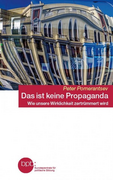
Das ist keine Propaganda: Wie unsere Wirklichkeit zertrümmert wird
Bonn: Bundeszentrale für politische Bildung (bpb), Sonderausg. (2020), 295 pp.
"Auf der ganzen Welt nutzen unterschiedlichste Akteure die Wirkungsmechanismen der digitalen Medien aus, um durch gezielte Desinformationskampagnen die öffentliche Meinung zu beeinflussen. Dies, so lautet die zentrale These von Peter Pomerantsev, bedrohe Demokratien und Demokratisierungsprozesse. W
...

10 Things to Know About Misinformation and Disinformation
London: Overseas Development Institute (ODI) (2020), 13 pp.
"By accident or design, the internet and social media have created the ideal conditions for a huge increase in false information and conspiracy theories. This can cause real harm offline, especially because digital literacy and digital policy are both currently unable to keep up with the pace of cha
...
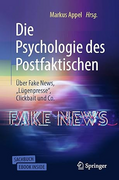
Die Psychologie des Postfaktischen: Über Fake News, "Lügenpresse", Clickbait & Co.
Deep Insights
Berlin: Springer (2020), ix, 219 pp.
"In diesem Buch werden in 18 Kapiteln Phänomene der Kommunikation im digitalen Zeitalter vorgestellt und die psychologischen Hintergründe anhand von wissenschaftlichen Theorien und Analysen erörtert. Viele Menschen sind verunsichert durch eine Medienwelt, die unausgewogen erscheint (Fake News, LÃ
...

Disinformation, Misinformation, and Fake News in Social Media: Emerging Research Challenges and Opportunities
Cham: Springer (2020), viii, 288 pp.
"This book serves as a convenient entry point for researchers, practitioners, and students to understand the problems and challenges, learn state-of-the-art solutions for their specific needs, and quickly identify new research problems in their domains. The contributors to this volume describe the r
...

Online Temptations: COVID-19 and Religious Misinformation in the MENA Region
Social Media + Society, volume 6, issue 3 (2020), pp. 1-4
"Issues of verification in the age of mass media, and now social media, have been a long-discussed topic among Islamic media scholars. While Islam might be a common thread in COVID-19 religious misinformation, there is nothing inherently Islamic to the religious tinged elements of misinformation on
...

Die Kunst des Miteinander-Redens: Über den Dialog in Gesellschaft und Politik
Bonn: Bundeszentrale für politische Bildung (bpb), Sonderausg. (2020), 222 pp.
"Entgrenzt, entfesselt, entgleist? Im digitalen Zeitalter ist Kommunikation prinzipiell schrankenlos, die Anlässe für Debatten sind unübersehbar – und die Art und Weise, wie in der (Netz)öffentlichkeit weniger mit- als vor allem übereinander gesprochen wird, oftmals weit jenseits überkommene
...

Disinformation as Political Communication
Political Communication, volume 37, issue 2 (2020), pp. 145-156
"This introduction to the special issue “Beyond Fake News: The Politics of Disinformation” contains four main sections. In the first, we discuss the major sociopolitical factors that have allowed disinformation to flourish in recent years. Second, we review the very short history of disinformati
...

"Todo se inició, en verdad, cuando tuve el encargo, en mi calidad de consultor internacional, de realizar una serie de entrevistas en torno a la desinformación en Venezuela con expertos venezolanos en temas comunicacionales y políticos. Las transcripciones de aquellas notas de voz, que se hiciero
...

Fake news: Acceptance by demographics and culture on social media
Journal of Information Technology & Politics, volume 17, issue 1 (2020), pp. 1-11
"Fake news has trumped up attention across cultures from the United States Elections to the Arab Spring. While political marketers have long used the language of fear and persuasion in their messaging, social media has intensified its impact. The purpose of this study is to investigate the influence
...

Using Misinformation as a Political Weapon: COVID-19 and Bolsonaro in Brazil
Harvard Kennedy School Misinformation Review, volume 1, issue 2 (2020), 8 pp.
"With over 30,000 confirmed cases, Brazil is currently the country most affected by COVID-19 in Latin America, and ranked 12th worldwide. Despite all evidence, a strong rhetoric undermining risks associated to COVID-19 has been endorsed at the highest levels of the Brazilian government, making Presi
...
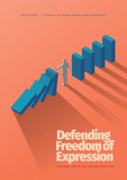
Defending freedom of expression: Fake news laws in East and Southeast Asia
Deep Insights
Bangkog; Manila: Asia Centre; Council of Asian Liberals and Democrats (CALD). (2020), 61 pp.
"This report compares the impact of legislation in countries with multiparty legislatures and independent government institutions, and countries with one dominant political force and an absence of independent national institutions. It finds that in the former countries, provisions are included to sa
...

Routledge Handbook of Conspiracy Theories
London; New York: Routledge (2020), xx, 680 pp.
"Taking a global and interdisciplinary approach, the Routledge Handbook of Conspiracy Theories provides a comprehensive overview of conspiracy theories as an important social, cultural and political phenomenon in contemporary life. This handbook provides the most complete analysis of the phenomenon
...
