
Filter
206
Featured
92
7
11
Topics
64
21
18
15
14
13
12
10
10
9
9
8
6
6
6
6
4
4
4
4
3
3
3
3
3
3
3
3
3
3
2
2
2
2
2
2
2
2
2
2
2
2
2
2
2
2
2
2
2
2
2
1
1
1
1
1
1
1
1
1
1
1
1
1
1
1
1
1
1
1
1
1
1
1
1
1
1
1
1
1
1
1
1
1
1
1
1
1
1
1
1
1
1
1
1
1
1
1
1
1
1
1
1
1
1
1
1
1
1
1
1
1
1
1
1
1
1
1
1
1
1
1
1
1
1
1
1
1
1
1
1
1
1
1
1
1
1
1
1
1
1
1
Language
Document type
24
10
5
4
3
3
2
2
1
1
Countries / Regions
Authors & Publishers
Media focus
Publication Years
Methods applied
Journals
Output Type

‘Forced to report’: Affective proximity and the perils of local reporting on Syria
Journalism, volume 24, issue 2 (2023), pp. 280–294
"Based on interviews with Syrian media practitioners, this article uses the notion of affective proximity to make sense of local media practitioners’ reporting and witnessing of suffering in their country and community. I argue that the life-risking, and sometimes deadly, media practices of local
...
Has Journalism Forgotten the Journalists?
"This essay argues that more qualitative research is needed to assess why journalists are reporting burnout, taking time off work, and in some cases leaving the profession." (Abstract)
Constraints on Journalistic Practices in the Arab World Post–Arab Spring and Post-Covid-19
In: The Routledge Companion to Journalism in the Global South
London; New York: Routledge (2023), pp. 179-186
"Over a decade ago, the 2011 Arab Spring uprisings erupted in six Arab countries. They were accompanied, initially, by high hopes for democratic transformation and reform (Lynch, 2012). These hopes and aspirations also included widening the margin of freedom of expression in general and press freedo
...
Establishing Individual, Organizational and Collective Practices for Journalists' Well-Being through Disconnection
"This chapter explores broader use and negotiation of online connection and disconnection within news organizations and professional bodies. It argues that improving the happiness of journalists means centering methods of care in the profession, within individual practice and organizational editoria
...

"GIJN’s comprehensive, 16-chapter Reporter’s Guide to Investigating War Crimes includes expert advice from more than two dozen specialists and journalists, covering everything from the legal aspects of war, attacks on civilians, conflict-related sexual violence, environmental crimes, banned weap
...
Building Resilience Through Trauma Literacy in J-Schools
"This chapter explores what educators can do to help students cope with trauma that they are likely to experience during their studies and in their future practice." (Abstract)
How Newsroom Social Media Policies Can Improve Journalists' Well-Being
"This chapter draws on a discourse analysis of newsroom social media policies, and in-depth interviews with journalists focused on their reactions to the social media policies within the newsrooms in which they have worked, and their recommendations for how those policies should be improved." (Abstr
...

Embedding Trauma Literacy Into Curriculum: An Examination of the Attitudes of Australian and New Zealand Journalism Educators
Journalism & Mass Communication Educator, volume 78, issue 2 (2023), pp. 112-126
"Australia and New Zealand have reputations as countries prone to catastrophic and frequent natural and man-made disasters. Therefore, it is no surprise that antipodean academics want trauma-informed education for their journalism students. This study presents the Australian-New Zealand results of a
...

Safety of Journalists Covering Trauma and Distress: ‘Do no Harm’
Key Guides
Paris: UNESCO (2022), 16 pp.
"• Pressure has intensified on journalists to cover people’s trauma and distress and deliver emotionally-driven content to multiple platforms.
• Impact on survivors: An ongoing lack of trauma-aware training for journalists can lead to inept or ill-informed handling of survivors, some say this
...

The Strategic Bias: How Journalists Respond to Antimedia Populism
International Journal of Press/Politics, volume 27, issue 4 (2022), pp. 808-826
"As populist campaigns against the media become increasingly common around the world, it is ever more urgent to explore how journalists adopt and respond to them. Which strategies have journalists developed to maintain the public's trust, and what may be the implications for democracy? These questio
...
Reporting the Covid-19 Pandemic: Trauma on Our Own Doorstep
Digital Journalism, volume 10, issue 6 (2022), pp. 997-1014
"The political and media rhetoric of the pandemic is that of conflict and a call to arms in face of a hidden enemy. But this is not a distant war where journalists are parachuted in to report on the action for a few weeks and then fly home. It is on our own doorstep. Many of those covering the globa
...
Expanding the Analytical Boundaries of Mob Censorship: How Technology and Infrastructure Enable Novel Threats to Journalists and Strategies for Mitigation
Digital Journalism, volume 11, issue 10 (2022), pp. 1848-1867
"Mob censorship, which “expresses the will of ordinary citizens to exert power over journalists through discursive violence” is traditionally considered a grassroots phenomenon. However, within technically mediated systems, who is behind the mob is sometimes unclear. We therefore ask how the tec
...
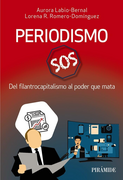
Periodismo SOS: Del filantrocapitalismo al poder que mata
Madrid: Ediciones Pirámide (2022), 232 pp.
"Las autoras desarrollan una investigación para encontrar los orígenes del filantroperiodismo como un nuevo escenario laboral. Al igual que la persecución de los poderes extralegales a los periodistas que cuentan la realidad. Como consecuencia, el libro desarrolla un análisis de la situación de
...
Journalism and Mental Health: Ugandan Journalists’ Perspectives
In: COVID-19 and the Media in Sub-Saharan Africa: Media Viability, Framing and Health Communication
Leeds: Emerald Publishing (2022), pp. 147-162
"In the midst of a public health crisis like the COVID-19 pandemic, journalists play an important role of sharing information of consequence with the public. As first responders to precarious events, they work in close proximity to the threat they are reporting on yet at the same time struggle with
...

State of Mental Health in Kenyan Media
Nairobi: Media Council of Kenya (2022), vi, 28 pp.
"From the findings of the survey, it emerges that mental issues are widespread among journalists. It is notable and concerning that among the respondents, there is generally a significant percentage of them who either lack knowledge on issues of mental health, or for those that have knowledge and ca
...

A Mental Health Guide for Journalists Facing Online Violence
Key Guides
International Women's Media Foundation (IWMF) (2022), 32 pp.
"This guide is designed to provide journalists with support for mental health conditions arising from online violence. The first part of the guide explains the psychological reasons why online abusers target media workers and lays out what happens to both the body and the mind when you are attacked
...

Economic crisis and trauma journalism: Assessing the emotional toll of reporting in crisis-ridden countries
Communications: The European Journal of Communication Research, volume 47, issue 3 (2022), pp. 350-374
"This article discusses the relationship between the post-2008 global economic crisis and trauma journalism through a quantitative study of reporters covering austerity’s everyday manifestations and examines the effects on the media professionals involved. The findings indicate that journalists wh
...
Journalists, harassment, and emotional labor: The case of women in on-air roles at US local television stations
Journalism, volume 23, issue 1 (2022), pp. 79-97
"At a time of growing threats to the press worldwide, including in supposedly ‘safe’ developed democracies, this article explores the nature of harassment perpetrated by strangers, one-time sources, and viewers against women broadcast journalists working at US local television stations. The stud
...
Why collective resilience in journalism matters: A call to action in global media development
Journal of Applied Journalism & Media Studies, volume 11, issue 2 (2022), pp. 163-188
"The COVID-19 pandemic, global economic downturn, anti-press violence and worsening situation of labour precarity for journalists around the world have led to increased stress, trauma and burnout in the profession, which raises questions at the heart of media sustainability and approaches to media d
...
