
Filter
91
Featured
90
5
2
Topics
24
19
16
11
10
10
9
7
7
6
6
6
5
5
4
3
3
3
3
3
3
2
2
2
2
2
2
2
2
2
2
2
2
2
2
2
2
2
2
2
1
1
1
1
1
1
1
1
1
1
1
1
1
1
1
1
1
1
1
1
1
1
1
1
1
1
1
1
1
1
1
1
1
1
1
1
1
1
1
1
1
1
1
1
1
1
1
1
1
1
1
1
1
1
1
1
1
1
1
1
1
1
1
1
1
1
1
1
1
1
Language
Document type
20
6
2
2
2
2
1
1
1
1
1
Countries / Regions
Authors & Publishers
Media focus
Publication Years
Methods applied
Journals
Output Type

Transparencia de la moderación privada de contenidos: Una mirada de las propuestas de sociedad civil y legisladores de América Latina
Montevideo: UNESCO (2022), 41 pp.
"Se han encontrado importantes y fundados aportes desde organizaciones de la Sociedad Civil sobre el tema, con consensos sobre los principales contenidos de las exigencias de transparencia y rendición de cuentas que deberían atender las grandes plataformas de Internet -en especial las dominantes y
...
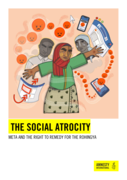
The social atrocity: Meta and the right to remedy for the Rohingya
London: Amnesty International (2022), 72 pp.
"Beginning in August 2017, the Myanmar security forces undertook a brutal campaign of ethnic cleansing against Rohingya Muslims in Myanmar’s Northern Rakhine State. A UN investigation found that the role of Facebook in the violence was “significant”. This report is based on an in-depth investi
...

Social Media and the Information War in the Balkans
Brussels: Balkan Free Media Initiative (BFMI) (2022), 52 pp.
"This report examines the destabilizing effects of social media in two key places in the Balkans: Serbia and Republika Srpska, the majority Serb entity of Bosnia and Herzegovina (BiH). The leaders of both – President Aleksandar Vucic in Serbia and President Milorad Dodik in Republika Srpska – ar
...

Content Moderation and Local Stakeholders in Kenya
Article 19; UNESCO (2022), 83 pp.
"This report specifically looks at the situation of local actors who, while they are impacted by the circulation of harmful content on social media or the moderation thereof, often find themselves unable to take effective action to improve their situation in that respect." (Introduction)

"Wait, Who's Timothy McVeigh"? A Translation Review of Facebook and YouTube Content Moderation Policies in Amharic, Arabic, Bengali, and Hindi
Localization Lab; Internews (2022), 54 pp.
"The report documents the quality and usability of Facebook and YouTube content moderation policies in four languages. It found that the translations of Facebook and YouTube's content moderation policies in these languages are far below a standard that would be considered acceptable by the average u
...

Regulating Harmful Content in Indonesia: Legal Frameworks, Trends, and Concerns
Yogyakarta: Center for Digital Society (2022), xi, 120 pp.
"Publication and dissemination of harmful content are constituted as criminal offenses according to Indonesian regulation. Consequently, all harmful content could be criminally prosecuted [...] Several terms used in the regulations are too broad (e.g., morality, public order, etc.) and may cause mul
...
The Online Regulation Series: The Handbook
Tech Against Terrorism (2021), 170 pp.
"The Online Regulation Series Handbook provides an analysis of global online regulation, analysing over 60 legislations and regulatory proposals in 17 countries, and their implications for countering terrorist and violent extremist content. The Handbook is based on analysis published throughout Octo
...
No Excuse for Abuse: What Social Media Companies Can Do Now to Combat Online Harassment and Empower Users
PEN America (2021), 7 pp.
"To ensure that social media becomes safer, more open, and more equitable for all users, platforms like Twitter, Facebook, and Instagram must prioritize curbing online harassment. In this report, PEN America proposes concrete, actionable changes that social media companies should make immediately to
...
La protección del espacio cívico en línea: Un repaso a las amenazas actuales a la libertad de expresión en internet
Asociación por los Derechos Civiles (ADC) (2021), 32 pp.
"La Asociación por los Derechos Civiles (ADC) tiene la misión de defender los derechos fundamentales mediante la contribución al diseño de políticas por parte del sector público y privado. Las respuestas de los gobiernos deben promover un espacio público amplio y robusto en internet. Este deb
...

Counter-Terrorism, Social Media and the Regulation of Extremist Content
"As highlighted above, the development and refinement of counter-terrorism policies and practices by social media and technology companies has come about as a function of the evolving nature of terrorist and extremist entities’ exploitation of said platforms. The challenges highlighted above, name
...
Watching the Watchmen: Content Moderation, Governance, and Freedom of Expression
London: Article 19 (2021), 86 pp.

Taming Big Tech: A Pro-Competitive Solution to Protect Free Expression
London: Article 19 (2021), 42 pp.
"In this policy, ARTICLE 19 outlines how open markets, competition, and users’ empowerment can help address current freedom of expression challenges in online content curation. We offer practical solutions on how to achieve these objectives through a pro-competitive instrument: the unbundling of t
...

Ill Advice: A Case Study in Facebook’s Failure to Tackle COVID-19 Disinformation
London: Institute for Strategic Dialogue (ISD) (2021), 34 pp.
"Despite detailed policies on mis- and disinformation and promises to enforce them, social media platforms are failing to tackle prominent groups and individuals who spread false claims about COVID-19 and vaccines online. Using the World Doctors Alliance1 as a case study, a group that has spread var
...
The "Hate Speech" Policies of Major Platforms During the COVID-19 Pandemic
Montevideo: UNESCO Office Montevideo and Regional Bureau for Science in Latin America and the Caribbean (2021), 32 pp.
"This document reports an increase in so-called “hate speech” posts on Facebook, Twitter, and YouTube after the onset of the COVID-19 pandemic. Although dissimilar, such an increase can be observed in the transparency reports of the different platforms and the surge in content moderation since M
...
Report on the Facebook Third-Party Fact-Checking Programme
London: Full Fact (2020), 33 pp.
"Full Fact first started working with Facebook on the Third-Party Fact-Checking programme in January 2019. When we joined the programme we committed to reporting regularly on its operation. Our first report, published in July 2019, covered January to June 2019.1 This second report details our experi
...
Social Media Codes of Conduct: Reflections for Mediators
Centre for Humanitarian Dialogue (2020), 8 pp.
"This article summarises preliminary reflections for mediators on social media codes of conduct. Such codes of conduct, to be agreed upon by conflict stakeholders, would aim to prevent and mitigate the use of social media to exacerbate conflicts or jeopardise peace processes. Such codes of conduct w
...
Who Moderates the Social Media Giants? A Call to End Outsourcing
New York: New York University Stern Center for Business and Human Rights (2020), 28 pp.
"Content moderation—the process of deciding what stays online and what gets taken down— is an indispensable aspect of the social media industry. Without it, online platforms would be inundated not just by spam, but by personal bullying, neo-Nazi screeds, terrorist beheadings, and child sexual ab
...
Between ‘filter bubbles’ and community leaders: An exploratory study of Facebook groups for Russophones/Russians in the Netherlands
Journal of Global Diaspora & Media, volume 1, issue 1 (2020), pp. 89-105
"Through an exploration of Facebook groups designed for Russophones and Russians in the Netherlands, this study considers online community belonging negotiations. In doing so, the article aims to address the role of online administrators (admins) in online community construction, seeking to enrich t
...
Working Group on Infodemics: Policy Framework
Key Guides
Forum on Information & Democracy (2020), 127 pp.
"The Forum on Information & Democracy proposes a number of policy steps to democratic governments and their supporters. Transparency and accountability need to be shored up and content moderation should be done according to democratic mandates and oversight. The impact of new platforms where disinfo
...
