
Filter
361
Featured
265
19
5
Topics
52
42
34
31
29
28
23
19
18
15
15
14
14
14
12
12
12
12
11
11
10
9
8
8
8
8
8
8
8
8
8
7
7
7
7
7
7
7
6
6
6
6
6
6
6
6
6
6
6
6
6
5
5
5
5
5
5
5
5
5
5
5
5
5
5
5
5
5
4
4
4
4
4
4
4
4
4
4
4
4
4
3
3
3
3
3
3
3
3
3
3
3
3
3
3
3
3
3
3
3
3
3
3
3
3
3
3
3
3
3
2
2
2
2
2
2
2
2
2
2
2
2
2
2
2
2
2
2
2
2
2
2
2
2
2
2
2
2
2
2
2
2
2
2
2
2
2
2
2
2
2
2
2
2
2
2
2
2
2
2
2
2
2
2
2
2
2
2
2
2
2
2
2
2
2
2
2
2
2
1
1
1
1
1
1
1
1
1
1
1
1
1
1
1
1
1
1
1
1
1
1
1
1
1
1
1
1
1
1
1
1
1
1
1
1
1
1
1
1
1
1
1
1
1
1
1
1
1
1
1
1
1
1
1
1
1
1
1
1
1
1
1
1
1
1
1
1
1
1
1
1
1
1
1
1
1
1
1
1
1
1
1
1
1
1
1
1
1
1
1
1
1
1
1
1
1
1
1
1
1
1
1
1
1
1
1
1
1
1
1
1
1
1
1
1
1
1
1
1
1
1
1
1
1
1
1
1
1
1
1
1
1
1
1
1
1
1
1
1
1
1
1
1
1
1
1
1
1
1
1
1
1
1
1
1
1
1
1
1
1
1
1
1
1
1
1
1
1
1
1
1
1
1
1
1
1
1
1
1
1
1
1
1
1
1
1
1
1
1
1
1
1
1
1
1
1
1
1
1
1
1
1
1
1
1
1
1
1
1
1
1
1
1
1
1
1
1
1
1
1
1
1
1
Language
Document type
59
11
10
10
9
8
6
5
4
4
3
1
1
Countries / Regions
Authors & Publishers
Media focus
Publication Years
Methods applied
Journals
Output Type

Digital Divide: Who in Africa is Connected and Who is Not
Deep Insights
Afrobarometer (2022), 22 pp.
"Afrobarometer finds that most Africans own a mobile phone and have access to a mobile phone network. However, fewer than half own a mobile phone with Internet access, and even fewer have access to a computer. This translates to low levels of Internet use in many countries. Lack of Internet access a
...

Social media use, stress, and coping
Science Direct, volume 45, issue 101305 (2022), 7 pp.
"In this review, we systematize work on the relationship between social media use and stress by providing a functional perspective that distinguishes between three functions that social media can have in the stages of the stress-coping process: as stressors, as resources, and as coping tools. Curren
...
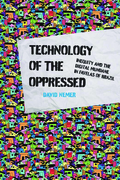
Technology of the Oppressed: Inequity and the Digital Mundane in Favelas of Brazil
Cambridge, Mass.: MIT Press (2022), xi, 218 pp.
"David Nemer draws on extensive ethnographic fieldwork to provide a rich account of how favela residents engage with technology in community technology centers and in their everyday lives. Their stories reveal the structural violence of the information age. But they also show how those oppressed by
...
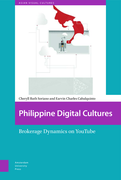
Philippine Digital Cultures: Brokerage Dynamics on YouTube
Amsterdam: Amsterdam University Press (2022), 240 pp.
"Amid the proliferation of a range of new and ubiquitous online platforms, YouTube, a video-based platform, remains a key driver in the democratisation of creative, playful, vernacular, intimate, as well as political expressions. As a critical node of contemporary communication and digital cultures,
...

Digital 2022: Global Overview Report
We Are Social; Hootsuite (2022), 300 slides
"Double-digit annual growth has taken the global social media user figure to 4.62 billion, and current trends indicate that it will equal 60 percent of the world’s total population within the next few months. COVID-19 continues to hamper research into internet adoption though, resulting in reporti
...

Spuren digitaler Artikulationen: Interdisziplinäre Annäherungen an soziale Medien als kultureller Bildungsraum
Bielefeld: transcript Verlag (2022), 226 pp.
"Beinahe täglich posten oder liken wir etwas auf Twitter, Facebook oder Instagram. Als Orte direkter Kommunikation und Interaktion sind die Sozialen Medien längst zu Plattformen für die Verhandlung und Verbreitung kultureller Ausdrucksformen unseres Alltags geworden. Doch bei näherer Betrachtung
...
Reuters Institute Digital News Report 2022
Oxford: Reuters Institute for the Study of Journalism (2022), 161 pp.
"Trust in the news has fallen in almost half the countries in our survey, and risen in just seven, partly reversing the gains made at the height of the Coronavirus pandemic. On average, around four in ten of our total sample (42%) say they trust most news most of the time. Finland remains the countr
...
¿Hay concentración en internet en América Latina? El caso Uruguay
Montevideo: Observacom; Friedrich-Ebert-Stiftung (FES) (2022), 16 pp.
"El análisis de la información disponible sobre ocho indicadores de concentración en Internet en Uruguay muestra que en casi todas ellas unas pocas empresas tienen una posición dominante en el mercado o servicio relevado." (Conclusiones, página 16)
Snap Judgements: How Audiences Who Lack Trust in News Navigate Information on Digital Platforms
Oxford: Reuters Institute for the Study of Journalism (2022), 43 pp.
"In this report, we qualitatively examine how audiences who lack trust in most news organisations in their countries navigate the digital information environment, especially how they make sense of the news they encounter while using social media, messaging applications, or search engines. Drawing on
...
E-learning in Thailand: Mapping the digital divide
Geneva: ITU (2022), xi, 53 pp.
"The study's primary objectives were to assess the state of data on access to digital devices and connectivity in schools in Thailand, which are crucial enablers for e-learning initiatives, and to map the state of access to and use of these devices and connectivity so as to identify potential gaps.
...

Misinformation Across Digital Divides: Theory and Evidence from Northern Ghana
African Affairs, volume 121, issue 483 (2022), pp. 161-195
"Social media misinformation is widely recognized as a significant and growing global problem. Yet, little is known about how misinformation spreads across broader media ecosystems, particularly in areas with varying internet access and connectivity. Drawing on research in northern Ghana, we seek to
...

Why’s Everyone on TikTok Now? The Algorithmized Self and the Future of Self-Making on Social Media
Social Media + Society, volume 8, issue 1 (2022), pp. 1-11
"The video-sharing social media platform TikTok has experienced a rapid rise in use since its release in 2016. While its popularity is undeniable, at the first glance, it seems to offer features already available on previously existing and wellestablished platforms such as Instagram, YouTube, and Fa
...

Social media use and well-being: What we know and what we need to know
Science Direct, issue 45 : 101294 (2022), 8 pp.
"Research into the impact of social media use (SMU) on wellbeing (e.g., happiness) and ill-being (e.g., depression) has exploded over the past few years. From 2019 to August 2021, 27 reviews have been published: nine meta-analyses, nine systematic reviews, and nine narrative reviews, which together
...

Conflict and Online Space in the Sahel: Challenges and Recommendations
Brussels: Search for Common Ground (2022), 5 pp.
"With the growth of new social media users across the Sahel, existing conflict dynamics are increasingly manifesting. Sahelians are entering a complex digital space. The ability of individuals and communities to adapt to online/offline conflict dynamics will define the future of conflict in the regi
...

"To illustrate the dynamics of the digital information ecosystem and how disinformation is seeded within this environment, Rappler explored cascades around the following themes: war on drugs, attacks against the press, and messaging around Martial Law and authoritarian rule. The themes were selected
...

Les politiciens et les usagers des réseaux sociaux sont les plus susceptibles de diffuser des nouvelles qu'ils savents fausses, selon les Nigériens
Afrobarometer (2022), 5 pp.
"Les Nigériens sont majoritaires à penser que les politiciens et les partis politiques (63%) et les usagers des réseaux sociaux (57%) diffusent "souvent" ou "quelque fois" des informations qu'ils savent fausses. Des grandes majorites des citoyens nigeriens estiment que le gouvernement devrait pou
...

Promise and peril: In changing media landscape, Africans are concerned about social media but opposed to restricting access
Afrobarometer (2022), 22 pp.
"Radio remains overwhelmingly the most common source for news in Africa. On average across 34 surveyed countries, two-thirds (68%) of respondents tune in at least a few times a week. Digital media use for news is growing quickly. Between 2014/2015 and 2019/2021, the share of Africans who get news fr
...


Social Media Usage During Covid-19 Pandemic: Beneficial or Injurious to Public Health in Nigeria?
Abuja Journal of Philosophy and Theology (APT), volume 11 (2021), pp. 67-82
"Before the outbreak of COVID-19 from the city of Wuhan, China in December 2019, many people across the globe, Nigerians inclusive already relied on social media to gather and disseminate information and news. Since the outbreak of the virus on February 27th, 2020 in Nigeria, people have depended on
...

"This Information Ecosystem Assessment documents how information around the COVID-19 pandemic is produced, consumed, and shared in Sudan contributing to the existence of multiple and overlapping information sub-systems within the supply side of the broader ecosystem. The findings show how the centra
...
