
Filter
57
Featured
29
3
Topics
18
10
8
7
6
6
5
5
5
5
4
4
3
3
3
3
3
3
3
2
2
2
2
2
2
2
2
2
2
2
2
2
2
2
2
2
1
1
1
1
1
1
1
1
1
1
1
1
1
1
1
1
1
1
1
1
1
1
1
1
1
1
1
1
1
1
1
1
1
1
1
1
1
1
1
1
1
1
1
1
1
1
1
1
1
1
1
1
1
1
1
1
1
1
1
1
1
1
1
1
1
1
1
1
1
1
1
1
1
1
1
1
1
1
1
1
1
1
1
Language
Document type
2
2
2
1
1
1
Countries / Regions
Authors & Publishers
Media focus
Publication Years
Methods applied
Journals
Output Type
Opening Closed Regimes: Civil Society, Information Infrastructure, and Political Islam
In: Digital Media and Political Engagement Worldwide: A Comparative Study
New York: Cambridge University Press (2012), pp. 200-220
"Ruling elites often try to co-opt civil society groups, and in times of political or military crises they can attempt to control the national information infrastructure. But a defining feature of civil society is independence from the authority of the state, even in countries such as Saudi Arabia a
...

Politik und Internet in Lateinamerika
St. Augustin; Berlin: Konrad-Adenauer-Stiftung (KAS) (2012), 118 pp.

Digitale Herausforderung: Internationale Beziehungen in Zeiten / Web 2.0
Göttingen: Steidl; Institut für Auslandsbeziehungen (ifa) (2012), 188 pp.
"Der arabische Frühling war nicht nur der Beginn eines gesellschaftlichen und politischen Umwälzungsprozesses in Nordafrika, sondern auch der Startpunkt einer neuen außenpolitischen Ära im Zeichen / Web 2.0. Auch wenn die Bedeutung der Mobiltelefone und sozialen Medien, mit der die Oppositionell
...

¿Cómo diseñar campañas políticas exitosas? Una mirada estratégica a las campañas ganadoras de los últimos tiempos
Quito: CIESPAL (2012), 249 pp.
"Tres son los principales objetivos de la presente obra: 1. El primero consiste en poner al alcance de los ciudadanos de América Latin a los conocimientos y herramientas indispensables para que comprendan de mejor manera la forma en que la Comunicación Política incide, en mayor o menor medida, en
...

A Buzz in Cyberspace, But no Net-Revolution: The Role of the Internet in Singapore’s 2011 Elections
Berlin: Friedrich-Ebert-Stiftung (FES) (2012), 44 pp.
"The May 2011 general election has been the most contested and most discussed in Singapore’s history. Prior to the polls, the government relaxed the rules on election campaigning in the Internet. For the first time in the highly wired city-state with its tech-savvy population of 5 million people,
...
Tackling Ideological Clashes: Positional Cultural Identification in Political Commentaries by Chinese Overseas Online Commentators
International Communication Gazette, volume 74, issue 6 (2012), pp. 540-555
"This investigation is about how Chinese overseas online commentators (COOCs) respond to political discourses on China. COOCs present the ideological heterogeneity of Chinese overseas. Their diverse responses to different ideological debates show patterns that manifest how the Chinese diaspora enact
...

Can it Tweet its Way to Democracy? The Promise of Participatory Media in Africa
Oxford: Reuters Institute for the Study of Journalism (2011), 103 pp.
Offers a policy-focused overview of the state of online political participatory media in Tunisia, Egypt, Ethiopia, Eritrea and Uganda.
Predicting Political Discussion in a Censored Virtual Environment
Political Communication, volume 28, issue 3 (2011), pp. 341-356
"Contrary to the optimistic view that the Internet would promote democracy in authoritarian countries like China, the pervasive political apathy among younger generations calls for a closer examination of micro-level individual political participation. This study contributes to the nascent body of e
...
From Steamed Bun to Grass Mud Horse: E Gao as Alternative Political Discourse on the Chinese Internet
Global Media and Communication, volume 7, issue 1 (2011), pp. 33-51
"This article examines e gao (online spoofs) as a popular form of political expression which has recently emerged on the Chinese internet. I first introduce a cultural approach to internet-mediated political communication that emphasizes discursive integration and the mutual constitution of communic
...

El periodismo es noticia: Tendencias sobre comunicación en el siglo XXI
Quito: CIESPAL (2011), 125 pp.
"[...] La mayoría de los asuntos que se a bordan en este libro han podido afectar a la gran mayoría de los probables lectores, sin embargo la mayoría de ellos no se detuvieron a analizarlos. Esta obra pretende obligarnos a parar un instante y pensar sobre diversas cuestiones relacionadas con los
...


Política e Internet en América Latina
Diálogo Político, volume 28, issue 2 (2011), pp. 13-121

Mucho ciberactivismo ... pocos votos: Antanas Mockus y el Partido Verde colombiano
Nueva Sociedad, issue 235 (2011), pp. 74-89
"El ex-alcalde de Bogotá Antanas Mockus y su «ola verde» constituyeron un auténtico caso de ciberactivismo en la campaña presidencial colombiana de 2010. Una ilusión democrática creada en internet convocó a jóvenes y ciudadanos sofisticados a cambiar un país sobre la base de la promesa de
...

Bürger online: Die Entwicklung der politischen Online-Kommunikation in Deutschland
Bonn: Bundeszentrale für politische Bildung (bpb) (2011), 345 pp.
"Wie hat das Internet die individuelle politische Kommunikation von Bürgerinnen und Bürgern verändert? Und welche konkreten Entwicklungen sind zu beobachten? Das von 2002 bis 2009 laufende DFG-Projekt »Politische Online-Kommunikation« geht diesen Fragen nach: Auf der Grundlage einer breit angel
...
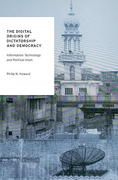
The Digital Origins of Dictatorship and Democracy: Information Technology and Political Islam
Oxford; New York: Oxford University Press (2010), xii, 285 pp.
"Around the developing world, political leaders face a dilemma: the very information and communication technologies that boost economic fortunes also undermine power structures. Globally, one in ten internet users is a Muslim living in a populous Muslim community. In these countries, young people ar
...
Internet und Politik in Lateinamerika: Costa Rica
Frankfurt am Main: Vervuert (2002), 82 pp.
Asien und das Internet
Hamburg: Institut für Asienkunde (2002), 254 pp.
