Filter
83
Breadcrumb:
GSMA
Featured
83
5
1
Topics
18
18
12
11
7
7
7
6
5
5
4
4
3
2
2
2
2
2
2
2
2
2
1
1
1
1
1
1
1
1
1
1
1
1
1
1
1
1
1
1
1
1
1
1
1
1
1
1
1
1
1
1
1
1
1
1
1
1
1
1
1
1
1
1
1
1
1
1
Language
Document type
13
9
6
5
5
4
3
3
2
1
1
Countries
Authors & Publishers
Media focus
Publication Years
Methods applied
Output Type
The State of Mobile Internet Connectivity 2022
London: GSMA (2021), 76 pp.
"Mobile internet use has reached 55% of the world's population. By the end of 2021, 4.3 billion people were using mobile internet, an increase of almost 300 million since the end of 2020. Growth in mobile internet adoption has almost entirely been driven by people living in low- and middle-income co
...

Building and Strengthening Digital Ecosystems in Humanitarian Contexts
London: GSMA (2021), 24 pp.
The Mobile Gender Gap Report 2021
London: GSMA (2021), 65 pp.
"1. Women’s access to mobile internet continues to increase across low- and middle-income countries, while mobile ownership remains relatively flat: 83 per cent of women own a mobile phone and 58 per cent use mobile internet. Women are also more likely than men to access the internet exclusively o
...
National Emergency Telecommunications Plans: Enablers and Safeguards. A Brief Evaluation Guide for Policy Practitioners
London: GSMA (2021), 16 pp.
"Section 1 focuses on creating an enabling environment. Mobile network operators (MNOs) operate in a regulated environment.5 However, if this environment is not sufficiently enabling to support disaster preparedness, response and recovery, MNOs will encounter challenges when disaster strikes. This s
...
"This paper has shown the diverse application of digital technologies across the electronics value chain, from raw material production and EEE manufacturing to post-consumer e-waste collection, logistics and recycling. Around the world, there is growing interest in digital technologies - particularl
...

Plans nationaux pour les télécommunications d’urgence: Catalyseurs et garanties. Guide succinct d'évaluation à l’intention des spécialistes des politiques publiques
London: GSMA (2021), 16 pp.
"Ce guide a pour but d'aider à identifier les lacunes, les opportunités et les faiblesses du système afin de guider la définition d’une stratégie nationale plus cohérente et de positionner la téléphonie mobile comme appui aux activités de préparation, de réponse et de relèvement en cas
...

COVID-19 and Digital Humanitarian Action: Trends, Risks and the Path Forward
London: GSMA (2021), 36 pp.
Principles for Driving the Digital Inclusion of Persons with Disabilities
London: GSMA (2020), 16 pp.
Mobile for Development: Reducing Inequalities in Our World
London: GSMA (2020), 31 pp.
The Digital Exclusion of Women with Disabilities: A Study of Seven Low- and Middle-Income Countries
London: GSMA (2020), 43 pp.
"1. Women with disabilities have among the lowest rates of mobile and smartphone ownership. In most countries, ownership gaps are widest between men without disabilities and women with disabilities. Even in countries where the mobile gender gap is small or nonexistent, there is still a disability ga
...
Reaching 50 Million Women with Mobile: A Practical Guide
London: GSMA; Altai Consulting (2020), 41 pp.
"The persistent gender gap in mobile access and use is already well documented, as are the significant benefits of closing it. Across low- and middle-income countries today, women are eight per cent less likely than men to own a mobile phone, 20 per cent less likely to use mobile internet and 33 per
...
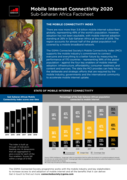
"There are now more than 3.8 billion mobile internet subscribers globally, representing 49% of the world’s population. However, adoption has not been equitable, with mobile internet adoption standing at 26% in Sub-Saharan Africa at the end of 2019. The region accounts for almost half of the global
...
Human-Centred Design in Humanitarian Settings: Methodologies for Inclusivity
Key Guides
London: GSMA (2020), 40 pp.
"To ensure that mobile solutions are designed inclusively in humanitarian contexts, it is important that target users are involved as co-creators of the future they want. A human-centred design approach is one way to ensure that users’ perspectives are fully integrated into programme design. This
...

The Mobile Disability Gap Report 2020
London: GSMA (2020), 31 pp.
A Monitoring, Evaluation and Learning (MEL) Framework for Humanitarian Innovation Programmes
London: GSMA (2020), 18 pp.
Human Rights Guidance for the Mobile Industry
London: GSMA (2020), 23 pp.
"The aim of this document is to provide an introduction for companies to consider the relevance of the following issues for their operations, as well as inspiration and resources to begin to formalise their management of human rights. It is recognised that many of these issues cannot be solved by on
...