
Filter
142
Featured
119
3
Topics
67
48
43
40
39
39
39
37
33
30
28
28
28
27
25
24
23
21
21
20
20
19
19
18
17
17
17
17
13
9
9
8
8
7
7
7
6
6
6
5
5
5
5
5
5
5
4
4
4
4
3
3
3
3
3
2
2
2
2
2
2
2
2
2
2
2
2
2
2
2
1
1
1
1
1
1
1
1
1
1
1
1
1
1
1
1
1
1
1
1
1
1
1
1
1
1
1
1
1
1
1
1
1
1
1
1
1
1
1
1
1
1
1
1
1
1
1
1
1
1
1
1
1
1
1
1
1
1
1
1
1
1
1
1
1
1
1
1
1
1
1
1
1
Language
Document type
113
25
10
9
4
3
1
1
Countries
Authors & Publishers
Media focus
Publication Years
Methods applied
Journals
Output Type

Mapping Digital Media: Digital Media, Conflict and Diasporas in the Horn of Africa
London: Open Society Foundations, Open Society Media Program (2012), 23 pp.
"The Horn of Africa is one of the least connected regions in the world. Nevertheless, digital media play an important social and political role in Eritrea, Ethiopia, and Somalia (including South-Central Somalia and the northern self-declared independent Republic of Somaliland). This paper shows how
...

Mapping Digital Media: Peru
London: Open Society Foundations, Open Society Media Program (2012), 94 pp.
"As with other countries in the region, Peru shows high levels of media concentration. Digitization has not yet aff ected the dominant positions in the Peruvian mass media market. On the contrary, the largest media groups’ hegemonic position has grown stronger. For example, the influence of Grupo
...

Mapping Digital Media: Nigeria
London: Open Society Foundations, Open Society Media Program (2012), 94 pp.
"Only 40 percent of Nigerians had access to a television in 2008 according to the International Telecommunication Union, and radio is still the dominant medium, reaching three-quarters of households. Both commercial and state broadcasters favor urban audiences and those in the south of the country.
...

Mapping Digital Media: Chile
London: Open Society Foundations, Open Society Media Program (2012), 127 pp.
"Overall, digitization has only partly impacted on the media landscape in Chile. It has neither altered the neoliberal trajectory of media policy, nor reduced high levels of ownership concentration and incumbent advantages. But there is, at the very least, a framework in place that will potentially
...

Mapping Digital Media: News and New Media in Central Africa. Challenges and Opportunities
London: Open Society Foundations, Open Society Media Program (2012), 65 pp.
"In this report, Marie-Soleil Frère surveys the news landscapes of DRC, Burundi, and Rwanda. Marshaling an impressive range of data, she examines patterns of production and consumption, the often grim realities of law and regulation, the embryonic state of media policy, the role of donors, and the
...

Mapping Digital Media: South Africa
London: Open Society Foundations, Open Society Media Program (2012), 120 pp.
"Developments in digital media in South Africa are densely intertwined with political factors. The Government has sought to be the driver of digitization, but it has also caused repeated delays in digital roll-out. In addition, the Government has had contradictory interests such as promoting competi
...

Mapping Digital Media: India
London: Open Society Foundations, Open Society Media Program (2012), 155 pp.
"The United Nations pointed out in 2010 that more Indians have access to a mobile phone than to a toilet. There are over 800 million mobile connections, although the number of unique users (excluding inactive connections) is estimated at around 600 million. Together with the fact that 60 percent of
...

Mapping Digital Media: Georgia
London: Open Society Foundations, Open Society Media Program (2012), 101 pp.
"This report finds that the momentous change in ownership transparency regulation and the dynamic and free online environment are the most notable success stories since 2005. Yet these achievements are overshadowed by the lack of independence of the broadcasting regulator and the public broadcaster,
...

Mapping Digital Media: Argentina
London: Open Society Foundations, Open Society Media Program (2012), 100 pp.

Mapping Digital Media: Turkey
London: Open Society Foundations, Open Society Media Program (2012), 81 pp.

Mapping Digital Media: Romania
London: Open Society Foundations, Open Society Media Program (2011), 90 pp.

Mapping Digital Media: Thailand
London: Open Society Foundations, Open Society Media Program (2011), 80 pp.

Mapping Digital Media: Serbia
London: Open Society Foundations, Open Society Media Program (2011), 90 pp.
"Serbia has a strategy for switching over from analog to digital broadcasting, prepared with broad public consultation. The basic legal framework is in place, but implementation is not yet underway. Moreover, if fair access to digital licenses is to be ensured, a new media law—harmonized with the
...

Mapping Digital Media: Latvia
London: Open Society Foundations, Open Society Media Program (2011), 99 pp.

Mapping Digital Media: Moldova
London: Open Society Foundations, Open Society Media Program (2011), 117 pp.
"In Moldova, the combination of digitization and political change has increased the diversity of media outlets and their news, the plurality of opinions, and the transparency of public institutions, while it has diminished political interference in the media. Yet the lack of independence of regulato
...
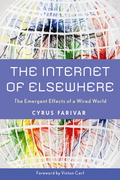
The Internet of Elsewhere: The Emergent Effects of a Wired World
New Brunswick, New Jers.: Rutgers University Press (2011), xiii, 239 pp.
"Cyrus Farivar explores the Internet's history and effects in four distinct and, to some, surprising societies—Iran, Estonia, South Korea, and Senegal. He profiles Web pioneers in these countries and, at the same time, surveys the environments in which they each work [...] Skype was invented in Es
...

Mapping Digital Media: Lithuania
London: Open Society Foundations, Open Society Media Program (2011), 88 pp.
"The explosion of digital media and their impact on journalism and democracy in Lithuania coincided with the country's second decade of independence and with the economic crisis of 2009-2010. With the rapid growth of internet penetration, websites dedicated to news appeared and traditional media wen
...

Mapping Digital Media: Morocco
London: Open Society Foundations, Open Society Media Program (2011), 86 pp.

Mapping Digital Media: Mexico
London: Open Society Foundations, Open Society Media Program (2011), 86 pp.

Internet in China
Innsbruck: Innsbrucker Diskussionspapiere zu Politik, Religion und Kunst (IDPRK) (2010), 30 pp.
"Mit geschätzten 400 Millionen Internetnutzern (Juni 2010) ist die VR China vor den USA der größte nationale Internetmarkt. Nach den USA und Japan bildet China den weltweit drittgrößten Markt fur Informations- und Kommunikationstechnologien. Die drei an der US-amerikanischen Nasdaq-Borse gehand
...
