
Filter
255
Featured
214
10
5
Topics
82
69
35
33
31
30
30
26
25
24
22
21
21
21
21
20
20
20
17
17
17
17
16
16
16
14
14
14
14
9
9
9
8
7
6
6
6
5
5
5
5
5
5
5
4
4
4
4
4
4
4
4
4
4
4
4
4
4
4
4
3
3
3
3
3
3
3
3
3
3
3
3
3
3
3
3
3
3
3
3
2
2
2
2
2
2
2
2
2
2
2
2
2
2
2
2
2
2
2
2
2
2
2
2
2
2
2
2
2
2
2
2
2
2
2
2
2
1
1
1
1
1
1
1
1
1
1
1
1
1
1
1
1
1
1
1
1
1
1
1
1
1
1
1
1
1
1
1
1
1
1
1
1
1
1
1
1
1
1
1
1
1
1
1
1
1
1
1
1
1
1
1
1
1
1
1
1
1
1
1
1
1
1
1
1
1
1
1
1
1
1
1
1
1
1
1
1
1
1
1
1
1
1
1
1
1
1
1
1
1
1
1
1
Language
Document type
71
31
30
27
23
22
17
15
8
8
3
2
2
1
1
Countries
Authors & Publishers
Media focus
Publication Years
Methods applied
Journals
Output Type
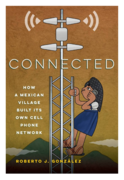
Connected: How a Mexican Village Built its Own Cell Phone Network
Oakland, Calif.: University of California Press (2020), xiii, 259 pp.
"This is the true story of how, against all odds, a remote Mexican pueblo built its own autonomous cell phone network – without help from telecom companies or the government. Anthropologist Roberto J. González paints a vivid and nuanced picture of life in a Oaxaca mountain village and the collect
...

"First unveiled in 2015, the Digital Silk Road (DSR) component of China’s Belt and Road Initiative (BRI) has attracted more political and commercial attention as technology-related tensions between the US and China have risen. Whereas large-scale traditional infrastructure projects have so far bee
...

Digital Ecosystem Country Assessment (DECA): Colombia
USAID, Digital Frontiers Project (2020), 43 pp.
"[...] The DECA is a decision-making tool to help USAID Missions, their partners, and other relevant stakeholders identify the opportunities, maximize the benefits, and manage the risks associated with digital technology. The goal is to help USAID’s partner countries along their journey to self-re
...
Human Rights Guidance for the Mobile Industry
London: GSMA (2020), 23 pp.
"The aim of this document is to provide an introduction for companies to consider the relevance of the following issues for their operations, as well as inspiration and resources to begin to formalise their management of human rights. It is recognised that many of these issues cannot be solved by on
...
The Last-mile Internet Connectivity Solutions Guide: Sustainable Connectivity Options for Unconnected Sites
Geneva: ITU (2020), xviii, 137 pp.
"There are several overarching reasons why billions of people remain offline, ranging from a lack of network infrastructure availability and affordable Internet services to gaps in skills and ability, the availability and cost of personal devices, and a perceived lack of relevancy. For example, over
...

Digital Regulation Handbook
Geneva: ITU (2020), xvi, 199 pp.
Measuring Digital Development: Facts and Figures
Geneva: ITU (2020), 17 pp.
"Facts and Figures 2020 reveals that people in rural areas continue to face greater challenges than people in urban areas in terms of remaining connected during the lockdown, especially in developing economies. Large swathes of the rural landscape are still not covered by mobile broadband networks,
...
Connecting humanity: Assessing investment needs of connecting humanity to the Internet by 2030
Geneva: ITU (2020), vi, 25 pp.
"Nearly USD 428 billion is required to achieve universal access to broadband connectivity by 2030 at the global level. This amount includes significant investment in infrastructure, investments to design and implement policy and regulatory frameworks that incentivize and promote growth in broadband
...
Media Influence Matrix: Pakistan. Technology, Public Sphere and Journalism
Budapest: Center for Media, Data and Society (CMDS) (2019), 20 pp.
"With particularly low internet penetration rates, intense state censorship and heavy Chinese investment, Pakistan presents elements of an authoritarian internet culture where surveillance is a barely-questioned norm, unless probed by civil society organizations or journalists. Social media giants s
...

The State of ICT in In Kenya
Cape Town: Research ICT Africa (2019), v, 41 pp.

The State of ICT in Mozambique 2018
Research ICT Africa (2019), iv, 15 pp.

Pooling Aid Sector Demand for Digital Public Goods: Lessons from Sizing Mobile Channel Demand in Sub-Saharan Africa
Digital Impact Alliance (dial); Altai Consulting (2019), 38 pp.
"We started by performing fieldwork in five countries, covering the four main SSA regions: the Democratic Republic of the Congo (DRC), Ghana, Malawi, Tanzania and Uganda. We then conducted 116 interviews across 78 organizations, covering the overall ecosystem: mobile network operators (MNOs), aggreg
...

Telecommunications Reclaimed: A Hands-On Guide to Networking Communities
Key Guides
Internet Society (2019), 255 pp.
"This book is a guide on how to build a community network, a shared local telecommunications infrastructure, managed as a commons, to access the internet and other digital communications services. It was written collectively by a group of community network pioneers in Europe, activists and researche
...

A Global South Perspective on Alternative Spectrum Policy
Cape Town: Research ICT Africa (2019), 32 pp.
Measuring Digital Development: Facts and Figures 2019
Geneva: ITU (2019), ii, 11 pp.
"Welcome to the first of ITU’s Measuring Digital Development series of statistical and analytical publications that replace the annual Measuring the Information Society Report. Facts and figures 2019 offers a snapshot of the most important ICT indicators, including estimates for the current year.
...
From Blogging to Digital Rights: Telecommunications Reform in Myanmar
In: Myanmar Media in Transition: Legacies, Challenges and Change
Singapore: ISEAS (2019), pp. 366-376
"The uptake of telecommunications technology in Myanmar has been nothing short of dramatic. After years of restricted access to information and freedom of expression, it has been a remarkable journey for civil society groups like MIDO to witness the growing interest and demand, especially among the
...

Connecting People. Transforming Nations
USAID (2019), 7 pp.
"Nearly 250 million people live in Indonesia. More than 80 percent of them have no access to the Internet. Access to broadband has the potential to transform individual lives, local communities, and entire nations. The last decade has seen exponential growth in Internet connectivity. Information and
...

Media Influence Matrix: Bulgaria. Technology, Public Sphere and Journalism
Budapest: Center for Media, Data and Society (CMDS) (2018), 24 pp.
"Technology plays an important role for news media distribution in Bulgaria: 88% of Bulgarians get their news online, first and foremost on the online platforms of popular television channels and their social network pages. Bulgarians are some of the most active social media users in the EU (ranked
...

"The 43 country reports included in this year’s Global Information Society Watch (GISWatch) capture the different experiences and approaches in setting up community networks across the globe. They show that key ideas, such as participatory governance systems, community ownership and skills transfe
...

The Little Data Book on Information and Communication Technology 2018
Washington, DC; Geneva: World Bank; ITU (2018), vi, 240 pp.
"In 2016, there were more than 7.3 billion mobile-cellular subscriptions worldwide. Globally, 3.5 billion people were using the Internet, of which 2.5 billion were from developing countries. Mobile-broadband subscriptions have risen constantly to reach 3.6 billion, while the number of fixed-broadban
...
