
Filter
115
Featured
95
3
3
Topics
39
30
30
24
21
6
5
5
4
4
4
4
3
3
3
2
2
2
2
2
2
2
2
2
2
2
2
2
2
1
1
1
1
1
1
1
1
1
1
1
1
1
1
1
1
1
1
1
1
1
1
1
1
1
1
1
1
1
1
1
1
1
1
1
1
1
1
1
1
1
1
1
1
1
1
1
1
1
1
1
1
1
1
1
1
1
1
1
1
1
1
1
1
1
1
1
1
1
1
1
1
1
1
1
1
1
1
1
1
1
1
1
1
1
1
1
1
1
1
1
1
1
1
1
Language
Document type
31
8
6
5
4
4
2
1
1
1
1
1
Countries
Authors & Publishers
Media focus
Publication Years
Methods applied
Journals
Output Type

Bridging Journalism’s Data Viz Accessibility Gap
Oxford: Reuters Institute for the Study of Journalism (2022), 28 pp.
"Making a visual format accessible for people who can’t see is challenging, but there’s a huge community already invested in working out viable solutions. The tension that remains for them is in receiving a clear mandate for this work from senior leaders within organisations. Accessibility champ
...
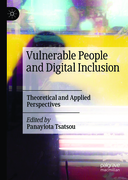
Vulnerable People and Digital Inclusion: Theoretical and Applied Perspectives
Cham: Palgrave Macmillan (2022), xxvii, 346 pp.
"This edited collection explores the role of digital inclusion in the welfare and social inclusion of vulnerable people. With interdisciplinary contributors from six continents, working in diverse fields such as digital media studies, social computing, community informatics and cultural studies, the
...
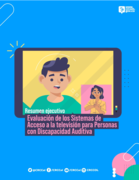
Evaluación de los sistemas de acceso a la televisión para personas con discapacidad auditiva. Resumen ejecutivo
Bogotá: Comisión de Regulación de Comunicaciones (CRCOM) (2022), 43 pp.
"Este documento está dividido en seis secciones, entre las cuales está la presente introducción, que incluye la matriz de consistencia que permitió establecer los objetivos orientadores del estudio, y continúa con la sección de análisis de los estándares e implementación de sistemas de acce
...

Representing Male Disability in Colombian Audiovisual Media: The Masking of Social and Political Intersections in 'Los Informantes'
Latin American Research Review (LARR), volume 57 (2022), pp. 867-886
"This article examines the discursive construction of male disability in Los informantes, a national Colombian TV show. By combining critical discourse analysis, multimodal discourse analysis, and queer linguistics with (critical) disability studies and crip theory, it examines three TV reports that
...

Estudio representaciones sociales en la televisión abierta colombiana
Bogotá: Comisión de Regulación de Comunicaciones (CRCOM) (2022), 74 pp.
"Es reconocida la influencia que tienen los medios de comunicación en la construcción y reproducción de estas representaciones sociales. Los contenidos comunicativos contribuyen a la creación o refuerzo de estereotipos, que en algunos casos generan valoraciones inadecuadas que fomentan la exclus
...

Using Radio Drama to Tackle Disability Discrimination in Nigeria
London: BBC Media Action (2022), 15 pp.
"As part of the Inclusive Futures programme, BBC Media Action produced a radio drama, Story Story, and accompanying social media content, to tackle stigma and discrimination around disability in Nigeria. This content was broadcast from November 2020 to November 2021 through local radio partners in s
...

A Guide to Improving the Accessibility of Indian News and Newsrooms
Oxford: Reuters Institute for the Study of Journalism (2022), 30 pp.
"I spoke to 14 journalists with disabilities in India who painted a vivid picture of the barriers they face to joining the industry, finding employment, and thriving in the workplace. And what affects these journalists translates into media products that reflect a lack of accessibility for our audie
...

ICT accessibility overview: Assessment for the Africa region
Geneva: ITU (2022), vi, 50 pp.
"The aim of this report is to support ITU members and stakeholders from the Africa region in their efforts to achieve inclusive digital communities by assessing ICT accessibility as a key driver in achieving digital inclusion within the digital transformation process. The report provides an overview
...

Del mutante a la persona: Claves para comunicar sobre discapacidad desde un enfoque de derechos
Santo Domingo: Fundación Francina (2021), 43 pp.
"La primera parte invita a reflexionar sobre los criterios de noticiabilidad y el uso de emociones en los contenidos comunicacionales, explora formas discursivas, propone una estructura de construcción de héroes y plantea algunas interrogantes para identificar estereotipos y falsos paradigmas en l
...

Konzept zur Förderung von Barrierefreiheit: „Leichte Sprache“ als Aufgabe für die Medien
Media Perspektiven, issue 2 (2021), pp. 117-124
"In verschiedenen Lebensbereichen stoßen Personen mit Einschränkungen auf Barrieren. Dies gilt auch für Medieninhalte. Viele Anbieter bauen Audiodeskription, Untertitelung und Gebärdenspracheinblendungen stetig weiter aus. Auch die Verwendung der „Leichten Sprache“ in Video, Audio und Text k
...
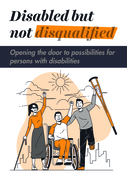
Assessing the Barriers to Accessing ICT by People with Disability in Tanzania
Kampala: CIPESA (2021), 19 pp.

Movie Minorities: Transnational Rights Advocacy and South Korean Cinema
New Brunswick et al.: Rutgers University Press (2021), ix, 301 pp.
"Rights advocacy has become a prominent facet of South Korea’s increasingly transnational motion picture output, especially following the 1998 presidential inauguration of Kim Dae-jung, a former political prisoner and victim of human rights abuses who received the Nobel Peace Prize in 2000. Today
...
Assessing the Barriers to Accessing ICT by People with Disability in Uganda
Kampala: CIPESA (2021), 16 pp.

Elaboración de productos accesibles en el entorno digital: Guía práctica
Asociación por los Derechos Civiles (ADC) (2021), 46 pp.
"[...] la presente Guía Práctica aspira a condensar soluciones posibles y recomendaciones relativas a la multiplicidad de variantes que hay que tener en cuenta al momento de construir productos de difusión que consideren las distintas necesidades de accesibilidad para incluir a todas las personas
...
Assessing the Barriers to Accessing ICT by People with Disability in Kenya
Kampala: CIPESA (2021), 24 pp.

"La présente étude, réalisée dans le cadre des projets régionaux d'éducation inclusive mis en oeuvre par Humanité & Inclusion, avait pour objectif : de répertorier les TIC existantes et susceptibles de favoriser l'inclusion scolaire des enfants handicapés; d'identifier les défis à la mise
...
Hör- und sehbeeinträchtigte Menschen: Nutzungsmotive und Erwartungen an die Medien. Ergebnisse einer Mehr-Methoden-Studie in Nordrhein-Westfalen
Media Perspektiven, issue 2 (2021), pp. 109-116
"Mittels einer Onlineumfrage und Publikumsgesprächen wurde bei seh- und hörbeeinträchtigten Personen ermittelt, welche Medienangebote sie nutzen und wie sie diese beurteilen. Die barrierefreien Angebote im öffentlich-rechtlichen Rundfunk werden grundsätzlich sehr geschätzt. Es wird aber auch V
...

Disability Reporting in the Media
Internews (2021), 18 pp.
"In this manual, we discuss key disability issues, key messages and principles for journalists wanting to support the human rights of Africans with disabilities. The manual also deals with terminology - it is about using words and that puts the person rather than the disability first. Jounalists wil
...
