
Filter
537
Featured
392
26
4
Topics
197
114
63
49
38
36
31
28
22
22
22
21
20
19
18
18
17
16
15
15
15
14
14
13
13
13
12
11
10
9
9
9
9
9
9
9
8
8
8
8
8
8
8
7
7
7
7
7
7
7
7
7
7
7
7
7
7
7
7
6
6
6
6
6
6
6
6
6
5
5
5
5
5
5
5
5
5
5
5
5
5
5
5
5
5
5
5
5
5
4
4
4
4
4
4
4
4
4
4
4
4
4
4
4
4
4
4
4
4
4
3
3
3
3
3
3
3
3
3
3
3
3
3
3
3
3
3
3
3
3
3
3
3
3
3
3
3
3
3
3
3
3
3
3
3
3
3
3
3
3
3
3
3
3
3
2
2
2
2
2
2
2
2
2
2
2
2
2
2
2
2
2
2
2
2
2
2
2
2
2
2
2
2
2
2
2
2
2
2
2
2
2
2
2
2
2
2
2
2
2
2
2
2
2
2
2
2
2
2
2
2
2
2
2
2
2
2
1
1
1
1
1
1
1
1
1
1
1
1
1
1
1
1
1
1
1
1
1
1
1
1
1
1
1
1
1
1
1
1
1
1
1
1
1
1
1
1
1
1
1
1
1
1
1
1
1
1
1
1
1
1
1
1
1
1
1
1
1
1
1
1
1
1
1
1
1
1
1
1
1
1
1
1
1
1
1
1
1
1
1
1
1
1
1
1
1
1
1
1
1
1
1
1
1
1
1
1
1
1
1
1
1
1
1
1
1
1
1
1
1
1
1
1
1
1
1
1
1
1
1
1
1
1
1
1
1
1
1
1
1
1
1
1
1
1
1
1
1
1
1
1
1
1
1
1
1
1
1
1
1
1
1
1
1
1
1
1
1
1
1
1
1
1
1
1
1
1
1
1
1
1
1
1
1
1
1
1
1
1
1
1
1
1
1
1
1
1
1
1
1
1
1
1
1
1
1
Language
Document type
26
21
17
15
13
13
10
10
5
3
3
3
2
1
Countries
Authors & Publishers
Media focus
Publication Years
Methods applied
Journals
Output Type

The Arab World Online 2014: Trends in Internet Usage in the Arab Region
Dubai: Dubai School of Government (DSG), Governance and Innovation Program; bayt.com (2014), 21 pp.
"Our research indicates that today, there are more than 135 million individuals using the Internet in the 22 Arab countries. This is coupled with a mobile penetration rate of around 110 percent on a regional level; and more than 71 million active users of social networking technologies." (Page 1)
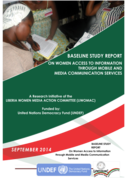
Baseline Study Report on Women Access to Information Through Mobile and Media Communication Services
"Out of a total 400 participants, 374 respondents, representing 93.5%, know how to use cell phones, while 26, representing 6.5%, have no knowledge whatsoever about cell phone usage. This finding is indicative of a relatively high knowledge of mobile phones utility. The result also indicates that Lon
...

The 1% Rule in Four Digital Health Social Networks: An Observational Study
Journal of Medical Internet Research, volume 16, issue 2 (2014), 10 pp.
"In recent years, cyberculture has informally reported a phenomenon named the 1% rule, or 90-9-1 principle, which seeks to explain participatory patterns and network effects within Internet communities. The rule states that 90% of actors observe and do not participate, 9% contribute sparingly, and 1
...
Wissenskluft und Digital Divide
Baden-Baden: Nomos (2014), 121 pp.
"Der Band gibt eine fundierte, knappe und anschauliche Einführung in die theoretischen Grundlagen, methodischen Zugänge, empirischen Befunde und gesellschaftlichen Zusammenhänge der Wissenskluftforschung. Diese geht von wachsenden Wissensdifferenzen zwischen statushöheren und -niedrigeren Gruppi
...
Performing Patriotic Citizenship: Zimbabwean Diaspora and Their Online Newspaper Reading Practices
Journal of African Media Studies, volume 6, issue 1 (2014), pp. 91-110
"This article focuses on the psycho-social dimension of the diaspora through an examination of the online news consumption practices of the Zimbabwean diaspora. The objective is to contribute on theoretical debates about the way in which the diaspora imagine their citizenship in the digital age. Dat
...


Digital Ethnography: Anthropology, Narrative, and New Media
Austin: University of Texas Press (2013), x, 117 pp.
"Integrating insights from cultural anthropology, folklore, digital humanities, and digital heritage studies, this work brims with case studies that provide in-depth discussions of applied projects. Web links to multimedia examples are included as well, including projects, design documents, and othe
...
Youth, Facebook and Politics in South Africa
Journal of African Media Studies, volume 5, issue 2 (2013), pp. 119-130
"This article explores how Facebook is used by South African youth, with particular reference to their political participation and involvement. Research has shown the declining involvement of young people in political processes, particularly since democratic elections in 1994. This is an internation
...

Discovering the Libyan Youth Movement’s Identity Through Facebook
Conflict & Communication Online, volume 12, issue 1 (2013), 15 pp.
"This study demonstrates that critical discourse analysis can be used to quickly discern the identity of a political actor and make accurate predictions about that actor’s intentions and goals, even in the context of a revolution. This study’s authors used critical discourse analysis to empirica
...


The World Internet Project: International Report
Los Angeles: USC Annenberg School for Communication and Journalism, Center for the Digital Future, 5th ed. (2013), 87 pp.
Online@AsiaPacific: Mobile, social and locative media in the Asia-Pacific
London: Routledge (2013), xii, 206 pp.

Youth Culture and Mobiles
Mobile Media & Communication, volume 1, issue 1 (2013), pp. 83-88
"The category of youth has been a strategically important focus in the development of mobile communication and media research. This paper reviews the themes and findings of the first phase of youth and mobile phone research, followed by a phase of new work just underway on youth and mobile media and
...

Social Media and Elections in Asia-Pacific: The Growing Power of the Youth Vote
Singapore: Konrad-Adenauer-Stiftung (KAS) (2013), 164 pp.
"Undoubtedly, politicians have awoken to the political power of social media and it will be increasingly adopted as a mainstream means of information distribution and communications as voters and young people are becoming more politically active in a number of the jurisdictions surveyed in this book
...
Special Issue on Youth, ICTs, and Civic Engagement in Asia
International Communication Gazette, volume 75, issue 3 (2013), pp. 249-337
"The articles collected in this special issue share a common focus: young adults’ use of new media for civic engagement in South and Southeast Asia. Youth engagement problems are evident when established democracies witness a decline in youth participation in traditional civic activities (e.g., vo
...

"The study focused on exploring how 152 children, 12 to 17 years old, in Kenya, use social media and other digital technologies, and what impact these technologies have on this group, particularly from the perspective of child rights. The study involved holding digital youth clinics in four location
...

Fights, Adapts, Accepts: Archetypes of Iranian Internet Use
Philadelphia, PA: Annenberg School for Communication, Center for Global Communication’s Iran Media Program (2013), 24 pp.
"The Internet is one of the few remaining platforms where Iranians can practice some level of open debate, less susceptible to social and political limitations. Research on Internet use in Iran sheds light on a large online community engaged in a diversity of activities and expanding at a significan
...
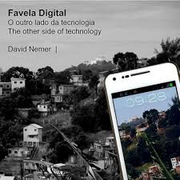
Favela Digital: O Outro Lado da Tecnologia
Vitoria: GSA Grafica e Editora (2013), 128 pp.
"The idea for this book came up during the fieldwork I did in Vitória, Brazil for my doctoral dissertation. My research aims to understand the experience of marginalized people in community technology centers and how this experience informs the ways we think about what constitutes “empowerment”
...


Digital News Report 2013: Tracking the Future of News
Oxford: Reuters Institute for the Study of Journalism (2013), 108 pp.
This is the second of the annual Reuters Institute Digital News surveys published by Reuters Institute for the Study of Journalism (RISJ) at Oxford University. You Gov online polls commissioned by RISJ were conducted with 11,000 online users in the UK, US, Denmark, France, Germany, Spain, Italy, Bra
...
