
Filter
46
Featured
Free Access
36
Top Insights
1
Topics
Media Landscapes, Media Systems, Media Situation in General
17
Taliban
14
Media Freedom, Press Freedom
12
Media Assistance in Conflict Regions & Fragile Countries
7
Media Assistance
7
Conflict Areas: Media Systems, Media Landscapes, Role of Media
6
Authoritarian Regimes: Media Systems & Landscapes
5
Press Freedom & Communication Rights Violations
5
Safety of Journalists, Safety Risks of Media Workers
3
Media Assistance: Country Strategies & Experiences
3
Press Landscapes
3
Political Transition and Media
3
Access to Media & Information
2
Media Use, Media Consumption
2
Trust in the Media, Credibility of Media
2
Killings of Journalists & Media Personnel
2
Violence Against Journalists & Media Personnel
2
Community Radios
2
Media Law & Regulation in Conflict Areas
2
Media Viability & Financial Sustainability
2
Female Journalists & Media Workers
2
Working Conditions of Journalists & Media Personnel
2
Local Communication & Media
2
Radio Landscapes
2
Television Landscapes
2
Transition Countries: Media Systems & Media Landscapes
2
Radio Television Afghanistan (RTA)
2
Democracy / Democratization and Media
2
Television
2
Access to Internet & Digital Communications
1
Digital & Social Media Use, Internet Use
1
Internet & Social Media Use: Women
1
Independent & Oppositional Media in Authoritarian Regimes
1
Cinema
1
Documentaries, Television Documentaries, Web Documentaries
1
Exile Journalism, Exile Media
1
Media / Communication Control
1
Censorship
1
Harassment & Intimidation of Journalists
1
Self-Censorship
1
Community Radio Contents & Programming
1
Community Radio Sustainability & Financing
1
Media Assistance: Community Radios
1
Extremist & Terrorist Communication Strategies and Media
1
Hate Speech, Hate Speech in Social Media
1
Contents of Media
1
Development and Media
1
Social Media in Political Communication
1
Disaster & Humanitarian Crisis Communication
1
Disinformation, Misinformation, Fake News
1
Media Markets
1
Education and Communication / Media
1
COVID-19 Communication
1
History of Media & Communication
1
History of Radio
1
Indigenous Radio Broadcasting
1
Journalism Education & Training
1
Journalists: Professional Identity & Values
1
News Agencies
1
Local Radios, Local Radio Programmes
1
Media Assistance: Implementing Organizations
1
Diffusion of Innovations
1
Information Ecosystems
1
Post-Socialist Media Systems & Landscapes
1
Media Law & Regulation
1
BBC
1
Migration & Refugees Reporting & (Social) Media Representation
1
Polarization, Political Polarization
1
Politics and Media
1
Media Capture, Vested Political & Other Interests in the Media
1
National Identity & Media, Nationalism & Communication
1
Political Communication
1
Press
1
Public Media, State Media
1
Public Service Broadcasting
1
Public & State Radios
1
Radio
1
Religion and Communication
1
Ethnocentrism
1
Telecommunication Companies, Mobile Phone & Fixed Line Operators
1
Tolo TV (Television Channel, Afghanistan)
1
Urban Issues: Media Representation & Reporting
1
Language
Document type
Countries / Regions
Authors & Publishers
Media focus
Publication Years
Methods applied
Journals
Output Type

Strukturwandel der (massenmedialen) Öffentlichkeit in Afghanistan 2001–2021
In: Afghanistan 2001-2021: Gewaltideologien und ein Hauch von offener Gesellschaft
Abbas Poya (ed.)
Bielefeld: transcript (2024), pp. 193-206
"Afghanistan als Ganzes wurde von mehreren sich gegenseitig bedingenden Phänomenen geprägt: Einerseits gab es sozialen Wandel und Demokratisierung, andererseits führte die starke Liberalisierung des Medienmarktes zu einer fragmentierten ethnischen Gruppenöffentlichkeit, die die Fragilität der s
...
Unpacking Affective Polarization in Afghanistan: Ethnic Politics, Elite Competition, and Online Divisive Content
Tokyo: Toda Peace Institute (2024), 25 pp.
"Affective polarization has been a persistent feature of Afghanistan’s society and politics in the past decades. However, with the instantaneous collapse of the republic’s government and the return of the Taliban, the country has witnessed heightened affective polarization along ethnic and ideol
...

Deprived and Silenced: The Taliban and Suppression of Access to Information
Potsdam: Friedrich Naumann Stiftung (2024), 16 pp.
"Before the Taliban‘s return in 2021, Afghanistan had made notable strides in promoting transparency and civic engagement through progressive laws governing information access. These landmark measures, praised internationally, represented small but significant steps toward strengthening the countr
...

Expat Afghan Media and Local Media amidst Taliban Constraints
International Journal of Social Science and Humanities Research, volume 12, issue 1 (2024), pp. 141-149
"This research study delves into the intricate landscape of media in Afghanistan after 15 August 2021, focusing on the coexistence of local and Expat Afghan Media within the challenging context of Taliban constraints. In the wake of the Taliban's resurgence and control of Afghanistan, The challengin
...
Understanding and Addressing Mis-/Disinformation in the Afghan Media Ecosystem
Internews (2024), 21 pp.
"This report summarizes Internews’ six-month social media monitoring research conducted in 2023 that aimed to better understand the online mis- and disinformation environment in Afghanistan. [...] The first phase of the study revealed key aspects of Afghanistan's digital information landscape. The
...
Länderkurzinformation Afghanistan: Informationslage
Nürnberg: Bundesamt für Migration und Flüchtlinge (2024), 6 pp.
"Die beschriebene Quellenlage stellt auch für die Länderanalyse eine Herausforderung dar. Afghanische Medien geben einen guten Überblick darüber, wie die Taliban sich präsentieren möchten. Auch neue Verordnungen und Erlasse der Zentralregierung sind so nachvollziehbar. Dies gilt jedoch nicht f
...
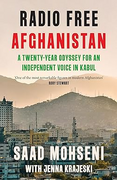
Radio Free Afghanistan: A twenty-year odyssey for an independent voice in Kabul
New York: Harper Collins (2024), 307 pp.
"Saad Mohseni, chairman and CEO of Moby Group, Afghanistan's largest media company, charts a twenty-year effort to bring a free press to his country after years of Taliban rule, and how that effort persists even after the Taliban's return to power in 2021. In the heady early days of the American occ
...
Between Shadows and Stories: Navigating the Journey of Afghan Journalists, from Aug. 15, 2021 to Aug. 15, 2023
Afghanistan's National Journalists Union (2023), 17 pp.
"The Afghan media landscape stands at a crossroads, navigating a landscape rife with challenges and uncertainties in the wake of the Taliban's resurgence. The post-Taliban era, marked by a thriving media sector with 160 television channels, 311 radio stations, 90 print newspapers, and 26 news agenci
...
Afghan Media Sector Faces Economic Collapse
Deutsche Welle (2022)
"Against the backdrop of a highly precarious situation for journalists, a severe economic crisis is unfolding within Afghan media houses, according to a survey on the current state of the media sector in Afghanistan conducted by DW Akademie and partner organizations. Data were collected in February
...
Afghan Media under the Taliban: Restrictions and Violations
Afghanistan Human Rights and Democracy Organization (AHRDO) (2022), 48 pp.
"[...] Since returning to power in August 2021, the Taliban has imposed a new media control regime, which has three key features: restriction, gender-discrimination, and repression with impunity. First, the Taliban has passed several media policies, imposing extreme constraints on press freedom and
...

Afghanistan's media developments and challenges in the past two decades: A short glance at media freedom
Reality of Politics, issue 19 (2022), pp. 64-77
"Media, during Taliban five years period from 1996–2001, had been totally suffocated. Only limited number of print media would publish to spread the propaganda of Taliban Emirate under Sharia Law. Post-Taliban era, media landscape obtained new image with the establishment of democratic government.
...
Afghanistan Media Landscape Guide
CDAC Network (2022), 24 pp.
"This Media Landscape Guide provides a snapshot of the media in Afghanistan, including the audiences, the producers, the preferences of different groups in the community, the communications culture, and the languages associated with the media. It gives an insight into the role of media in developmen
...
Solidarity and Survival: The Story of South Asia. Afghanistan Country Report
International Federation of Journalists (IFJ) (2022), 5 pp.
"An independent media is essential to tell the world the complex unfolding story of Afghanistan. Journalists remaining in Afghanistan, as well as those who have left, desperately need support from the international community. There is need for solidarity and interventions on several fronts. The Afgh
...
Afghanistan. Blacked Out: Media Freedom Under the Taliban
Bonn: Deutsche Welle DW Akademie (2022), 7 pp.
"Oppression of women, financial meltdown, censorship: Research findings by Afghan NGO Nai SOMA and DW Akademie highlight the extent of the Afghan media sector’s breakdown after the Taliban took power in Kabul." (Page 1)
Transformations in Afghan Media and Culture Through Cycles of Upheaval
Current History, volume 121, issue 834 (2022), pp. 135-140
"This article traces how the Afghan cultural, media, and arts sectors have gone through cycles of boom and bust in tandem with the country’s tumultuous history in recent decades, starting with the prewar golden era in the 1960s and 1970s, then focusing on the post-9/11 internationally funded media
...
Slowing Transmission: Language Challenges in Community Radio Relay of COVID-19 Risk Communication in Afghanistan
Translators Without Borders (2021), 16 pp.
"In 2020 Internews launched the Rooted in Trust project to counter rumors and misinformation about COVID-19. They commissioned Translators without Borders (TWB) to map community radio stations and investigate the language and translation challenges community radio broadcasters face when relaying off
...
The Pen Vs the AK-47: The Future of Afghan Media Under the Taliban
Politics and Public Policy Shorenstein Center on Media (2021)
"Written just prior to the Taliban's rapid takeover of Afghanistan, this new report from Shorenstein Center Fellow Samiullah Mahdi provides an overview of the media landscape in Afghanistan, and the threats to and opportunities for press freedom in the region." (Introduction)
Afghanistan Media Landscape
Maastricht: European Journalism Centre (2020)
"Afghanistan media has a history of 147 years. In 1873 the first ever paper, Shamsunahar, was established. The first radio transmitter was installed in 1920. The first TV broadcast happened in Kabul in 1978. The Internet was linked and used in Afghanistan during the Taliban period after 1996, althou
...
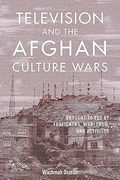
Television and the Afghan Culture Wars
Urbana: University of Illinois Press (2020), 288 pp.
"Fieldwork from across Afghanistan allowed Osman to record the voices of Afghan media producers and people from all sectors of society. In this moving work, Afghans offer their own seldom-heard views on the country's cultural progress and belief systems, their understandings of themselves, and the r
...

Between the White House and the Kremlin: A Comparative Analysis of Afghan and Tajik Media
International Journal of Communication, volume 13 (2019), pp. 619-641
"In their postwar, postindependence, and post-Soviet moments, why did two neighbors, Afghanistan and Tajikistan, who share cultural, linguistic, and historical similarities, take radically divergent paths in the development of their mass media, public sphere, and democracy? In this article, I argue
...
