
Filter
244
Featured
Free Access
217
Quick Overview
1
Top Insights
6
Topics
Trust in the Media, Credibility of Media
65
Digital & Social Media Use, Internet Use
46
News Consumption & Information Sources of Media Users
33
Media Landscapes, Media Systems, Media Situation in General
27
Access to Media & Information
25
Media Freedom, Press Freedom
19
Radio Consumption, Radio Use, Radio Audiences
15
Mobile Phone Use
14
Disinformation, Misinformation, Fake News
14
Television Consumption, Televison Use, Television Audiences
12
Media Viability & Financial Sustainability
12
Information Needs
7
Access to Internet & Digital Communications
6
Media Markets
6
Public Media, State Media
6
Media Use: Women, Female Media Audiences
5
Social Media
5
Local Radios, Local Radio Programmes
5
Local Television
5
Media Law & Regulation
5
Audience Expectations & Satisfaction
4
Television Use: Children
4
Freedom of Expression
4
Watchdog Role of the Media
4
Access to Public Information, Freedom of Information, Right to Information
3
Advertising Markets & Industries
3
Audience Feedback, Interaction & Participation
3
Media Use: Youth
3
COVID-19 Communication
3
Media Assistance
3
Media & Communication Policies
3
Media & Information Literacy
3
Financing Media, Financial Media Management
3
Public Service Broadcasting
3
Research in Media & Communication
3
Telecommunication Infrastructure
3
Flow of Information
2
Audience Segmentation, User Typologies, Personas
2
Disinformation Consumption & Perception
2
Film Audiences, Film Consumption
2
Health Information Access & Use
2
Media Use: Conflict Areas
2
Media Use: Entertainment
2
Media Use: Rural Populations
2
Milieus, Lifestyles
2
Print Media Use, Press Readers
2
Authoritarian Regimes: Media Systems & Landscapes
2
Cybersecurity, Digital Safety, Privacy, Right to Privacy
2
Exile Journalism, Exile Media
2
Community Radios
2
Development Aid Reporting
2
Development Journalism & Media Representation of Development Issues
2
Digital Media Landscapes
2
Internet
2
Trust Building in Health & Emergency Communication
2
Media in the Global South / Developing Countries
2
Poverty & Impoverished People: Reporting & Media Representation
2
Media Assistance: Financial Sustainability & Management
2
Socialist Media Systems
2
Politics
2
Peace, Peacekeeping, Peace Building, Peace Movements
2
Influence of Media on Politics
2
Political Transition and Media
2
Perception, Cognition & Comprehension
2
Cable Television
2
Advertising
1
Advertising Effects & Impact
1
Civic Engagement, Citizen Participation, Civil Society & Media
1
Audiences & Users
1
Audience Composition
1
Audience Research
1
Audience Research in Media Assistance
1
Audience Research Methods
1
Audience Research: Online Surveys
1
Audience Research: Planning & Implementing Surveys
1
Book Reading Habits, Book Readers, Book Consumption
1
Digital & Social Media Use: Youth
1
Information Needs in Disasters & Humanitarian Crises
1
Information Needs & Media Use: Refugees & Displaced People
1
Information Use & Consumption
1
Media Socialisation, Media Biographies, Media Life Journeys
1
Media Use: Foreign / International Media
1
Media Use: Migrants & Diasporas
1
Television Use: Youth
1
Music Consumption & Use
1
Campaigning: Effects & Effctiveness
1
Indirect Censorship, Soft Censorship
1
State Influence on the Media
1
Strategic Communication Planning
1
Alternative Communication & Media
1
Community Media
1
Community Participation in Community Media
1
Traditional Communication
1
Russia-Ukraine War <2014-
1
Conflict Areas: Media Systems, Media Landscapes, Role of Media
1
Conflict Reporting, Armed Conflict Reporting
1
Conflict-Sensitive & Peace Journalism
1
Extremist & Terrorist Communication Strategies and Media
1
Violence in the Media: Reception & Effects
1
Contents of Media
1
Rumours & Rumour Management
1
Arts
1
Theatre
1
Cultural Consumption
1
Cultural Studies
1
Perceptions & Attitudes Towards Development Issues and Development Assistance
1
Algorithms & Big Data
1
Digital & Information Literacy
1
Online Services
1
Disaster Risk & Preparedness Communication, Disaster Prevention Communication
1
Conspiracy Narratives, Conspiracy Theories
1
Library Use
1
Economics of Media
1
Media Industries
1
Media Ownership
1
Video on Demand
1
Education and Communication / Media
1
Educational Radio Programmes
1
Educational Communication
1
Schools
1
Female Journalists & Media Workers
1
Gender-Based Harassment, Intimidation & Violence
1
Gender Relations
1
Health Campaigns: Experiences
1
Health Radio Programmes
1
HIV / AIDS Communication
1
Malaria Communication
1
Sexual Health Communication, Reproductive Health Education, Family Planning
1
Indigenous Languages
1
Globalisation, Globalisation Criticism
1
Image Abroad
1
Russia: Foreign Media Representation & Image Abroad
1
Transnational Broadcasting, International Broadcasting
1
Satellite Television
1
Transnational Television, International Television
1
Journalistic Quality
1
News
1
News Agencies
1
Radio Journalism
1
Election Reporting
1
Protests, Protest Movements, Protest Reporting & Media Representation
1
Working Conditions of Journalists & Media Personnel
1
Media Assistance: Refugees
1
Communication & Information Needs
1
COVID-19 Pandemic: Effects on Journalism, Media & Communication
1
Diversity & Pluralism in Media / Communication
1
Information
1
Information Ecosystems
1
Interpersonal Communication, Interpersonal Relations
1
Social Media Landscapes
1
Media Management
1
Financing Media: Customer Payments, Subscription Models, User-Based Financing
1
Broadcasting Companies
1
Media Outlets, Media Associations
1
BBC
1
Migration & Refugees Reporting & (Social) Media Representation
1
People with Disabilities: Access to & Use of ICT and Media
1
Civic Engagement, Citizen & Community Participation
1
Governance
1
Democracy / Democratization and Media
1
Media Capture, Vested Political & Other Interests in the Media
1
National Identity & Media, Nationalism & Communication
1
Opinion Leaders, Politicians, Decision Makers, Elites
1
Radio Stations
1
Audience Influence
1
Digital Media Reception
1
Emotions in the Media, Emotional Functions & Messages of Media
1
Media Psychology, Communication Psychology
1
Media Reception
1
Parasocial Interaction
1
Preference
1
Everyday Life
1
Mental Stress
1
Personality
1
Motivations
1
Television Reception & Effects
1
Rural Communication, Media in Rural Areas
1
Social Conflicts, Social Problems
1
Population
1
Reality & Communication, Truth & Media
1
Social Aspects
1
Digital Television
1
Mobile Phones, Smartphones
1
Television Channels
1
Television Programmes & Genres
1
Theories of Communication & Media
1
Urban Communication, Urban Media
1
Language
Document type
Countries / Regions
Authors & Publishers
Media focus
Publication Years
Methods applied
Journals
Output Type

Contemporary Media Use in Ukraine
Broadcasting Board of Governors (BBG); Gallup (2014), 2 pp.
"Television is the dominant news medium in Ukraine. Almost all Ukrainians (96.8%) watch TV for news at least weekly, including 95.7% of Crimeans. The Internet has overtaken radio and print media as the second most dominant news source in the country, with about half (48.3%) going online for news at
...
Newsgathering and Policy Perceptions in Ukraine
Broadcasting Board of Governors (BBG); Gallup (2014), 35 slides
"Use of Ukrainian vs. Russian in news content is not important for the vast majority of adults; trust in content is key to reliance on sources. Ukrainian TV channels remain the top news sources for adults across ethnic groups and regions (other than Crimea), and offer news trusted by large majoritie
...

Contemporary Media Use in Turkey
Broadcasting Board of Governors (BBG); Gallup (2014), 2 pp.
"Nationally, Turkish media consumers fall into three basic groups: About half (48.0%) tend to only watch TV news; about one-third (32.0%) mostly watch TV and use the Internet to get news, and two in 10 (20.0%) are “super users” who get news from a variety of media platforms. Super-users are more
...
Contemporary Media Use in Turkey
Broadcasting Board of Governors (BBG); Gallup (2014), 42 slides
"Turkish media market is highly sophisticated but media outlets are subject to severe political pressure. Young Turks are turning increasingly to the Internet and social media to compensate. Internet already rivals TV as key information source. Kurdish speakers use the same outlets as other Turks, b
...
Syria Audience Research
Berlin: Media in Cooperation and Transition (MiCT) (2014), 31 pp.
"The media culture of Syrians is strongly dominated by satellite television which is the most widely accessible type of media for Syrians across the sample. Beyond satellite television, access to media is primarily dependent on location with people in government controlled areas enjoying the best ac
...
Face-To-Face Survey Overview Summary Results
London: Balancing Act (2014), 50 pp.
"Mobile ownership in all of the four surveys [in Ghana, Nothern Nigeria, Senegal and Tanzania] was around 90%, making the mobile phone the most widely owned device media device, both used as a media carrier (radio) and a media in its own right (Internet, SMS) [...] Radio remains the dominant medium
...
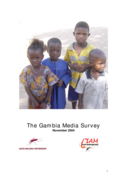
The Gambia Media Survey
Gates Malaria Partnership; Center for Innovation Against Malaria (2014), 56 pp.
"A national survey was completed in November 2004, designed to measure: media access and use; knowledge of Malaria, its prevention and cure; reach of the radio programme Bolongodala. The sample achieved represented the adult (15+) population of the Gambia estimated to be 768,200. Mandinka is the mos
...
Media Use in Cambodia
Broadcasting Board of Governors (BBG); Gallup (2014), 2 pp.
"A majority (57%) of Cambodians say they watch TV news at least weekly, with urban residents considerably more likely than their rural counterparts to do so. Radio follows, used for news by 42,9% overall and equally prevalent in urban and rural areas. About one in 10 Cambodians overall now say they
...

Cambodia: From Big Screen to Small
Broadcasting Board of Governors (BBG); Gallup (2014), 37 slides
"Cambodia is a country on the cusp of rapid media change. TV and radio remain the top media and main sources of news. Apolitical newcomer Hang Meas is top source with tabloid news, entertainment. But new media is gaining, fueled by widespread mobile use: almost all households have a mobile phone; yo
...

Contemporary Media Use in Pakistan
Broadcasting Board of Governors (BBG); Gallup (2014), 2 pp.
"Just 18.1% of Pakistanis say they follow current events about the country “a lot,” but almost half (47.7%) follow current events “somewhat.” About one-third report being less attentive, following current events “very little” (29.6%) or “not at all” (4.6%). Results trend upward with
...
Pakistan: Audience Realities in an Unstable Media Landscape
Gallup; Broadcasting Board of Governors (BBG) (2014), 43 slides
"TV is the main information platform by far, but the importance of individual channels varies by region and modes of access. Population is divided between those with access to non-State TV and those without. While most express generic satisfaction with media, actual opinions about specific channels
...

Citizen Access to Information in Papua New Guinea 2014
M&C Saatchi World Services Research & Insight; ABC International Development (2014), 86 pp.
Media Survey Findings: Nationwide National Opinion Survey, Wave III, September 2014
Internews (2014), 36 pp.
Key findings include: 35% of people interviewed had family members working outside of Nepal; 86% of households had a working mobile phone (92.5% in urban; 84.3% in rural areas); 49% had a working television (79.5% in urban; 42.3% in rural areas); 45% a working radio (46.1% in urban; 45.3% in rural a
...
Contemporary Media Use in Egypt
Broadcasting Board of Governors (BBG); Gallup (2014), 2 pp.
"Television viewing is ubiquitous in Egypt and by far the most common source of information for its residents. Nearly all (98.8%) Egyptians have a working television in their home, while just 37.9% of Egyptians have a radio. The percentage of Egyptians with a radio in their household is down signifi
...
Institutional Grantees Audience Survey: A Project Report
Dar-es Salaam: Ipsos; Tanzania Media Fund (TMF) (2014), 92 pp.
"Radio was found to be the most frequently used media channel with 46% of the respondents listening to radio on a daily basis and a further 30% listenership on a weekly basis. Newspapers were found to be the least used media with 22% of the respondents reading newspapers less than once a month. The
...
Citizen Access to Information in Vanuatu
InterMedia; ABC International Development (2013), 62 pp.
"This report has eight core sections. In the first three sections we outline the overall purpose of the study, the methodological approach and the overarching insights that emerged from the study. This is followed by a section on key citizen information needs and sources. The fifth section discusses
...
Media Use in the Middle East: An Eight-Nation Survey
Qatar: Northwestern University in Qatar; Harris Interactive (2013), 97 pp.
"In assessing attitudes toward the media, one notable finding was a vote of confidence for improved quality of news media reporting between 2011 and 2013 with a majority of adults agreeing that it has improved in six of the eight countries surveyed. This optimism is also reflected in overall percept
...
Global Hotspots: Media Use in Mali and Somalia 2013
Broadcasting Board of Governors (BBG); Gallup (2013), 60 slides
"Strategic Considerations for a Mali Communications Strategy: Don't forget the importance of local language to reach broad cross-section of the population. Broadcast media remain paramount; on a national radio is likely to be the key medium. Digital is still mostly a niche phenomenon." (Slide 39)
"S
...

Estudio de actitudes, hábitos y opinión sobre la radio y televisión 2013
Lima: Consejo Consultivo de Radio y Televisión (CONCORTV) (2013), 20 pp.
"Entre ver televisión, escuchar radio, leer diarios/revistas y navegar por Internet, los peruanos le dedican más de 12 horas con treinta minutos al consumo de medios de comunicación." (Página 5)
