
Filter
120
Featured
Free Access
103
Quick Overview
2
Top Insights
3
Topics
Media Use, Media Consumption
33
Digital & Social Media Use, Internet Use
28
Trust in the Media, Credibility of Media
19
Media Freedom, Press Freedom
14
Disinformation, Misinformation, Fake News
12
Watchdog Role of the Media
11
Media Use: Youth
9
Access to Media & Information
8
Access to Internet & Digital Communications
8
Digital & Social Media Use: Youth
7
Access to Public Information, Freedom of Information, Right to Information
6
Browser
6
Digital Market Concentration
6
Search Engines
6
Media Landscapes, Media Systems, Media Situation in General
5
Audiences & Users
4
Information Needs & Media Use: Refugees & Displaced People
4
Media Use: Women, Female Media Audiences
4
Radio Consumption, Radio Use, Radio Audiences
4
Internet Markets
4
Online News
4
News
4
Freedom of Expression
3
Digital Journalism, Online Journalism
3
Social Media
3
Civic Engagement, Citizen Participation, Civil Society & Media
2
Audience Segmentation, User Typologies, Personas
2
Disinformation Consumption & Perception
2
Information Needs
2
Media Use: Children
2
Media Use: Foreign / International Media
2
Media Use: Political Information
2
Media Use: Urban Populations
2
Television Use: Youth
2
Television Consumption, Televison Use, Television Audiences
2
Digital Communication, Digital Media
2
Digital Platforms & Intermediaries
2
Facebook
2
Female Journalists & Media Workers
2
Image Abroad
2
News Reception
2
Protests, Protest Movements, Protest Reporting & Media Representation
2
Financing Media: Customer Payments, Subscription Models, User-Based Financing
2
Politics
2
Politics and Media
2
Democracy / Democratization and Media
2
Political Communication
2
Public Opinion
2
Public Media, State Media
2
Uses-And-Gratifications Approach
2
Advertising Audiences & Target Groups
1
Audience Feedback, Interaction & Participation
1
Audience Research Methods
1
Social Media Analytics, Web Metrics, User Data Analytics
1
Television Use: Children
1
Media Use: Foreign & International News
1
Media Use: Migrants & Diasporas
1
Media Use: Minorities & Disadvantaged Groups
1
Television Use: Women
1
Radio Use: Youth
1
Mobile Phone Use
1
News Avoidance
1
Opinion Polls, Public Opinion Research
1
Using Audience Research Data for the Improvement of Media Products
1
Authoritarian Regimes: Government Communication Strategies
1
Independent & Oppositional Media in Authoritarian Regimes
1
Election Campaigns
1
Solidarity
1
Media Reception & Effects: Children
1
Communication Rights
1
Cybersecurity, Digital Safety, Privacy, Right to Privacy
1
Encryption, Cryptology
1
Censorship Circumvention Tools & Strategies
1
Internet Censorship Circumvention Tools & Strategies
1
Government Communication Strategies
1
Community Communication
1
Groups, Group Communication, Group Development
1
Russia-Ukraine War <2014-
1
Decoding
1
Rumours & Rumour Management
1
Fans, Fandom, Fan Cultures
1
Nonprofit Organizations, NGOs
1
Information for Development
1
Algorithms & Big Data
1
Big Digital Platforms, Big Tech Companies
1
Data Journalism, Computer-Assisted Investigative Reporting
1
Digital Media Landscapes
1
Digital & Information Literacy
1
Google
1
Social Media in Political Communication
1
Financing Digital / Online Media
1
Podcasts
1
TikTok
1
Twitter & Microblogs
1
Diaspora Media
1
Election Campaigns: Disinformation & Misinformation
1
Health Disinformation & Misinformation
1
Data Bases, Digital Libraries, Open Access Repositories
1
Documentation Systems
1
Economics of Media
1
Media Markets
1
Literacy, Literacy Campaigns, Postliteracy, Alphabetisation Policies
1
Television Entertainment: Audiences
1
Climate Change Communication, Climate Journalism
1
Journalism Ethics
1
Bias in News Media
1
Sensationalist Journalism, Yellow Press
1
COVID-19 Communication
1
Vaccination Campaigns & Vaccine Hesitancy
1
Indigenous Radio Broadcasting
1
Foreign News, International News
1
Transnational Broadcasting, International Broadcasting
1
Satellite Television
1
Transnational Television, International Television
1
Transnational Media Corporations, International Media Companies
1
Journalism
1
Investigative Journalism
1
Journalism Studies & Research
1
Journalistic Quality
1
Local Journalism
1
Local News
1
Radio News
1
Television News
1
Radio Journalism
1
Election Reporting
1
Bilingualism, Multilingualism
1
Local Communication & Media
1
Media Assistance
1
Communication Processes
1
Information Ecosystems
1
Media & Communication Policies
1
Public Funding & Support Policies for Media
1
Television Landscapes
1
Media Law & Regulation
1
Financing Media, Financial Media Management
1
Migration
1
Migration & Refugees Reporting & (Social) Media Representation
1
People with Disabilities: Reporting & Media Representation
1
Polarization, Political Polarization
1
Political Socialisation
1
Election Campaigns: Social Media
1
Influence of Media on Politics
1
Media Capture, Vested Political & Other Interests in the Media
1
Opinion Leaders, Politicians, Decision Makers, Elites
1
Public Opinion Manipulation
1
Media Reception
1
Judaism and Communication
1
Focus Groups & Group Discussions (Qualitative Research Method)
1
Civil Society
1
Telecommunication Companies, Mobile Phone & Fixed Line Operators
1
Youth Activism, Youth Civic Engagement, Youth Political Interests, Youth Protests
1
Language
Document type
Countries / Regions
Authors & Publishers
Media focus
Publication Years
Methods applied
Journals
Output Type

Sri Lanka Media Audience Study 2019: Consuming News in Turbulent Times
International Media Support (IMS) (2020), 63 pp.
"Across various demographics, Sri Lankan audiences highly value news and current information. More than three quarters (77%) identified news as being very important, and another 18% said it was somewhat important. National news on current affairs had the highest level of audience interest (76%), fol
...
Port-Au-Prince Information Ecosystem Assessment
Internews; Panos Caribbean (2020), 70 pp.
"Key finding 1: A trusted thirdperson is the most important information provider. When asked for their main source of information, family, friends, and religious leaders accounted for 89% of the response choices combined. Additionally, 97% stated they trust their family and friends. Key finding 2: S
...
Information Ecosystem Assessment of First Time Youth Voters in Myanmar’s 2020 Election
Internews (2020), iv, 55 pp.
"Facebook is “best” source of information for elections, but television is still most trusted Among irst time youth voters, 83% of survey respondents cited Facebook as the best channel to receive elections information. In Myanmar, Facebook and the Internet are virtually interchangeable. Key Info
...
Consumo y pago de noticias digitales: Oportunidades y desafíos del modelo de suscripción en América Latina
Luminate Foundation; Provokers (2020), 62 pp.
"Durante la pandemia de COVID-19, el 57% de los lectores de medios digitales en Argentina, Brazil, Colombia y Mexico ha aumentado su consumo de noticias. El 90% de los consumidores está accediendo a las noticias digitales por lo menos dos veces a la semana y el 78% por lo menos una vez al día. Las
...

Influencers and Influencing for Better Accountability in the DRC: Sources and Circulation of Information in the DRC - the Case of North Kivu
Top Insights
Fondation Hirondelle; Harvard Humanitarian Initiative Demos; ICREDES (2019), 39 pp.
"The information ecosystem in DRC is fragmented and fragile. It is characterised by a great number of media outlets, however their level of professionalism is low and their vulnerability to partisan capture is high. This fragility is replicated in the online space. The Congolese population rely heav
...
Pluralism in a Hybrid Media Environment from the User Perspective
San Domenico de Fiesole (IT): Robert Schuman Centre for Advanced Studies European University Institute (2019), 21 pp.
"The analyzed studies and surveys reflect some common trends concerning changing news habits in Europe. First, although the newspapers are still the main original sources for stories and provide institutional basis for high-quality journalism, they are not the primary gateways through which users ac
...
Le Niger sur les ondes: La radio, première source d’information
Afrobarometer (2019), 7 pp.
"Trois-quarts des Nigériens possèdent un téléphone portable ou y ont accès à travers quelqu’un du foyer qui en possède un. Cet accès est de 55% pour la radio, 21% pour la télé, et 6% pour l’ordinateur. Mais juste 12% des Nigériens ont un téléphone portable avec accès à l’Interne
...

Surprising News: How the Media Affect - and Do Not Affect - Politics
Boulder; London: Rienner (2019), x, 277 pp.
"In chapter 2, the book lays down its foundations with a review of a large body of experimental psychology research on how and why individuals can preserve their beliefs, sometimes in the face of all evidence, logic, and argument to the contrary. The second part of the chapter shows that millions of
...

Money for nothing and content for free? Zahlungsbereitschaft für digitaljournalistische Inhalte
Düsseldorf: Landesanstalt für Medien NRW (2019), 42 pp.
"Die vorliegende Studie untersucht, wie etablierte Medienunternehmen und journalistische Neugründungen in Deutschland nutzerseitige Zahlungsbereitschaft für digitaljournalistische Inhalte besser identifizieren, fördern und abschöpfen können. Auf Grundlage einer für die deutsche Online-Bevölke
...
Media Use in the Middle East: A Seven-Nation Survey
Qatar: Northwestern University in Qatar (2019), 104 pp.
"This 2019 report pays special attention to social media and social media influencers even as it focuses heavily on news media. As always, we look at media use by platform and content while also honing in both generally and in detail on the use of the internet. As a member of the World Internet Proj
...
Media Influence Matrix: Romania. Technology, Public Sphere and Journalism
Budapest: Data and Society (CMDS) Center for Media CEU School of Public Policy (2019), 23 pp.
"Convergence of services usually affects the quality and price of services offered by providers. However, this has not been the case in Romania yet. People benefit from a very competitive market and enjoy fairly cheap services, but the implications of convergence on the content made available to con
...
Representações sobre as notícias e o mundo por crianças a frequentar o ensino primário: O caso português
Covilhã (PO): LabCom (2019), iv, 334 pp.
"Nas últimas décadas, têm sido vários os estudos que documentam a importância das notícias na vida dos públicos mais jovens, argumentando sobre a presença da atualidade na sua socialização e na construção de significados sobre o mundo. No contexto português, são ainda escassas as pesqu
...

National Survey: Perceptions of the Population of the Republic of Moldova on Mass Media
Internews; USAID (2018), 218 pp.
"55% of the interviewees have mixed feelings about how well informed they are regarding the general events from the Republic of Moldova. 43% of the respondents stated that they don’t feel informed at all or feel informed to a small extent regarding the events from the country. At the same time, 40
...

Publics Globally Want Unbiased News Coverage, But Are Divided on Whether Their News Media Deliver: Deep Political Divides in Many Nations on Satisfaction with News Media
Pew Research Center (2018), 54 pp.
"Publics around the world overwhelmingly agree that the news media should be unbiased in their coverage of political issues, according to a new Pew Research Center survey of 38 countries. Yet, when asked how their news media are doing on reporting different political issues fairly, people are far mo
...
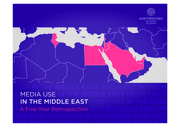
Media Use in the Middle East: A Five-Year Retrospection
Quick Overview
Qatar: Northwestern University in Qatar (2018), 79 pp.
"The retrospection, which covers Egypt, Jordan, Lebanon, Qatar, Saudi Arabia, Tunisia, and the United Arab Emirates, includes the following highlights: Internet penetration has increased in every country since 2013. The biggest increase occurred in Lebanon – from 58 percent to 91 percent in the la
...
Gewichtungsstudie zur Relevanz der Medien für die lokale - regionale Meinungsbildung in Deutschland: MedienGewichtungsStudie 2018-I
Die Medienanstalten (2018), 33 pp.
"Radio hat mit 31% den höchsten Marktanteil an der Info-Nutzung zu regionalen Themen, gefolgt vom Internet knapp vor der Tageszeitung. Fernsehen an vierter Stelle [...] Die Tageszeitung bekommt mit Abstand die meisten Nennungen als wichtigste Quelle für regionale Infos. Internet wie bei der Nutzun
...
Media Consumption in Turkey
Broadcasting Board of Governors (BBG); Gallup (2017), 2 pp.
"About two-thirds of Turkish adults (65.0%) currently say they go online for news at least weekly. Among Kurdish speakers, that figure is much higher at 70.8%. Half of all residents (50.2%) say they use newspapers or magazines for news every week. While four in five adults (80.5%) say they get news
...
Migration von Subsahara-Afrika nach Europa: Motive, Informationsquellen und Wahrnehmung deutschen Engagements
Stuttgart; Berlin: Institut für Auslandsbeziehungen (ifa); Media in Cooperation and Transition (MiCT) (2017), 54 pp.
"In dieser Studie wird mithilfe qualitativer Fokusgruppendiskussionen mit Migranten bzw. mit Menschen mit Migrationsabsicht aus Subsahara-Afrika (i) nach Motiven für Migration, (ii) nach der Nutzung von Informationen und dem Wissen über Migration sowie (iii) nach der Rolle von Projekten der intern
...

A Survey Report on the Public Perception of the Role of Civil Society Organizations and the Media in Nepal
USAID; FHI 360 (2017), 39 pp.
"The vast majority of survey respondents, irrespective of their gender and geographical location, recognized the importance of media, particularly electronic media. They acknowledged media role in keeping people informed, entertained and opinion formation. Although people heralded the media for focu
...
Media's Gender Gap: Investigating Relationships Between Women's News Production and Consumption
Media Impact Project USC Annenberg Norman Lear Center (2017), 13 pp.
"Women are underrepresented in newsrooms and are less likely to read political and international news. Preliminary data shows that news organizations with a higher share of women writing the news and in leadership positions also have a higher share of women in their audience. A number of academic st
...
