
Filter
14
Topics
Educational Use of ICTs / Internet
3
People with Disabilities: Advocacy & Empowerment
2
Digital & Information Literacy
2
Educational Television
2
Media, Mass Media
2
People with Disabilities & Communication / Media
2
Radio
2
Television
2
Access to Media & Information
1
Advocacy & Empowerment: Disadvantaged & Vulnerable Groups
1
Book Publishing
1
Book Publishing Houses
1
Gender and Book Publishing
1
Cinema
1
Alternative Press
1
Community Radios
1
Hate Speech, Hate Speech in Social Media
1
Creative & Cultural Industries
1
Cultural Policies
1
Authors, Writers
1
Development Assistance
1
Development Organizations
1
Nonprofit Organizations, NGOs
1
Development Communication, Communication for Development (C4D)
1
Digital Skills, Digital Production Skills
1
Online Learning, E-Learning
1
Countering Hate Speech, Disinformation & Propaganda
1
Media Literacy: Disinformation, Fake News, Hate Speech
1
Printing Industries
1
Education and Communication / Media
1
Adult Education
1
Educational Radios
1
Media Didactics, Media Use in Education
1
Nonformal Education
1
Open, Distance and Digital Education (ODDE)
1
Teaching & Teaching Methods
1
Universities
1
Gender Relations
1
Gender Representation & Stereotypes in the Media
1
Health Journalism
1
Indigenous Issues Reporting & Media Representation
1
Regional (Transnational) Integration & Communication
1
Mercosur
1
Media Assistance: Journalism Education & Training
1
Language
1
Bilingualism, Multilingualism
1
Communication
1
Stereotypes in Media & Communication
1
Media Literacy Policies
1
Government
1
Press
1
Television Production
1
Video Production Skills
1
Media Effects
1
Rural Areas, Rural Communities, Rural Development
1
Social Conflicts, Social Problems
1
Social Change
1
Television Programmes & Genres
1
Language
Document type
Countries / Regions
Authors & Publishers
Media focus
Publication Years
Output Type
Digital Skills Toolkit
Geneva: ITU (2024), vi, 49 pp.
"The Digital Skills Toolkit is a guide for governments to develop national digital skills strategies. The aim is to provide governments with step-by-step guidelines and multiple examples that cover a wide range of contexts to draw upon from around the world. The toolkit is for all countries - those
...
Addressing hate speech through education: A guide for policy-makers
Paris: UNESCO (2023), 68 pp.
"This guide for policy-makers developed by the United Nations’ Office on Genocide Prevention and the Responsibility to Protect (OSAPG) and UNESCO provides specific strategies and approaches to address hate speech within and through education. Countering harmful, discriminatory and violent narrativ
...

Education for the Most Marginalised Post-COVID-19: Guidance for Governments on the Use of Digital Technologies in Education. Act One (of Three): Executive Summary
EdTechHub; UNESCO (2020), 13 pp.
"There is no one-size-fits-all way in which governments should promote and implement initiatives that use digital technologies to improve the learning outcomes of the most marginalised, and governments always need to take into consideration their local contexts and priorities. However, in very gener
...
The Dynamics of News and Indigenous Policy in Australia
Bristol, UK; Chicago, USA: intellect (2017), x, 318 pp.
Report on Using Information and Communication Technologies (ICTs) in Education for Persons with Disabilities
Quito: UNESCO (2012), 77 pp.
"Significant progress has been made in regional agreements, providing a suitable frame of reference for a social approach to the care model. Although adjustments are required to harmonize domestic norms with international referents, much remains to be done for educational norms in the regions to ado
...
Informe sobre el uso de las tecnologías de información y comunicación (TIC) en la educación para personas con discapacidad
Quito: UNESCO; Trust for the Americas (2012), 78 pp.
"Significant progress has been made in regional agreements, providing a suitable frame of reference for a social approach to the care model. Although adjustments are required to harmonize domestic norms with international referents, much remains to be done for educational norms in the regions to ado
...
Education in and for the Information Society: UNESCO Publications for the World Summit on the Information Society
Paris: UNESCO (2003), 82 pp.
Indaba 99: Women's Voices. Gender, Books and Development
Harare: Zimbabwe International Book Fair Trust (1999), 296 pp.
"A collection of thirty-six papers, report-backs and discussions from the Zimbabwe International Book Fair Indaba 1999. The papers are grouped in four parts: those from the plenary sessions; Publishing; Writing; Research; and Access." (Hans M. Zell, Publishing, Books & Reading in Sub-Saharan Africa,
...
Mercosur: La dimensión cultural de la integración
Buenos Aires: Ediciones CICCUS (1997), 331 pp.
Media Training in Namibia
Windhoek: Namibian Economic Policy Research Unit; Media Institute of Southern Africa (MISA) (1995), ix, 152 pp.
L'organisation de programme d'education televisuelle en Cote D'Ivoire: Une etude de cas
Tilburg: IVO (1980), 63 pp.
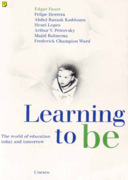
Learning to be: The world of education today and tomorrow
Paris: UNESCO (1972), xxxix, 313 pp.
Técnicas de producción en teleducación. V seminario latinoamericano para profesores de teleducación
Bogotá: Instituto de Solidaridad Internacional Fundación Konrad Adenauer (KAS) (1971), 368 pp.
Sociología y pedagogía de teleducacion: IV seminario latinoamericano para profesores de teleducación
Instituto de Solidaridad Internacional Fundación Konrad Adenauer (KAS) (1970), 295 pp.
