Filter
10
Featured
Free Access
6
Top Insights
1
Topics
Hate Speech, Hate Speech in Social Media
3
Racism in Social Media & Digital Communication
3
Disinformation, Misinformation, Fake News
3
Hate Speech Legislation & Regulation
2
Content Moderation & Regulation: Social Media
2
Facebook
2
Artificial Intelligence
2
Racism in Communication & Media
2
Self-Regulation of Media
2
Antisemitism
2
Gender Advocacy & Empowerment, Gender Mainstreaming
1
Cybersecurity, Digital Safety, Privacy, Right to Privacy
1
Freedom of Expression
1
Public Diplomacy, Cultural Diplomacy
1
Arts
1
Good Governance
1
Algorithms & Big Data
1
Big Digital Platforms, Big Tech Companies
1
Cyberbullying, Cyberharassment
1
Data Governance, Data Justice, Data Sovereignty
1
Digital Ethics, AI Ethics, Social Media Ethics, Data & Information Ethics
1
Digital Platform & Intermediaries Regulation
1
Digital & Information Literacy
1
Scoring, Scoring Systems
1
Social Media
1
Twitter & Microblogs
1
AI & Democracy / Democratization
1
AI & Social Justice
1
Digital Philosophies
1
Discrimination in Language & Media
1
Minorities
1
Minority Rights
1
Perceptions & Attitudes Towards Minorities
1
Xenophobia
1
Disinformation & Misinformation Law & Regulation
1
Gaming: Ethical Issues
1
Image Ethics, Ethics in Photojournalism
1
Journalism Ethics
1
Bias in News Media
1
Sexuality: Media Representation, Sexually Explicit Media Content, Pornography
1
Indigenous Peoples, Indigenous Population
1
Stereotypes in Media & Communication
1
Media Law & Regulation
1
Confidential Sources, Whistleblowing, Protection of Journalists' Sources
1
Regulatory Bodies
1
Migration
1
People with Disabilities (General)
1
Governance
1
Election Campaigns: Social Media
1
Public Spheres
1
Prejudices
1
Buddhism
1
Confucianism
1
Corruption & Combating Corruption
1
Ethnocentrism
1
Participation
1
Reality & Communication, Truth & Media
1
Robots, Robotics
1
Technologies: Impact Assessment
1
Language
Document type
Countries / Regions
Authors & Publishers
Media focus
Publication Years
Methods applied
Output Type

Code & Vorurteil: Über Künstliche Intelligenz, Rassismus und Antisemitismus
Bonn: Bundeszentrale für politische Bildung (bpb), Sonderausg. (2024), 231 pp.
"Was bedeutet die zunehmende Nutzung Künstlicher Intelligenz für die Demokratie, für Offenheit und Vielfalt in der Gesellschaft? Wie gerecht entscheiden Algorithmen? Vielfach zeigt sich, dass KI-Anwendungen strukturelle Ungleichheit und bestehende Diskriminierungsmuster reproduzieren können. Den
...
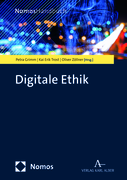
Digitale Ethik
Top Insights
Baden-Baden: Nomos; Verlag Karl Alber (2024), 661 pp.
"Das neue umfassende Standardwerk für den Bereich der Digitalen Ethik. Das Handbuch verschafft einen Überblick über die Herausforderungen und Besonderheiten der Ethik im digitalen Raum und versammelt namhafte Expert:innen zu folgenden Themenfeldern: Theoretische Zugänge (Deontologische Ansätze,
...

Automatisierte Entscheidungssysteme und Diskriminierung: Ursachen verstehen, Fälle erkennen, Betroffene unterstützen. Ein Ratgeber für Antidiskriminierungsstellen
Berlin: Algorithm Watch (2022), 26 pp.
"Diese Publikation ist im Rahmen des Projekts AutoCheck – Handlungsanleitung für den Umgang mit automatisierten Entscheidungssystemen für Antidiskriminierungsstellen entstanden. Sie ist eine erste Einführung in die Diskriminierungsrisiken beim Einsatz von automatisierten Entscheidungssystemen.
...

How Platforms Respond to Human Rights Conflicts Online: Best Practices in Weighing Rights and Obligations in Hybrid Online Orders
Hamburg: Leibniz Institut für Medienforschung; Global Digital Human Rights Network (GDHRNet) (2022), 187 pp.
"Platforms have power. But this power is not unchecked. Governments have an important role to play in protecting their citizens' rights vis-à-vis third parties and ensuring a communication order in which rights are not violated. (And in addition, of course, they need to respect human rights themsel
...
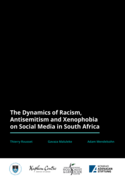
The Dynamics of Racism, Antisemitism and Xenophobia on Social Media in South Africa
Johannesburg: Konrad-Adenauer-Stiftung (KAS) (2022), x, 221 pp.
"This study examines racism, antisemitism, and xenophobia on Facebook and Twitter. The authors were looking for patterns in the mass of posts, tweets, and images that circulate on social media. To do this, they focused on a series of case studies. These demonstrate that political discussion on socia
...
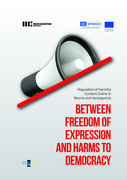
Regulation of Harmful Content Online in Bosnia and Herzegovina: Between Freedom of Expression and Harms to Democracy
Sarajevo: Mediacentar; UNESCO (2022), 108 pp.
"The study specifically focuses on five types of harmful content: a) hate speech and hate narratives; b) denials of war crimes and glorification of war criminals; c) ethno-nationally and/or politically biased media reporting; d) disinformation; and e) attacks, threats and smear campaigns against ind
...

Whistleblowing for Change: Exposing Systems of Power and Injustice
Bielefeld: transcript (2021), 376 pp.
"The courageous acts of whistleblowing that inspired the world over the past few years have changed our perception of surveillance and control in today's information society. But what are the wider effects of whistleblowing as an act of dissent on politics, society, and the arts? How does it contrib
...

Teilhabe für alle?! Lebensrealitäten zwischen Diskriminierung und Partizipation
Bonn: Bundeszentrale für politische Bildung (bpb) (2017), 295 pp.
Indígenas no Brasil: Demandas dos povos e percepções da opiniao pública. Módulo II – Survey nacional
Fundação Perseu Abramo (FPA); Rosa-Luxemburg-Stiftung (2010), 182 slides
The Sage Handbook of Prejudice, Stereotyping and Discrimination
London et al.: Sage (2010), xxv, 646 pp.