
Filter
21
Featured
Free Access
10
Top Insights
2
Topics
Religious Television Programmes
5
Christian Television
4
Muslim Radio Broadcasting
3
Islamist Communications & Media
3
Religious Media Use, Religious Media Audiences
2
Televangelism
2
Public Service Broadcasting: Religious Programmes
2
Judaism and Communication
2
Advertising Markets & Industries
1
Media Use: Migrants & Diasporas
1
Television Use: Youth
1
Muslim Book Publishing
1
Homiletics, Preaching, Sermons
1
Pentecostal Churches & Communication
1
Film and Religion, Religion in Motion Pictures
1
Film Industries
1
Community Television
1
Extremist & Terrorist Communication Strategies and Media
1
Religious Communication in Conflicts & Peacebuilding
1
Religious Music
1
Religious Digital & Social Media Practices
1
Digital Media Landscapes
1
Ethnic / Minority Television Programmes
1
Integration of Minorities: Role of Media
1
Music Industries & Markets
1
Satellite Television
1
Death & Grief: Reporting & Media Representation
1
Media Landscapes, Media Systems, Media Situation in General
1
Press Landscapes
1
Radio Landscapes
1
Television Landscapes
1
Media Law & Regulation: Religious Media
1
Sa'rawi, Muhammad Mutawalli
1
Religion and Communication
1
COVID-19 Pandemic & Religion
1
Fundamentalisms (Religious)
1
Hinduism and Communication
1
Muslim Digital Media & Online Communities
1
Muslim Media
1
Religion and Politics
1
Youth & Religious Communication
1
COVID-19 Pandemic: Economic, Political and Social Effects
1
Cable Television
1
Al-Manar (Television Channel, Lebanon)
1
Quran TV (Television Channel, Pakistan)
1
Television Talk Shows
1
Language
Document type
Countries / Regions
Authors & Publishers
Media focus
Publication Years
Methods applied
Journals
Output Type

#IAMHUSSEINI: Television and mourning during the COVID-19 pandemic
Religion, volume 52, issue 2 (2022), pp. 284-305
"This article is a study of mourning among Shi’a Muslims during the COVID-19 pandemic through a call-in talk show called #IAMHUSSEINI. By analyzing the discourses of callers and presenters and locating them within a visual context of the television studio, this article shows how the viewership of
...
Religious Television and Pious Authority in Pakistan
Bloomington: Indiana University Press (2021), xi, 226 pp.
"In Pakistan, religious talk shows emerged as a popular television genre following the 2002 media liberalization reforms. Since then, these shows have become important platforms where ideas about Islam and religious authority in Pakistan are developed and argued. In Religious Television and Pious Au
...

10 Jahre „Islamisches Wort“ und „Forum am Freitag“: Rückblick und Ausblick auf Islam im Rundfunk
Communicatio Socialis, volume 50, issue 3 (2017), pp. 391-405
"Die Islamkonferenz hat kritisch nach dem Beitrag der Medien für die Integration von Muslimen gefragt. 2007 machten der SWR mit der Radio-Sendung „Islamisches Wort“ und das ZDF mit der TV-Sendung „Forum am Freitag“ einen Anfang. Der NDR folgte später mit dem „Freitagsforum“ und der „
...
Fatwa on Satellite TV and the Development of Islamic Religious Discourse
Journal of Arab & Muslim Media Research, volume 10, issue 2 (2017), pp. 129-152
"Satellite TV and the Internet revolutions have reinvigorated religious discourse in public spaces. Across the world, religious TV channels and Internet religious websites have taken up the roles of traditional religious spaces such as churches, mosques, synagogues, gurdwaras and temples. Islamic re
...
Preaching Islamic Renewal: Religious Authority and Media in Contemporary Egypt
Oakland, Calif.: University of California Press (2016), xi, 261 pp.
"Preaching Islamic Renewal examines the life and work of Muhammad Mitwalli Sha‘rawi, one of Egypt's most beloved and successful Islamic preachers. His wildly popular TV program aired every Friday for years until his death in 1998. At the height of his career, it was estimated that up to 30 million
...
Religion and Global Media: Impact of Arabic TV Channels on Lowland Eritrean Youth
Journal of Arab & Muslim Media Research, volume 9, issue 2 (2016), pp. 221-236
"Satellite TV channels from the Middle East started beaming into Eritrea from 1996, and the Eritrean youth are avid consumers of the global messages from across the borders. Following an in-depth interview method as a research technique, using an unstructured, openended questionnaire, the present st
...
Religious TV
In: Media Industries in the Middle East 2016
Qatar: Northwestern University in Qatar; Doha Film Institute (2016), pp. 162-169
"Religious channels in the MENA region are approximately 10 percent of all free-to-air (FTA) channels from 2012 to 2014. This is a relatively high share compared to many markets outside the region, such as the U.K., where religious channels only represent one percent of FTA channels. Religious chann
...
Ramadan TV
In: Media Industries in the Middle East 2016
Qatar: Northwestern University in Qatar; Doha Film Institute (2016), pp. 152-161
"Television executives and producers are busy for 11 months of the year, preparing for the do-or-die one-month television season: Ramadan. This ninth month in the Islamic lunar calendar is at once a period of religious devotion and a time for the television industry’s best productions. It is a tim
...
Media Industries in the Middle East 2016
Top Insights
Qatar: Northwestern University in Qatar; Doha Film Institute (2016), 174 pp.
"This report contains the collected, examined, and produced information on the fundamental characteristics of the media and communication industries, whenever possible, in the MENA region as a whole. It typically includes 14 countries from Mauritania on the Atlantic Ocean to Oman on the Arab Gulf. F
...
New Media and Religious Transformations in Africa
Bloomington, Indiana: Indiana University Press (2015), xii, 316 pp.
"New Media and Religious Transformations in Africa casts a critical look at Africa's rapidly evolving religious media scene. Following political liberalization, media deregulation, and the proliferation of new media technologies, many African religious leaders and activists have appropriated such me
...
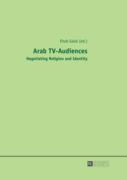
Arab TV-Audiences: Negotiating Religion and Identity
Frankfurt am Main: Peter Lang (2014), 150 pp.
"Today the relations between Arab audiences and Arab media are characterised by pluralism and fragmentation. More than a thousand Arab satellite TV channels alongside other new media platforms are offering all kinds of programming. Religion has also found a vital place as a topic in mainstream media
...
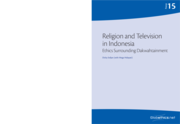
Religion and Television in Indonesia: Ethics Surrounding Dakwahtainment
Geneva: Globethics.net (2013), 109 pp.
"This monograph provides a critical overview and assessment of the new and rising phenomenon of dakwahtainment or Islamic televangelism in post-reformasi Indonesia. This phenomenon feeds on the increasing materialist, consumerist, nihilistic and voyeuristic culture of celebrity that is currently eng
...
Religious Broadcasting in the Middle East
New York: Columbia University Press (2012), xvi, 348 pp.
Global and Local Televangelism
Basingstoke et al.: Palgrave Macmillan (2012), xiv, 250 pp.

Religious Media Content: A Cable TV Phenomenon
audiencescapes (2011), 7 pp.
Islamic Fundamentalism in Arab Television: Islamism and Salafism in Competition
In: Fundamentalism in the Modern World. Vol. 2: Fundamentalism and Communication: Culture, Media and the Public Sphere
Ulrika Mårtensson, Jennifer Bailey, Priscilla Ringrose, Asbjorn Dyrendal (eds.)
London; New York: Tauris (2011), pp. 264-291
"Within less than 20 years, the number of Arabic-language satellite channels has risen from zero to more than 500, including channels financed by the US, Russia, China, the UK and France. Some 50 of these channels label themselves as Islamic (and a handful are Christian), but Islamic programming is
...
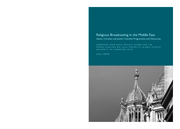
Religious Broadcasting in the Middle East: Islamic, Christian and Jewish Channels. Programmes and Discourses
Top Insights
Cambridge: Cambridge Arab Media Project (CAMP) Cambridge University; Prince Alwaleed Bin Talal Centre of Islamic Studies (CIS) (2010), 70 pp.
"Since the mid-1990s, the influence of satellite television broadcasting in the Middle East has become central to the shaping of public attitudes in the region and beyond. While many of the main influential mainstream satellite channels are news-focused, entertainment and religious broadcasting are
...
Fernsehprediger, Online-Counselling und Fatwa-Hotlines: Zur Medialisierung des Islam
In: Religion und Massenmedien
Maud E. Sieprath (ed.)
Berlin: Weißensee-Verlag (2009), pp. 99-128
"Der Mainstream-Islam, der sich heute im arabischen Fernsehen und Internet präsentiert, hat [...] eine besondere Charakteristik: er hat eine moralische Botschaft, ist aber nicht vordergründig politisch und wird damit geduldet von den autoritären Regimes, die in populär-religiösen Formaten zumei
...

Islam im Rundfunk - wie eigentlich? Auf dem Weg zu muslimischer kommunikativer Präsenz in deutschen Rundfunkprogrammen
Köln: Institut für Rundfunkökonomie an der Universität zu Köln (2007), 40 pp.
"[...] Vor diesem Hintergrund sei nun der heutige rechtliche Sachstand bei den religiösen Sendungen anhand einiger Gesetzesbeispiele etwas genauer beschrieben (unter 2). Daraus werden sich auch bereits erste Aufschlüsse über künftige allgemeine Entwicklungs- und Reformmöglichkeiten ergeben. Ein
...
Islam auf Sendung: Islamische Fernsehsendungen im offenen Kanal
Berlin: Dagyeli (2007), 238 pp.
