
Filter
3
Topics
Authoritarian Regimes: Government Communication Strategies
1
Media / Communication Control
1
Surveillance, Surveillance Technologies, Spyware
1
Foreign Government Communication Interventions
1
Hate Speech Legislation & Regulation
1
WeChat (Messaging, Social Media & Mobile Payment App, China)
1
Facebook
1
TikTok
1
Twitter & Microblogs
1
Deepfakes (Realistic-Looking Media Content that has been Modified, Generated or Falsified Using AI)
1
Language
Document type
Countries / Regions
Authors & Publishers
Media focus
Publication Years
Output Type
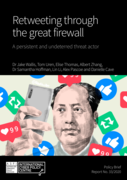
"This report analyses a persistent, large-scale influence campaign linked to Chinese state actors on Twitter and Facebook. This activity largely targeted Chinese-speaking audiences outside of the Chinese mainland (where Twitter is blocked) with the intention of influencing perceptions on key issues,
...
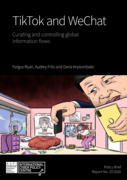
"The Chinese state has demonstrated a propensity for controlling and shaping the information environment of the Chinese diaspora—including via WeChat. The meteoric growth of TikTok has now put the Chinese Communist Party (CCP) in a position from which it can shape the information environment on a
...
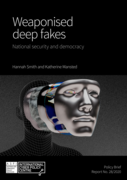
"Any technology that can be used to generate false or misleading content, from photocopiers and Photoshop software to deep fakes, can be weaponised. This paper argues that policymakers face a narrowing window of opportunity to minimise the consequences of weaponised deep fakes. Any response must inc
...
