
Filter
202
Featured
Free Access
99
Key Guidance
1
Top Insights
2
Topics
Female Journalists & Media Workers
72
Self-Censorship
24
Safety of Journalists, Safety Risks of Media Workers
14
Journalists Dealing with Risks & Threats, Resilience & Wellbeing of Media Workers
13
Gender-Based Online Harassment & Sexual Threats
9
Cyberbullying, Cyberharassment
7
Gender-Based Harassment, Intimidation & Violence
7
Media Freedom, Press Freedom
6
Countering Defamation & Harassment
6
Safety of Journalists: Law & Public Policies
5
Press Freedom & Communication Rights Violations
4
Countering Hate Speech, Disinformation & Propaganda
4
Hate Speech, Hate Speech in Social Media
3
Media Law & Regulation
3
Chilling Effects (Discouragement of Legitimate Exercise of Legal Rights)
2
Impunity for Crimes Against Journalists & Media Personnel
2
Surveillance, Surveillance Technologies, Spyware
2
Russia-Ukraine War <2014-
2
Conflict Reporting, Armed Conflict Reporting
2
Sports Reporting
2
Foreign Correspondents
2
Protests, Protest Movements, Protest Reporting & Media Representation
2
Working Conditions of Journalists & Media Personnel
2
Authoritarian Regimes: Media Systems & Landscapes
1
Independent & Oppositional Media in Authoritarian Regimes
1
Cybersecurity, Digital Safety, Privacy, Right to Privacy
1
Digital Media Censorship, Control & Filtering, Internet & Social Media Censorship
1
Media / Communication Control
1
Censorship
1
Countering Press Freedom Violations by Legal Actions
1
Killings of Journalists & Media Personnel
1
Violence Against Journalists & Media Personnel
1
Alternative Communication & Media
1
Trauma, Coping with Trauma, Trauma Therapy
1
Twitter & Microblogs
1
LGBT & Communication / Media
1
Minority Journalists
1
Disinformation, Misinformation, Fake News
1
Disinformation & Misinformation Law & Regulation
1
Self-Regulation of Media
1
Gender Representation & Stereotypes in the Media
1
Gender-Sensitive Journalism
1
Women's Rights
1
COVID-19 Communication
1
Indigenous Journalists & Communicators
1
Russia: Foreign Information Operations, International Broadcasting, Public Diplomacy
1
European Union (EU)
1
Associations & Networks of Journalists
1
Investigative Journalism
1
Journalism Education & Training
1
Local Television
1
COVID-19 Pandemic: Effects on Journalism, Media & Communication
1
Media Landscapes, Media Systems, Media Situation in General
1
Criminal Law & Criminal Prosecution
1
Human Rights Violations
1
Law Enforcement, Litigations, Legal Practice, Case Law, Jurisdiction
1
Legal Protection
1
Migration & Refugees Reporting & (Social) Media Representation
1
Hindu Nationalism
1
Democracy / Democratization and Media
1
Media Capture, Vested Political & Other Interests in the Media
1
Taliban
1
COVID-19 Pandemic: Economic, Political and Social Effects
1
Language
Document type
Countries / Regions
Authors & Publishers
Media focus
Publication Years
Methods applied
Journals
Output Type
Why are journalists threatened and killed? A portrait of neo-paramilitary anti-press violence in Colombia's Bajo Cauca
Journalism, volume 23, issue 4 (2020), pp. 841-857
"Anti-press violence in Colombia's Bajo Cauca is an inherent part of the structures, which underpin the region's alternative social (dis)order. Through ethnographic interviews with four members of Colombia's neo-paramilitary group, Los Urabenos, who have perpetrated attacks against journalists, this
...
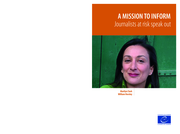
A Mission to Inform: Journalists at Risk Speak Out
Strasbourg: Concil of Europe (2020), 149 pp.
"The present study brings together a unique collection of open testimonies from 20 journalists working in different member states of the Council of Europe. Each of these journalists spoke about the risks and pressures they perceived and experienced in exercising their profession, as well as their st
...
Online Harassment and Its Implications for the Journalist–Audience Relationship
Digital Journalism, volume 8, issue 8 (2020), pp. 1047-1067
"Amid growing threats to journalists around the world, this study examines the nature of online harassment, the types of journalists most likely to experience it, and the most common forms of response to such abuse. Through a representative survey of U.S. journalists, we find that nearly all journal
...
What to Do if You’re the Target of Online Harassment
Slate; Free Speech Project; Future Tense; & Security Program at American University Washington College of Law Law Tech (2020)
"In the middle of a global pandemic, as a wave of anti-racism activism sweeps the nation, conditions are rife for a spike in online hate and harassment. Tens of thousands have taken to the streets to protest police brutality while millions more socially distance at home, anxious and isolated, with e
...

Professionalism, Safety Measures, and Threats: An Exploratory Approach
Paradigms, volume 14, issue 1 (2020), pp. 117-124
"All citizens have equal rights to lead their life in any country in the world. The primary responsibility of the government is to protect the rights of all human beings on equal basis residing in a country. This study is an endeavor to highlight the intensity and reasons behind the threats received
...

A way to silence journalists? Estonian female journalists’ experiences with harassment and self-censorship
In: Journalist Safety and Self-Censorship
Ingrid Fadnes, Anna Grøndahl Larsen, Roy Krøvel (eds.)
London; New York: Routledge (2020), pp. 114-129
"The aim of the study is to investigate Estonian female journalists’ experiences with harassment resulting in self-censorship. We carried out three studies: one in 2015, a second in 2016 and a third one in 2018. The data were gathered by in-depth interviews (2015 and 2018), journalists’ diaries
...
Constructing Silence: Processes of Journalistic (Self-)Censorship during Memoranda in Greece, Cyprus, and Spain
Media and Communication, volume 8, issue 1 (2020), pp. 15-26
"What are to be considered as threats against journalism? Whereas the literature on safety of journalists mainly discusses threats as part of armed conflicts, this article studies how other kinds of conflicts such as economic strangulation and the viability threat represent threats against journalis
...
Freedom of Expression in Times of Covid-19: Chilling Effect in Hungary and Serbia
Journal of Liberty and International Affairs, volume 6, issue 2 (2020), pp. 14-29
"New technologies have opened several risks to safety of journalists. More importantly, in the state of emergency caused by the Covid-19 outbreak, journalists and media actors have shifted their activities online more than ever, which also made them more prone to digital threats and attacks. In some
...
Double-edged knife: Practices and perceptions of technology and digital security among Mexican journalists in violent contexts
Tapuya: Latin American Science, Technology and Society, volume 3, issue 1 (2020), pp. 22-42
"Violence against Mexican journalists has received significant attention from scholars at home and abroad during the last decade. However, though a diversity of issues have been consistently studied, there is one topic that is still largely neglected: the implications of technology for news workersâ
...

The “triple effect” silencing female journalists online. A theoretical exploration
In: Journalist Safety and Self-Censorship
Ingrid Fadnes, Anna Grøndahl Larsen, Roy Krøvel (eds.)
London; New York: Routledge (2020), pp. 100-113
"Online harassment of women journalists imposes self-censorship and threatens women’s participation in online journalism. This is of grave concern for the development of freedom of speech and plurality in the media (Organization for Security and Co-operation in Europe [OSCE], 2019). Part of this i
...
Female Journalists’ Experience of Online Harassment: A Case Study of Nepal
Media and Communication, volume 8, issue 1 (2020), pp. 47-56
"This study examines the experiences of female journalists in Nepal in the context of rapidly growing expansion of broadband Internet. By examining the findings of the qualitative in-depth interview of 48 female journalists, it argues that online platforms are threatening press freedom in Nepal, mai
...
#MeToo, Sexual Harassment and Coping Strategies in Norwegian Newsrooms
Media and Communication, volume 8, issue 1 (2020), pp. 57-67
"This article, through conducting a study of the sexual harassment (SH) of media workers, investigates the extent and types of SH experienced by the editorial staff of Norwegian newsrooms at the time the #MeToo campaign arrived in Norway, and what effects such experiences have on journalists’ prof
...
In the crosshairs: The perils of environmental journalism
Journal of Human Rights, volume 19, issue 3 (2020), pp. 275-290
"Journalists covering environmental issues around the globe are at heightened risk of murder, arrest, assault, threats, self-exile, lawsuits, and harassment because environmental controversies often involve influential business and economic interests, political power battles, criminal activities, an
...

Strengthening Media Freedom: The Protection of Journalists in Europe, Hate Speech, Disinformation and the Role of Platforms
European Parliament (2020), 20 pp.
"European Parliament resolution of 25 November 2020 on strengthening media freedom: the protection of journalists in Europe, hate speech, disinformation and the role of platforms (2020/2009(INI))." (Introduction)

Conclusion. Researching self-censorship caused by inadequate safety of journalists. Causes, solutions and future research
In: Journalist Safety and Self-Censorship
Ingrid Fadnes, Anna Grøndahl Larsen, Roy Krøvel (eds.)
London; New York: Routledge (2020), pp. 197-203
"The chapters document a multitude of factors pushing journalists to self-censor out of fear of repercussions such as government pressures, police brutality, social violence, corruption, misogyny and gendered stereotyping, surveillance, economic factors and more. The range of causes of self-censorsh
...
A New Pedagogy to Enhance the Safety and Resilience of Journalists in Dangerous Environments Globally
Education Sciences, volume 10, issue 310 (2020), 15 pp.
"Risks to journalists are rising with disasters, epidemics, physical, mental and digital harassment all increasing globally. Some 1382 journalists have been killed since 1992 and 246 are imprisoned. However, the threat type has been changing, with the majority of journalists killed annually being on
...

Pushing a Political Agenda: Harassment of French and African Journalists in Côte d’Ivoire’s 2010-2011 National Election Crisis
International Journal of Communication, volume 14 (2020), pp. 472-490
"Côte d’Ivoire’s national election in 2010 descended into civil war into 2011 when incumbent President Laurent Gbagbo refused to concede the presidency to the internationally recognized winner Alassane Ouattara. The three political players in this election—the parties of Ouattara, Gbagbo, and
...
Suffering in Silence: The Resilience of Pakistan’s Female Journalists to Combat Sexual Harassment, Threats and Discrimination
Journalism Practice, volume 15, issue 2 (2020), pp. 150-170
"Pakistan’s journalists confront severe safety risks across the country and impunity to crimes against them allows the perpetrators to go unpunished. Now the country is recognized as one of the deadliest places for working journalists in the world. Given this situation, the Pakistani female journa
...
Democracy at Stake: Self-Censorship as a Self-Defence Strategy for Journalists
Media and Communication, volume 8, issue 1 (2020), pp. 5-14
"The media play an essential role of informing and mobilising voters as well as facilitating a two-way communication process between citizens and those vying for electoral offices during elections. This allows citizens to get information on various issues from the contenders, which largely informs t
...
Digital Threats and Attacks on the Philippine Alternative Press: Range, Responses, and Remedies
In: Handbook of Research on Combating Threats to Media Freedom and Journalist Safety
Sadia Jamil (ed.)
Hershey, PA: IGI Global (2020), pp. 1-22
"In the Philippines, the assault on the press has gone digital. While Filipino journalists continue to face physical, verbal, and legal threats and attacks, cyber-attacks and online harassment/trolling were identified in 2018 as the second worst threat against them, after low wages and poor working
...
