
Filter
11
Featured
Free Access
4
Top Insights
2
Topics
Digital & Social Media Use, Internet Use
3
ICTs and Poverty Reduction
3
Digital Divide, Digital Inequalities
2
Media Use: Urban Populations
2
Mobile Phone Use
2
Suburbs, Poor Districts, Slums, Shanty Towns
2
Digital Activism, Cyber Advocacy
1
Audiences & Users
1
Information Use & Consumption
1
Media Use: Children
1
Media Use: Rural Populations
1
Mobile Phone Use: Women
1
Community Telecommunication Networks
1
Messages, Message Design, Message Analysis
1
Anthropology of Media & Communication
1
Clothing & Fashion
1
Nonprofit Organizations, NGOs
1
Communication for Social Change
1
Digital Communication, Digital Media
1
Digital Healthcare & Information, Mobile Health, E-Health, Telemedicine
1
Internet / ICTs and Social Change
1
Online Dating
1
Social Media
1
Gender and ICTs / Internet
1
ICTs and Development
1
Digitalisation, Online Communication & Democracy / Democratization
1
Poverty & Poverty Reduction
1
Literacy, Literacy Campaigns, Postliteracy, Alphabetisation Policies
1
Gaming, Video Games
1
Female Journalists & Media Workers
1
Gender in Health Communication
1
Rural Women & Communication
1
Journalists
1
Poverty & Impoverished People: Reporting & Media Representation
1
Media Literacy: Youth
1
Music
1
Political Doctrines
1
Radio Programmes & Genres
1
Urban Radios
1
Media Effects
1
Mobile Phones in Rural Areas
1
Participation
1
Mobile Phones, Smartphones
1
Urban Communication, Urban Media
1
Youth and Media
1
Language
Document type
Countries / Regions
Authors & Publishers
Media focus
Publication Years
Methods applied
Journals
Output Type
Technology of the Oppressed: Inequity and the Digital Mundane in Favelas of Brazil
Cambridge, Mass.: MIT Press (2022), xi, 218 pp.
"David Nemer draws on extensive ethnographic fieldwork to provide a rich account of how favela residents engage with technology in community technology centers and in their everyday lives. Their stories reveal the structural violence of the information age. But they also show how those oppressed by
...

Media Practices and Changing African Socialities: Non-Media-Centric Perspectives
New York; Oxford: Berghahn (2020), 250 pp.
"Deriving from innovative new work by six researchers, this book questions what the new media's role is in contemporary Africa. The chapters are diverse - covering different areas of sociality in different countries - but they unite in their methodological and analytical foundation. The focus is on
...

The Next Billion Users: Digital Life Beyond the West
Top Insights
Cambridge, Mass.; London: Harvard University Press (2019), 269 pp.
"The Next Billion Users reveals that many assumptions about internet use in developing countries are wrong. After immersing herself in factory towns, slums, townships, and favelas, Payal Arora assesses real patterns of internet usage in India, China, South Africa, Brazil, and the Middle East. She fi
...
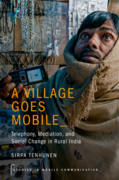
A Village Goes Mobile: Telephony, Mediation, and Social Change in Rural India
Top Insights
New York: Oxford University Press (2018), ix, 200 pp.
"In A Village Goes Mobile, Sirpa Tenhunen examines how the mobile telephone has contributed to social change in rural India. Tenhunen's long-term ethnographic fieldwork in West Bengal began before the village had a phone system in place and continued through the introduction and proliferation of the
...

An Ethnographic Approach to Low-Income Youth's Engagement in Communication for Social Change
Commons: Revista de Comunicación y Ciudadanía Digital, volume 6, issue 1 (2017), pp. 113-129
"This article presents an ethnographic approach to how low-income Brazilians of impoverished urban areas have engaged in community journalism and media activism. Exploring empirical materials collected during a seven-year research process (2009-2016), the article has two main objectives. One is to a
...
Wissenskluft und Digital Divide
Baden-Baden: Nomos (2014), 121 pp.
"Der Band gibt eine fundierte, knappe und anschauliche Einführung in die theoretischen Grundlagen, methodischen Zugänge, empirischen Befunde und gesellschaftlichen Zusammenhänge der Wissenskluftforschung. Diese geht von wachsenden Wissensdifferenzen zwischen statushöheren und -niedrigeren Gruppi
...

Encuesta de opinión: Pobreza, participación y medios
Santiago de Chile: Programa Comunicación y Pobreza (2013), 67 pp.
"Con excepción del consumo de radio y televisión abierta -que es bastante transversal-, los resultados dan cuenta de una “dieta medial” altamente diferenciada entre los individuos en situación de pobreza y el resto de la población. Esta diferencia se ve especialmente reflejada en el consumo
...
Versatzstücke einer Kommunikationsgeschichte der Armut
Medien & Zeit, volume 25, issue 1 (2010), pp. 3-50
"Wie Armut in Medien ein Gesicht gegeben wurde, durch welche manifesten Kommunikationsinhalte sich auf gesellschaftliche Armutsverhältnisse rückschließen lässt, welche Rollen Medien und deren Konsum im Leben von Armutsbetroffenen einnehmen und wie es den medialen Mittlern von Armut ergeht: Diese
...
Handbook of Mobile Communication Studies
Cambridge, Mass.; London: MIT Press (2008), ix, 472 pp.
"This book offers a view of the cultural, family, and interpersonal consequences of mobile communication across the globe. Scholars analyze the effect of mobile communication on all parts of life, from the relationship between literacy and the textual features of mobile phones to the use of ringtone
...
O rádio dos pobres: Comunicação de massa, ideologia e marginalidade social
São Paulo: Edições Loyola (1988), 195 pp.
Use of the Mass Media by the Urban Poor: Findings of Three Research Projects with an Annotated Bibliography
New York et al.: Praeger (1970), xvi, 251 pp.
"Three research projects studied in detail the mass media behaviors of poor children, adolescents, and adults. These studies focused on a complete range of media behaviors - media use, availability, content preferences, functions, and attitudes. They considered a comprehensive set of media including
...
