
Filter
44
Featured
Free Access
11
Top Insights
1
Topics
Collective Memory: Violent Conflicts & Wars
13
Holocaust
8
Dealing With the Past
7
Hate Speech, Hate Speech in Social Media
6
Collective Memory & Media, Media Representation of History
6
Perpetrators
5
Foreign Conflict Reporting, International War Reporting
5
Conflict Reporting, Armed Conflict Reporting
4
Racism in Communication & Media
4
Radio-Télévision Libre des Milles Collines (RTLM)
4
Political Cartoons & Comics
3
Documentaries, Television Documentaries, Web Documentaries
3
War & Political Violence in Cinema
3
Literature
3
Journalists Dealing with Risks & Threats, Resilience & Wellbeing of Media Workers
3
Transitional Justice
3
Media Use: Minorities & Disadvantaged Groups
2
Conflicts and Media
2
Extremist & Terrorist Communication Strategies and Media
2
Human Rights Protection & Violations: Media Representation & Reporting
2
Trauma: Media Representation & Reporting
2
Museums
2
Racism
2
Gender-Based Harassment, Intimidation & Violence: Media Representation & Reporting
2
Colonial Legacies
2
Colonial Period
2
Nazism
2
Africa: Foreign Media Representation & Image Abroad
2
Foreign Correspondents
2
Human Rights
2
Propaganda
2
Press
2
Radio
2
Memory, Memorizing
2
Sexual Violence & Abuse, Rape
2
Ethnic Groups, Ethnic Minorities
2
Afrodescendants
2
Conflict Coverage: Children's Books & Educational Materials
1
Children & Childhood
1
Faith-Based Film Literacy Education
1
Conflict Coverage: Cinema & Audiovisual Media
1
Film and Religion, Religion in Motion Pictures
1
Bible Films, Movie Christs & Antichrists
1
Historical Films
1
Violence in the Media: Film
1
Film Studies & Research
1
Censorship
1
Media Freedom, Press Freedom
1
Citizen Journalism, Community Journalism
1
Oral Cultures & Traditions, Oral History, Oral Testimonies
1
Storytelling
1
Civil Wars
1
Conflict Prevention, Mediation & Reconciliation: Role of Media
1
Crime & Violence Reporting
1
Enemy Images
1
Hate Speech Legislation & Regulation
1
Media Assistance in Conflict Regions & Fragile Countries
1
Trauma, Coping with Trauma, Trauma Therapy
1
Wars & Political Violence in Arts & Literature
1
War Reporting
1
Arts
1
Collective Identities & Media
1
Poetry
1
Influence of Media on Development Aid
1
Social Media
1
Video & Foto Online Communities
1
Flickr
1
YouTube
1
Disinformation, Misinformation, Fake News
1
Conspiracy Narratives, Conspiracy Theories
1
Digital & Online Archives
1
Documenting Human Rights Violations
1
Economic Policies
1
Teaching & Teaching Methods
1
Ethics in Media & Communication
1
Decolonial & Non-Western Approaches
1
Decolonisation & Independence (General)
1
First World War (1914-1918)
1
History of Media: 19th Century
1
Local History & Memory
1
Ethnicity in Communication
1
Intercultural Dialogue
1
Developing Countries Reporting & Representation in Foreign / International Media
1
Foreign Countries: Reporting & Media Representation
1
Media Law & Regulation: International Standards & Practices
1
Colonialism
1
United Nations (UN)
1
Court Reporting & Media Representation of Judicial System
1
Media Landscapes, Media Systems, Media Situation in General
1
Media Law & Regulation
1
Law Enforcement, Litigations, Legal Practice, Case Law, Jurisdiction
1
Photography
1
Documentary Photography
1
Politics
1
Government
1
National Identity & Media, Nationalism & Communication
1
Public Media, State Media
1
Media Effects
1
Prejudices
1
Buddhism and Communication
1
Fundamentalisms (Religious)
1
Hinduism and Communication
1
Muslim Cinema & Film Representation of Islam
1
Antisemitism
1
Social Conflicts, Social Problems
1
Violence
1
State Violence
1
Civil Society
1
Language
Document type
Countries / Regions
Authors & Publishers
Media focus
Publication Years
Methods applied
Journals
Output Type
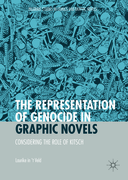
The Representation of Genocide in Graphic Novels: Considering the Role of Kitsch
Cham: Palgrave Macmillan (2019), ix, 230 pp.
"This book mobilises the concept of kitsch to investigate the tensions around the representation of genocide in international graphic novels that focus on the Holocaust and the genocides in Armenia, Rwanda, and Bosnia. In response to the predominantly negative readings of kitsch as meaningless or in
...
What is the Relationship Between Hate Radio and Violence? Rethinking Rwanda's "Radio Machete"
In: Media and Mass Atrocity: The Rwanda Genocide and Beyond
Allan Thompson (ed.)
Waterloo, Ontario: Centre for International Governance Innovation (2019), pp. 97-130
"The evidence amounts to a persuasive refutation of the commonly held beliefs that radio had widespread, direct effects and that hate radio was the primary driver of the genocide and participation in it. That said, the evidence suggests radio had some marginal and conditional effects. RTLM broadcast
...
"We Have Failed as a Continent:" Covering an African Atrocity for an African Audience
In: Media and Mass Atrocity: The Rwanda Genocide and Beyond
Allan Thompson (ed.)
Waterloo, Ontario: Centre for International Governance Innovation (2019), pp. 237-252
"This ethnic conflict frame performs three functions when used by African journalists. The first is that it works to domesticate the conflict [in Darfur] by relying on already sedimented knowledge among African audiences about identity formation … The second function of this frame is based on know
...
Digital Memory Studies: Media Pasts in Transition
New York; London: Routledge (2018), xii, 313 pp.
"Digital media, networks and archives reimagine and revitalize individual, social and cultural memory but they also ensnare it, bringing it under new forms of control. Understanding these paradoxical conditions of remembering and forgetting through today’s technologies needs bold interdisciplinary
...
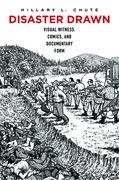
Disaster Drawn: Visual Witness, Comics, and Documentary Form
Cambridge, Mass.; London: Belknap Press; Harvard University Press (2016), 359 pp.
"In hard-hitting accounts of Auschwitz, Bosnia, Palestine, and Hiroshima's Ground Zero, comics display a stunning capacity to bear witness to trauma. Investigating how hand-drawn comics has come of age as a serious medium for engaging history, Disaster Drawn explores the ways graphic narratives by d
...
Zimbabwe’s State-Controlled Public Media and the Mediation of the 1980s Genocide 30 Years On
Journal of African Media Studies, volume 8, issue 2 (2016), pp. 145-165
"Since the end of genocide in 1987 Zimbabwe has remained a zone of ‘conflicts’, and the enduring debates surrounding this genocide, especially in public-owned but state-Controlled media, call for critical attention. Three years after independence, in 1980, Zimbabwe was plunged into a genocide na
...
When the Subaltern Speaks: Citizen Journalism and Genocide ‘victims’ Voices Online
African Journalism Studies, volume 36, issue 4 (2015), pp. 82-101
"The study uses online observation and critical discourse analysis (CDA) to examine how ‘Ndebeles’ [= Ndebele-speaking people of Zimbabwe] discuss the 1980s genocide and how citizen journalism has generally revolutionised their participation in debates silenced by the ruling elite. What strongly
...
Looking at the Tuol Sleng Museum of Genocidal Crimes, Cambodia, on Flickr and YouTube
Media, Culture & Society, volume 36, issue 6 (2014), pp. 790-809
"'During the Khmer Rouge regime (1975-9) the Tuol Svay Prey high school in Phnom Penh was used under the codename S21 as a torture-and-execution centre. In 1979, the government of the newly established People's Republic of Kampuchea had it refurbished as memorial. Today, people from all over the wor
...

Genozid in Ruanda
Message, issue 4 (2014), pp. 36-45
"Bei der Aufarbeitung des Völkermords in Ruanda liefern die Medien kaum Neues. Ihre zugespitzten und vereinfachende Berichte werden dem komplexen Ereignis oft nicht gerecht. Im Interview kritisiert Stefan Brüne überholte Gut-Böse-Narrative und fordert, im Angesicht aktueller Krisen den Fokus der
...
Hate Radio: Materialien, Dokumente, Theorie
Bonn: Bundeszentrale für politische Bildung (bpb) (2014), 255 pp.
German Colonialism and National Identity
New York; London: Routledge (2011), x, 340 pp.
"The German empire that emerges from the volume edited by Michael Perraudin and Jürgen Zimmerer is one very much embedded in a broader European colonial discourse. Just like any other empire, Germany believed itself to be a "better" empire, more benevolent, more efficient, more civilized. Yet we le
...
Journalists as Witnesses to Violence and Suffering
In: The Handbook of Global Communication and Media Ethics
Robert S. Fortner, Mark Fackler (eds.)
Chichester: Wiley Blackwell (2011), pp. 752-773

Genocide: Truth, Memory, and Representation
Durham: Duke University Press (2009), 349 pp.
"What happens to people and the societies in which they live after genocide? How are the devastating events remembered on the individual and collective levels, and how do these memories intersect and diverge as the rulers of postgenocidal states attempt to produce a monolithic "truth" about the past
...
A People Betrayed: The Role of the West in Rwanda's Genocide
London; New York: Zed Books, new updated ed. (2009), vii, 370 pp.
"In this classic of investigative journalism, Linda Melvern tells the compelling story of what really happened, revealing both the scale, speed and intensity of the unfolding genocide, as well as exposing the governments and individuals who could have prevented what was happening, if they had chosen
...
Teaching Religion and Film
Oxford: Oxford University Press (2008), xiv, 309 pp.
"Part I presents general categories for thinking about the intersection between religion and film, as well as an argument for an emerging line of theoretical inquiry. The chapters in Part II examine the use of film in teaching religious traditions, whether movies are seen from the critical perspecti
...
Teaching Holocaust Literature and Film
New York: Palgrave Macmillan (2008), xi, 170 pp.
"The representation of the Holocaust in literature and film has confronted lecturers and students with some challenging questions. Does this unique and disturbing subject demand alternative pedagogic strategies? What is the role of ethics in the classroom encounter with the Holocaust? " (Publisher d
...
The Media and the Rwanda Genocide
Top Insights
Kofi Annan (statement)
London; Kampala; Ottawa: Pluto Press; Fountain Publishers; International Development Research Centre (IDRC) (2007), xvi, 463 pp.
"This book examines the crucial role the media played in the 1994 Rwanda genocide, bringing together local reporters and commentators from Rwanda, Western journalists, and media theorists. Part One (eight articles) describes and analyzes "Hate Media in Rwanda", mainly, but not exclusively, focusing
...
Die (koloniale) Begegnung: AfrikanerInnen in Deutschland 1880 - 1945, Deutsche in Afrika 1880 - 1918
Frankfurt am Main et al.: Peter Lang (2003), 332 pp.

IMS Assessment Mission: The Rwanda Media Experience from the Genocide
International Media Support (IMS) (2003), 28 pp.

"Leave None to Tell the Story": Genocide in Rwanda
New York et al.: Human Rights Watch (1999), 525 pp.
