Filter
83
Featured
Free Access
83
Key Guidance
1
Quick Overview
2
Top Insights
3
Topics
Access to Internet & Digital Communications
18
Social / Digital Media and ICTs in Disaster & Humanitarian Crisis Management & Prevention
18
Mobile Phones, Smartphones
12
Mobile Phone Markets
11
Mobile Phone Use: Women
7
Mobile Phone Use
7
Mobile Phone Use: Migrants & Refugees
7
Ecological Footprint & Sustainability of Digitalization, E-Waste & Recycling
6
People with Disabilities: Tailored ICT & Media Products
5
Mobile Phone Use for Social Purposes, Mobiles for Development
5
Gender and ICTs / Internet
4
People with Disabilities: Access to & Use of ICT and Media
4
Telecommunication Law, Regulation & Policies
3
Agriculture & ICTs, e-Agriculture
2
Mobile Phone Use: People with Disabilities
2
Sustainable Development Goals (SDG)
2
Digital Healthcare & Information, Mobile Health, E-Health, Telemedicine
2
Digital & Information Literacy
2
Indigenous Digital & Social Media Communication
2
ICT Development Assistance
2
Telecommunication Companies, Mobile Phone & Fixed Line Operators
2
Telecommunication Infrastructure
2
Access to Media & Information
1
Access to Media & Information: Disadvantaged Groups and Minorities
1
Digital Divide, Digital Inequalities
1
Advocacy & Empowerment: Migrants & Refugees
1
Internet & Social Media Use: Women
1
Information Needs & Media Use: Refugees & Displaced People
1
Mobile Phone Use: Minorities
1
Behaviour Change Campaigns
1
Child Abuse: Digital Media
1
Child Protection Online
1
ICT / Internet Projects (Development Aid)
1
Big Digital Platforms, Big Tech Companies
1
Digital Ethics, AI Ethics, Social Media Ethics, Data & Information Ethics
1
Digital Inclusion
1
Digital Labour, Digital Work
1
Digital Skills, Digital Production Skills
1
Digital Financial Services, Mobile Banking, Mobile Payphone Business
1
Digital Media Markets
1
Artificial Intelligence
1
Digitalization, Digital Transformation
1
ICT Policies
1
Earthquakes, Floods, Tsunamis, Natural Disasters
1
Infectious Diseases' Outbreak Communication
1
Disinformation, Misinformation, Fake News
1
Informal Sector, Informal Economy
1
Energy Supply, Electricity
1
Solar Energy, Renewable Energy
1
Small Enterprises, Micro Businesses, Small & Medium Enterprises (SME)
1
Tourism & Travel
1
Climate Change Communication, Climate Journalism
1
Wastes & Recycling
1
Gender and Media, Gender and Communication
1
Women with Disabilities & Media
1
COVID-19 Communication
1
Food / Nutrition Communication & Media Representation
1
Health Campaigns: Experiences
1
Human Rights Protection
1
Design Thinking
1
People with Disabilities & Communication / Media
1
Helplines, Hotlines
1
Communication Research Design
1
Rural Areas, Rural Communities, Rural Development
1
Digital Switchover
1
Technological Change, Technological Developments, Technological Progress
1
Internet Bandwith, Broadband & Backbone Networks
1
Telecommunication Industries & Markets
1
Youth & Digital Media
1
Language
Document type
Countries / Regions
Authors & Publishers
Media focus
Publication Years
Methods applied
Output Type
National Emergency Telecommunications Plans: Enablers and Safeguards. A Brief Evaluation Guide for Policy Practitioners
London: GSMA (2021), 16 pp.
"Section 1 focuses on creating an enabling environment. Mobile network operators (MNOs) operate in a regulated environment.5 However, if this environment is not sufficiently enabling to support disaster preparedness, response and recovery, MNOs will encounter challenges when disaster strikes. This s
...
Mobile for Humanitarian Innovation Fund: Portfolio (2017-2022)
London: GSMA (2021), 28 pp.
"Over half a billion people who are living in areas with a mobile broadband network are not using mobile internet, despite substantial increases in mobile broadband coverage since 2014. Significant gender and rural-urban gaps persist. Women are 37% less likely to use mobile internet than men. Signif
...
The Mobile Gender Gap Report 2021
London: GSMA (2021), 65 pp.
"1. Women’s access to mobile internet continues to increase across low- and middle-income countries, while mobile ownership remains relatively flat: 83 per cent of women own a mobile phone and 58 per cent use mobile internet. Women are also more likely than men to access the internet exclusively o
...

The Mobile Disability Gap Report 2020
London: GSMA (2020), 31 pp.
Principles for Driving the Digital Inclusion of Persons with Disabilities
London: GSMA (2020), 16 pp.
Reaching 50 Million Women with Mobile: A Practical Guide
London: GSMA; Altai Consulting (2020), 41 pp.
"The persistent gender gap in mobile access and use is already well documented, as are the significant benefits of closing it. Across low- and middle-income countries today, women are eight per cent less likely than men to own a mobile phone, 20 per cent less likely to use mobile internet and 33 per
...
Human-Centred Design in Humanitarian Settings: Methodologies for Inclusivity
Key Guidance
London: GSMA (2020), 40 pp.
"To ensure that mobile solutions are designed inclusively in humanitarian contexts, it is important that target users are involved as co-creators of the future they want. A human-centred design approach is one way to ensure that users’ perspectives are fully integrated into programme design. This
...
Mobile for Development: Reducing Inequalities in Our World
London: GSMA (2020), 31 pp.
A Monitoring, Evaluation and Learning (MEL) Framework for Humanitarian Innovation Programmes
London: GSMA (2020), 18 pp.
Human Rights Guidance for the Mobile Industry
London: GSMA (2020), 23 pp.
"The aim of this document is to provide an introduction for companies to consider the relevance of the following issues for their operations, as well as inspiration and resources to begin to formalise their management of human rights. It is recognised that many of these issues cannot be solved by on
...
The Digital Exclusion of Women with Disabilities: A Study of Seven Low- and Middle-Income Countries
London: GSMA (2020), 43 pp.
"1. Women with disabilities have among the lowest rates of mobile and smartphone ownership. In most countries, ownership gaps are widest between men without disabilities and women with disabilities. Even in countries where the mobile gender gap is small or nonexistent, there is still a disability ga
...
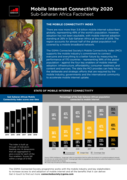
"There are now more than 3.8 billion mobile internet subscribers globally, representing 49% of the world’s population. However, adoption has not been equitable, with mobile internet adoption standing at 26% in Sub-Saharan Africa at the end of 2019. The region accounts for almost half of the global
...