
Filter
14
Topics
Empowerment
1
Digital & Social Media Use, Internet Use
1
History of Book Publishing
1
Catholic Television
1
Canção Nova (Brazil)
1
Catholic Charismatic Renovation
1
Comics, Cartoons, Caricatures
1
Political Cartoons & Comics
1
Cinema
1
Film & Gender
1
Documentaries, Television Documentaries, Web Documentaries
1
Indigenous Films, Indigenous Videos
1
History of Film & Cinema
1
Videos
1
Plagiarism
1
Media / Communication Control
1
Community Radios
1
Genocides
1
Holocaust
1
Perpetrators
1
Dealing With the Past
1
War Reporting
1
Aesthetics in Media & Communication
1
Anthropology of Media & Communication
1
Arts & Media
1
Collective Memory & Media, Media Representation of History
1
Collective Memory: Violent Conflicts & Wars
1
Cultural Identity
1
Popular Cultures
1
Hackers & Hacking
1
Social Media
1
Software Industries
1
ICT Sector Personnel / Professionals
1
Ecological Footprint, Sustainability & Recycling of Media Products
1
Environmental Communication
1
Deserts, Desertification
1
Gender Representation & Stereotypes in the Media
1
Colonial Legacies
1
Colonial Period
1
History of Media: 19th Century
1
History of Media: 20th Century
1
History of Radio
1
Indigenous Communication
1
Ethnicity in Communication
1
Indigenous Media, Indigenous Language Media Productions
1
Globalisation of Media
1
Political Reporting
1
Media & Communication Policies
1
Human Rights Protection
1
Brain Drain
1
Rossi, Marcelo
1
Imperialism
1
Politics and Media
1
Informatics
1
Urban Communication, Urban Media
1
Visual Communication
1
Language
Countries / Regions
Authors & Publishers
Media focus
Publication Years
Methods applied
Output Type
African Ecomedia: Network Forms, Planetary Politics
Durham; London: Duke University Press (2021), xiii, 322 pp.
"In African Ecomedia, Cajetan Iheka examines the ecological footprint of media in Africa alongside the representation of environmental issues in visual culture. Iheka shows how, through visual media such as film, photography, and sculpture, African artists deliver a unique perspective on the socioec
...
The Charismatic Gymnasium: Breath, Media and Religious Revivalism in Contemporary Brazil
Durham: Duke University Press (2020), xiv, 233 pp.
"In The Charismatic Gymnasium Maria José de Abreu examines how Charismatic Catholicism in contemporary Brazil produces a new form of total power through a concatenation of the breathing body, theology, and electronic mass media. De Abreu documents a vast religious respiratory program of revival pop
...
From Russia with Code: Programming Migrations in Post-Soviet Times
Durham: Duke University Press (2019), xii, 373 pp.
"While Russian computer scientists are notorious for their interference in the 2016 US presidential election, they are ubiquitous on Wall Street and coveted by international IT firms and often perceive themselves as the present manifestation of the past glory of Soviet scientific prowess. Drawing on
...
Immediations: The Humanitarian Impulse in Documentary
Durham: Duke University Press (2017), xiv, 254 pp.
"Endangered life is often used to justify humanitarian media intervention, but what if suffering humanity is both the fuel and outcome of such media representations? Pooja Rangan argues that this vicious circle is the result of immediation, a prevailing documentary ethos that seeks to render human s
...
Asian Video Cultures: In the Penumbra of the Global
Durham; London: Duke University Press (2017), viii, 360 pp.
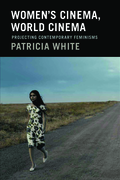
Women's Cinema, World Cinema: Projecting Contemporary Feminisms
Durham: Duke University Press (2015), ix, 270 pp.
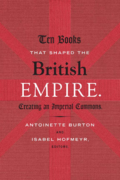
Ten Books That Shaped the British Empire: Creating an Imperial Commons
Durham; London: Duke University Press (2014), ix, 283 pp.
"Combining insights from imperial studies and transnational book history, this provocative collection opens new vistas on both fields through ten accessible essays, each devoted to a single book. Contributors revisit well-known works associated with the British empire, including Charlotte Brontë's
...

Genocide: Truth, Memory, and Representation
Durham: Duke University Press (2009), 349 pp.
"What happens to people and the societies in which they live after genocide? How are the devastating events remembered on the individual and collective levels, and how do these memories intersect and diverge as the rulers of postgenocidal states attempt to produce a monolithic "truth" about the past
...
Signal and Noise: Media, Infrastructure, and Urban Culture in Nigeria
Durham: Duke University Press (2008), xi, 314 pp.
"In this groundbreaking work, Brian Larkin provides a history and ethnography of media in Nigeria, asking what media theory looks like when Nigeria rather than a European nation or the United States is taken as the starting point. Concentrating on the Muslim city of Kano in the north of Nigeria, Lar
...

Global Indigenous Media: Cultures, Poetics, and Politics
Durham: Duke University Press (2008), ix, 362 pp.
"Whether discussing Maori cinema in New Zealand or activist community radio in Colombia, the contributors describe how native peoples use both traditional and new media to combat discrimination, advocate for resources and rights, and preserve their cultures, languages, and aesthetic traditions. By r
...
Communication and Empire: Media, Markets, and Globalization, 1860-1930
Durham: Duke University Press (2007), xx, 429 pp.
The Body of War: Media, Ethnicity, and Gender in the Break-up of Yugoslavia
Durham: Duke University Press (2007), 286 pp.
Changing Channels: Television and the Struggle for Power in Russia
Durham: Duke University Press, revised and expanded ed. (1999), xv, 372 pp.
Bad Language, Naked Ladies, and Other Threats to the Nation: A Political History of Comic Books in Mexico
Durham, NC: Duke University Press (1998), 210 pp.
"In Bad Language, Naked Ladies, and Other Threats to the Nation, Anne Rubenstein examines how comic books—which were overwhelmingly popular but extremely controversial in post-revolutionary Mexico—played an important role in the development of a stable, legitimate state. Studying the relationshi
...
