
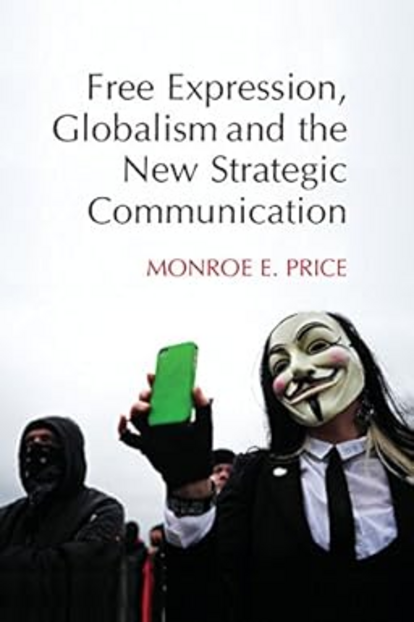
Free Expression, Globalism, and the New Strategic Communication
New York: Cambridge University Press (2015), ix, 275 pp.
Contains bibliogr. pp. 255-267, index
ISBN 9781107420939 (pbk)
Signature commbox: 10-International-E 2015
"Vast changes in technologies and geopolitics have produced a wholesale shift in the way states and other powerful entities think about the production and retention of popular loyalties. Strategic communication has embraced these changes as stakes increase and the techniques of information management become more pervasive. These shifts in strategic communications impact free speech as major players, in a global context, rhetorically embrace a world of transparency, all the while increasing surveillance and modes of control, turning altered media technologies and traditional media doctrines to their advantage. This book exposes the anxieties of loss of control, on the one hand, and the missed opportunities for greater freedom, on the other. 'New' strategic communication arises from the vast torrents of information that cross borders and uproot old forms of regulation. Not only states but also corporations, nongovernmental organizations, religious institutions, and others have become part of this new constellation of speakers and audiences." (Publisher description)
1 Moving the needle, filling the streets
2 Strategic communication and the foundations of free expression
3 Narratives of legitimacy [Strategic narratives in the Arab Spring; Taxonomy of legitimacy narratives; ...]
4 Strategies of the diagnostic [Information ecology for Somaliland; Afghanistan and the Altai reports]
5 Asymmetries and strategic communication [... Case studies of assymetry: circumvention in Iran and China; Afghanistan and assymetric creativity; ...]
6 Strategies of system architecture [Media development and the case of Myanmar; ... the U.S. 'internet freedom' strategy; the China internet white paper; Comparing approaches]
7 Soft power, soft war [... Techniques of attack in a soft war; The Islamic Republic's response to the soft war]
8 Religions and strategic communication
9 Regulating NGOs in the market for loyalties
10 Strategic platforms [about the 2008 Beijing Olympics]
11 Strategic communication and satellite channels
12 Strategies of closure, marker of anxiety
2 Strategic communication and the foundations of free expression
3 Narratives of legitimacy [Strategic narratives in the Arab Spring; Taxonomy of legitimacy narratives; ...]
4 Strategies of the diagnostic [Information ecology for Somaliland; Afghanistan and the Altai reports]
5 Asymmetries and strategic communication [... Case studies of assymetry: circumvention in Iran and China; Afghanistan and assymetric creativity; ...]
6 Strategies of system architecture [Media development and the case of Myanmar; ... the U.S. 'internet freedom' strategy; the China internet white paper; Comparing approaches]
7 Soft power, soft war [... Techniques of attack in a soft war; The Islamic Republic's response to the soft war]
8 Religions and strategic communication
9 Regulating NGOs in the market for loyalties
10 Strategic platforms [about the 2008 Beijing Olympics]
11 Strategic communication and satellite channels
12 Strategies of closure, marker of anxiety
