
Filter
63
Featured
Free Access
26
Inspiring Practice
1
Key Guidance
3
Quick Overview
1
Topics
Trauma: Media Representation & Reporting
30
Death & Grief: Reporting & Media Representation
22
Trauma, Coping with Trauma, Trauma Therapy
19
Journalists Dealing with Risks & Threats, Resilience & Wellbeing of Media Workers
12
Dealing With the Past
7
Collective Memory: Violent Conflicts & Wars
7
Holocaust
6
Disaster & Humanitarian Crisis Reporting
6
Therapeutical Use of Communication & Media
5
War & Political Violence in Cinema
4
Genocides
4
War Reporting
4
Children: Media Representation & Reporting
3
Conflict Reporting, Armed Conflict Reporting
3
Collective Memory & Media, Media Representation of History
3
Children & Childhood
2
Comics, Cartoons, Caricatures
2
Political Cartoons & Comics
2
Cinema
2
Groups, Group Communication, Group Development
2
Crime & Violence Reporting
2
Foreign Conflict Reporting, International War Reporting
2
Collective Memory: Disasters
2
Journalism Ethics
2
Safety of Journalists, Safety Risks of Media Workers
2
Working Conditions of Journalists & Media Personnel
2
Refugees / Displaced People
2
Therapeutical Writing, Memory Books
2
Digital & Social Media Use, Internet Use
1
Gaming: Uses & Effects
1
Mobile Phone Use
1
Conflict Coverage: Children's Books & Educational Materials
1
Children's Books: Picture Books
1
Solidarity
1
Orphans
1
Puppetry
1
Celebrities, Idols, Stars
1
Conflict Coverage: Cinema & Audiovisual Media
1
Film and Religion, Religion in Motion Pictures
1
Religious Films
1
Documentaries, Television Documentaries, Web Documentaries
1
Historical Films
1
Strategic Lawsuits Against Public Participation (SLAPP)
1
Crisis Communication
1
Storytelling
1
Perpetrators
1
Reconciliation Work
1
Conflict-Sensitive Radio Journalism, Radio in Conflict Prevention & Transformation
1
Enemy Images
1
Extremism & Terrorism Reporting
1
Extremist Recruitment through Media
1
Information Warfare, Psychological Warfare
1
Media Assistance in Conflict Regions & Fragile Countries
1
War Propaganda, Propaganda in Conflicts
1
Ritual Communication & Media Rituals
1
Theatre
1
Puppetry in Education
1
Theatre for Development
1
Fans, Fandom, Fan Cultures
1
Literature
1
Poetry
1
Popular Cultures
1
Facebook
1
Earthquakes, Floods, Tsunamis, Natural Disasters
1
Gaming, Video Games
1
Docudrama
1
Television Fiction
1
Television Serials
1
Objectivity & Veracity of Reporting
1
Good Practice Examples
1
Counselling
1
HIV / AIDS Communication
1
Mental Health (General)
1
Suicide Reporting & Media Representation
1
First World War (1914-1918)
1
Second World War (1939-1945)
1
Foreign Correspondents
1
Foreign News, International News
1
Journalism Education & Training
1
Print Journalism
1
Court Reporting & Media Representation of Judicial System
1
Forced Labour & Human Trafficking: Reporting & Media Representation
1
Witnesses, Witness Testimonies
1
Metaphors
1
Forced Labour & Human Trafficking
1
Human Rights Protection
1
Transitional Justice
1
BBC
1
Conflict & War Photography
1
Documentary Photography
1
Radio Dramas, Radio Soap Operas, Radio Fiction
1
Mental Stress
1
Sorrow
1
Afterlife, Immortality, Resurrection: Media Representation
1
COVID-19 Pandemic & Religion
1
Muslim Television Broadcasting
1
Violence
1
COVID-19 Pandemic: Economic, Political and Social Effects
1
Ethnic Groups, Ethnic Minorities
1
Resilience
1
Al-Jazeera
1
Reality Television Programmes & Daily Talks
1
User-Generated Contents
1
Visual Communication
1
Drawing, Drawings
1
Visualization
1
Language
Document type
Countries / Regions
Authors & Publishers
Media focus
Publication Years
Methods applied
Journals
Output Type
Making Secondary Trauma a Primary Issue: A Study of Eyewitness Media and Vicarious Trauma on the Digital Frontline
Istanbul: Eyewitness Media Hub (2015), 69 pp.
"The rapid and incredible growth of eyewitness media (also known as user-generated content or UGC) has led to the emergence of a new cadre of journalists, humanitarian and human rights professionals whose job it is to seek out, verify and edit the most disturbing and traumatic raw images captured by
...
Covering Trauma: A Training Guide
Radio for Peacebuilding Africa Search for Common Ground (2011), 20 pp.
"All stories about an ordinary person who becomes the victim of abuse require extra sensitivity, because survivors of abuse – whether the abuse is physical, emotional or political – are usually survivors of a traumatic event. There are many kinds of traumatic events. A terrible car crash, an ear
...
Trauma Journalism: On Deadline in Harm's Way
New York; London: Continuum (2011), ix, 229 pp.
"The role of journalists in covering trauma and tragedy isn’t new. Witnessing acts of violence, destruction and terror has long been the professional responsibility of countless print and broadcast reporters and photographers. But what is new is a growing awareness of the emotional consequences of
...
Journalists as Witnesses to Violence and Suffering
In: The Handbook of Global Communication and Media Ethics
Robert S. Fortner, Mark Fackler (eds.)
Chichester: Wiley Blackwell (2011), pp. 752-773
Representing Death in the News: Journalism, Media and Mortality
Basingstoke, Hampshire: Palgrave Macmillan (2010), viii, 199 pp.
"This new study maps and synthesizes existing research on the ways in which journalism deals with death. Folker Hanusch provides a historical overview of death in the news, looks at the conditions of production, content and reception, and also analyzes emerging trends in the representation of death
...
The Moment is Frozen in Time: Photojournalists’ Metaphors in Describing Trauma Photography
Journal of Constructivist Psychology, volume 23, issue 3 (2010), pp. 231-255
"In describing their understanding of trauma, disaster, and conflict photography, photojournalists in this qualitative study conceptualized abstract experiences using specific types of metaphors. Their metaphors focused on concepts such as violence, bewilderment, and health/affliction. The unique as
...
Trauma, Media, Art: New Perspectives
Newcastle upon Tyne: Cambridge Scholars Publishing (2010), vii, 285 pp.
"The essays collected in this book follow a contemporary critical trend in the field of trauma studies that reflects comparatively on artistic and media representations of traumatic histories and experiences from countries around the world. Focusing on a diversity of art and media forms—including
...
Trauma and Media: Theories, Histories, and Images
New York et al.: Routledge (2010), 224 pp.
"This book provides the first comprehensive account of trauma as a critical concept in the study of modern visual media, from Freud to the present day, explaining how contemporary trauma studies emerged from research on Holocaust representation in which the audiovisual testimony of survivors was pos
...
Media Witnessing: Testimony in the Age of Mass Communication
Basingstoke: Palgrave Macmillan (2009), 242 pp.
"From the Holocaust to 9/11, modern communications systems have incessantly exposed us to reports of distant and horrifying events, experienced by strangers, and brought to us through media technologies. In this book leading scholars explore key questions concerning the truth status and broader impl
...
Dealing with the Past, Reaching the Future: Historical Memory and Social Transformation in (South) Africa and Germany after 1989. International Conference, 29. – 31.10.2009
Berlin: Haus der Kulturen der Welt (2009), 4 pp.
"The role of historical memory and of cultural remembrance in societies dealing with dramatic transformations and, at times, traumatic pasts are numerous. In this conference, we will look at post-apartheid South Africa and reunified German society, how each country views itself, as well as the diffe
...
Cine-Therapie / Film-Therapie. Eine erste Bibliographie
Hamburg: Institut für Germanistik Universität Hamburg (2009), 10 pp.
"Darüber können viele, die in der Bildungsarbeit der Akademien versuchen, mit allgemeinem Publikum über Themen ins Gespräch zu kommen, die tabuisiert, traumatisiert, intimisiert oder sonstwie blockiert sind, berichten: Setzt man Filme als Katalysatoren des Gesprächs ein, wird es vielen möglich
...

Prejudice, Conflict and Media. Reducing Intergroup Prejudice and Conflict Using the Media: A Field Experiment in Rwanda
Harvard: Weatherhead Center for International Affairs Harvard University (2007), 64 pp.
"Can the media reduce intergroup prejudice and conflict? Despite the high stakes of this question, understanding of the mass media’s role in shaping prejudiced beliefs, norms, and behaviors is very limited. A year-long field experiment in Rwanda tested the impact of a radio soap opera about two Rw
...
Trauma and Journalism: A Guide for Journalists, Editors & Managers
Dart Center for Journalism & Trauma (2007), 28 pp.
"Trauma is at the heart of news — and of the human condition. How it’s reported gives those who weren’t there their first understanding of what a traumatic event means. Personally. For their families and loved-ones. For their community and their nation. Indeed, for the world as a whole. The jo
...
Covering Violence: A Guide to Ethical Reporting About Victims and Trauma
Key Guidance
New York: Columbia University Press, 2nd ed. (2006), xv, 295 pp.
"Now in its second edition, Covering Violence remains a crucial guide for becoming a sensitive and responsible reporter. Discussing such topics as rape and the ethics of interviewing children, the book gives students and journalists a detailed understanding of what is happening "on the scene" of a v
...
Covering Children & Trauma: A Guide for Journalism Professionals
Washington, DC: Dart Center for Journalism & Trauma (2006), 13 pp.
"When children are victims of violence, journalists have a responsibility to report the truth with compassion and sensitivity. Kids aren’t mini-adults; they deserve special consideration when they end up in the news. Yet few journalists have experience interviewing children for routine stories, le
...
Child Clinicians & the Media: A Guide for Therapists
Dart Center for Journalism & Trauma; National Child Traumatic Stress Network (2006), 17 pp.
"Whether clinicians like it or not, children and families affected by trauma are routinely covered by the media. When that happens, clinicians often face difficult choices [...] Audiences are powerfully affected when direct information comes from children, adolescents or family members. Yet balancin
...
Best Practices in Trauma Reporting: Ideas and Insights from Award-Winning Newspaper Articles
Key Guidance
New York: Dart Center for Journalism & Trauma (2005), 26 pp.
"The goal of this best practices guide is not to provide a template for trauma reporting, although the specific examples should be useful for journalists working on similar stories or faced with similar ethical dilemmas related to trauma reporting. The goal is to help journalists produce professiona
...
Puppetry in Education and Therapy: Unlocking Doors to the Mind and Heart
Bloomington, Indiana: AuthorHouse (2005), xvi,, 212 pp.
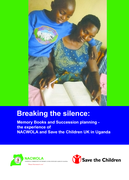
Breaking the Silence: Memory Books and Succession Planning. The Experience of NACWOLA and Save the Children UK in Uganda
London: Save the Children; National Community of Women Living with HIVAIDS in Uganda (NACWOLA) (2004), 36 pp.

Trauma and Cinema: Cross-Cultural Explorations
Hong Kong: Hong Kong University Press (2004), 288 pp.
"The book discusses how trauma presented in the media spills over national boundaries and can be found in images across divergent cultures in Africa, Asia, Australia, Europe and America." (Publisher description)
