
Filter
5
Text search:
Mandlenkosi
Mpofu
Topics
Citizen Journalism, Community Journalism
2
Dealing With the Past
2
Hate Speech, Hate Speech in Social Media
2
Digital Activism, Cyber Advocacy
1
Gender Advocacy & Empowerment, Gender Mainstreaming
1
Mobile Phone Advocacy & Campaigns
1
Exile Journalism, Exile Media
1
Alternative Communication & Media
1
Storytelling
1
Genocides
1
Conflict Reporting, Armed Conflict Reporting
1
Theatre
1
Theatre for Development
1
Digital Journalism, Online Journalism
1
Online News
1
Facebook
1
Xenophobia
1
Ethics in Nonprofit & Community Journalism
1
Gender-Based Harassment, Intimidation & Violence
1
Journalism
1
Corruption Reporting & Role of Media in Curbing Corruption
1
Election Reporting
1
Language
1
Transitional Justice
1
Sexual Violence & Abuse, Rape
1
Language
Countries / Regions
Authors & Publishers
Media focus
Publication Years
Journals
Output Type
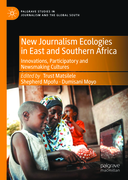
New Journalism Ecologies in East and Southern Africa: Innovations, Participatory and Newsmaking Cultures
Cham: Palgrave Macmillan (2023), xxiii, 319 pp.
"This volume presents case studies of news media employing and integrating social media into their news production practices. It links social media use to journalistic practices and news production processes in the digital age of the Global South. Critically, the chapters look at seminal cases of st
...
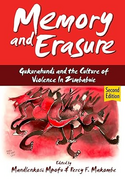
Memory and Erasure: Gukurahundi and the Culture of Violence in Zimbabwe
Bulawayo; Harare: Centre for Innovation and Technology (CITE); Weaver Press (2022), xxxi, 153 pp.
"Memory and Erasure brings together young and established Zimbabwean scholars and activists who explore with fresh eyes the failure to overcome the terrible legacies of this period. At its heart is recognition that justice cannot be achieved while Gukurahundi’s perpetrators remain in power and sti
...

The Linguistic Dimensions of Gukurahundi in Zimbabwe
In: Memory and Erasure: Gukurahundi and the Culture of Violence in Zimbabwe
Mandlenkosi Mpofu, Percy F. Makombe (eds.)
Harare: Weaver Press (2022), pp. 81-95
"This chapter explored the linguistic dimensions of Gukurahundi to show the centrality of language before, during and after the genocide. We drew on online testimonies from survivors and statements from government officials as well as visible language planning and language practices in the post-Guku
...
Theatre as Alternative Media in Zimbabwe: Selected Case Studies from Matabeleland
Journal of African Media Studies, volume 9, issue 3 (2017), pp. 507-520
"Popular theatre occupies a special space in Matabeleland because it is situated in the everyday lives of ordinary people, and is able to articulate their experiences and to create spaces for them to ‘speak to power’. In the wake of the Gukurahundi massacres and perceived marginalization of Mata
...
African Digital Media Review, Issue 2
African Journalism Studies, volume 37, issue 4 (2016), pp. 1-136
