
Filter
12
Text search:
Elisabeth
Eide
Featured
Free Access
11
Top Insights
4
Topics
Safety of Journalists, Safety Risks of Media Workers
6
Journalists Dealing with Risks & Threats, Resilience & Wellbeing of Media Workers
5
War Reporting
3
Conflict Areas: Media Systems, Media Landscapes, Role of Media
2
Conflict-Sensitive & Peace Journalism
2
Climate Change Communication, Climate Journalism
2
Female Journalists & Media Workers
2
Freedom of Expression
1
Censorship
1
Impunity for Crimes Against Journalists & Media Personnel
1
Killings of Journalists & Media Personnel
1
United Nations Plan of Action on the Safety of Journalists and the Issue of Impunity
1
Media Freedom, Press Freedom
1
Islamic State (Political-Religious Extremist Organization)
1
Conflict Prevention, Mediation & Reconciliation: Role of Media
1
Extremism & Terrorism Reporting
1
Extremist & Terrorist Digital / Social Media Presence
1
Extremist & Terrorist Communication Strategies and Media
1
Extremist Recruitment through Media
1
Foreign Conflict Reporting, International War Reporting
1
Media Law & Regulation in Conflict Areas
1
Trauma: Media Representation & Reporting
1
Defamation, Libel, Slander
1
Gender and Media, Gender and Communication
1
Gender Representation & Stereotypes in the Media
1
Media Assistance: Gender Focus
1
Foreign Correspondents
1
International Media Associations / Organizations
1
Stringers & Fixers (Journalism)
1
Photojournalism
1
Public Spheres
1
Language
Document type
Countries / Regions
Authors & Publishers
Media focus
Publication Years
Methods applied
Journals
Output Type
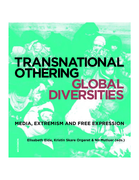
Transnational Othering – Global Diversities: Media, Extremism and Free Expression
Top Insights
Göteborg: Nordicom (2019), 332 pp.

Afghan journalists in a balancing act: Coping with deteriorating safety
Conflict & Communication Online, volume 18, issue 1 (2019), 16 pp.
"Afghan journalists have been experiencing a deteriorating situation, due to a multitude of threats. They operate in a situation of low popular literacy, as well as low media literacy. Threats from Taliban and other insurgents cause many journalists to live in constant fear. This article is based on
...
Turkey: How to deal with threats to journalism?
In: Transnational Othering – Global Diversities: Media, Extremism and Free Expression
Elisabeth Eide, Kristin Skare Orgeret, Nil Mutluer (eds.)
Göteborg: Nordicom (2019), pp. 171-190
"Journalism has always been an unsafe practice in modern Turkey. However, ties between the political system and democracy have been severed by the recent witch-hunt following the most recent failed coup, in 2016, and the subsequent societal collapse triggered by the administration of the state of em
...
Safety of Journalists Covering Conflict & Sensitive Issues
Conflict & Communication Online, volume 18, issue 1 (2019), 103 pp.
Evaluation International Association of Women in Radio and Television (IAWRT)
International Association of Women in Radio and Television (IAWRT); KUS Forum for Women and Development (2017), 51 pp.
"The organization has grown since the last evaluation in 2007, with the number of chapters expanding from seven to twelve. The membership comprises 45 other countries, some with the capacity to become chapters. Whether IAWRT is in a phase of expansion or consolidation is unclear, as there is no stra
...

A Country without Mercy: Afghan Journalists Caught in Crossfires
In: The Assault on Journalism. Building Knowledge to Protect Freedom of Expression
Ulla Carlsson, Reeta Pöyhtäri (eds.)
Göteborg: Nordicom (2017), pp. 81-86
"In the last Afghan solar year (22 March 2015 – 21 March 2016), twelve journalists and media workers were killed, exceeding any previous year in recent history. In June 2016, the US photographer David Gilkey and his interpreter, journalist Zabihullah Tamanna, were killed in a Taliban attack in Maj
...
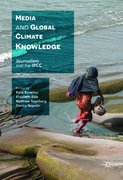
Media and Global Climate Knowledge: Journalism and the IPCC
New York: Palgrave Macmillan (2017), xx, 309 pp.
"This book is a broad and detailed case study of how journalists in more than 20 countries worldwide covered the Intergovernmental Panel on Climate Change (IPCC) Fifth Assessment (AR5) reports on the state of scientific knowledge relevant to climate change. Journalism, it demonstrates, is a key elem
...
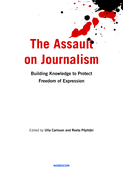
The Assault on Journalism. Building Knowledge to Protect Freedom of Expression
Top Insights
Göteborg: Nordicom (2017), 363 pp.
"To support joint efforts to protect journalism, there is a growing need for research-based knowledge. Acknowledging this need, the aim of this publication is to highlight and fuel journalist safety as a field of research, to encourage worldwide participation, as well as to inspire further dialogues
...
Journalism in Conflict and Post-Conflict Conditions: Worldwide Perspectives
Top Insights
Göteborg: Nordicom; Media Development and Global Policy UNESCO Chair on Freedom of Expression (2016), 202 pp.
"The aim of the present book is to provide both empirical and theoretical input to the discussions of the role of journalism and media in conflict and post-conflict situations and in the often rather muddy waters between them. Together, the contributions to this book from different parts of the worl
...
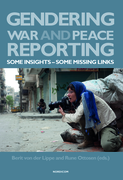
Gendering War and Peace Reporting: Some Insights – Some Missing Links
Göteborg: Nordicom (2016), 278 pp.
Freedom of Expression and Media in Transition: Studies and Reflections in the Digital Age
Top Insights
Göteborg: Nordicom (2016), 199 pp.
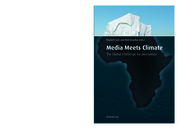
Media Meets Climate: The Global Challenge for Journalism
Göteborg: Nordicom (2012), 340 pp.
