
Filter
95
Featured
Free Access
81
Inspiring Practice
1
Key Guidance
2
Top Insights
4
Topics
COVID-19 Communication
75
Vaccination Campaigns & Vaccine Hesitancy
25
Disinformation, Misinformation, Fake News
14
Countering Hate Speech, Disinformation & Propaganda
13
Conspiracy Narratives, Conspiracy Theories
9
Facebook
7
Fact-Checking & Verification of Sources
7
COVID-19 Pandemic: Effects on Journalism, Media & Communication
6
Countering Misinformation & Rumours
5
Twitter & Microblogs
4
Trust in the Media, Credibility of Media
3
YouTube
3
Foreign Disinformation, Foreign Information Manipulation Operations, Foreign Propaganda
3
Health Communication
3
COVID-19 Pandemic & Religion
3
COVID-19 Pandemic: Economic, Political and Social Effects
3
Russia-Ukraine War <2014-
2
Rumours & Rumour Management
2
Algorithms & Big Data
2
Digital Healthcare & Information, Mobile Health, E-Health, Telemedicine
2
Content Moderation & Regulation: Social Media
2
TikTok
2
Infectious Diseases' Outbreak Communication
2
Media Literacy: Disinformation, Fake News, Hate Speech
2
Journalism Ethics
2
Health Campaigns: Experiences
2
Health Communication in Social Media, User-Generated Contents
2
Access to Public Information, Freedom of Information, Right to Information
1
Disinformation Consumption & Perception
1
News Consumption & Information Sources of Media Users
1
Authoritarian Regimes: Government Communication Strategies
1
Election Campaigns
1
Freedom of Expression
1
Government Communication Strategies
1
Public Diplomacy, Cultural Diplomacy
1
Community Radio Contents & Programming
1
Conflict Reporting, Armed Conflict Reporting
1
Memes
1
Behaviour Change Communication
1
Big Digital Platforms, Big Tech Companies
1
Google
1
Social Media
1
Artificial Intelligence
1
Disaster & Humanitarian Crisis Communication
1
QAnon (Conspiracy Narrative)
1
Disinformation & Misinformation Law & Regulation
1
Environmental Disinformation & Misinformation
1
Media Viability & Financial Sustainability
1
Educational Games, Serious Games
1
Climate Change Communication, Climate Journalism
1
Health Journalism
1
HIV / AIDS Communication
1
Religion in Health Communication
1
China: Foreign Media Representation & Image Abroad
1
China: Transnational Information Operations, International Broadcasting, Public Diplomacy
1
Russia: Foreign Information Operations, International Broadcasting, Public Diplomacy
1
Constructive Journalism, Solution-Oriented Journalism
1
Mindfulness, Mindful Communication
1
Media & Information Literacy
1
Human Rights
1
Political Communication
1
Propaganda
1
Public Opinion
1
Public Opinion Manipulation
1
Persuasive Communication
1
Islamophobia
1
Muslim Digital Media & Online Communities
1
Randomised Control Trials & (Quasi-) Experimental Designs
1
Research Report Writing
1
Reality & Communication, Truth & Media
1
Software
1
RT (Russian International Broadcaster, formerly Russia Today)
1
Language
Document type
Countries / Regions
Authors & Publishers
Media focus
Publication Years
Methods applied
Journals
Output Type

Community Radio Stations’ Production Responses to COVID-19 Pandemic in India
Media Asia, volume 48, issue 4 (2021), pp. 243-257
"The COVID-19 pandemic and the nationwide lockdown have made community radio broadcasting more important than before. Using case studies and interviews, we explored the kind of programming adopted by selected community radio (CR) stations in India during the pandemic and how they fight fake news. We
...
Fake News is Bad News: Hoaxes, Half-Truths and the Nature of Today's Journalism
Intech Open (2021), 260 pp.
"The publication is focused on the ways fake news, disinformation, misinformation and hateful statements are spread across society, predominantly within the online environment. Its main ambition is to offer an interdisciplinary body of scholarly knowledge on fake news, disinformation and propaganda
...
“Fake News”, Religion, and COVID-19 Vaccine Hesitancy in India, Pakistan, and Bangladesh
Media Asia, volume 48, issue 4 (2021), pp. 313-321
"Salali and Uysal (2020) found in their study that vaccine acceptance significantly increased when people believe in the natural origin of the virus. Therefore, mis/disinformation and conspiracy theories about how the virus started need to be debunked, especially in countries having high vaccine hes
...
Persuasive strategies in online health misinformation: A systematic review
Information, Communication & Society, volume 26, issue 11 (2021), pp. 2131-2148
"A proliferation of a variety of health misinformation is present online, particularly during times of public health crisis. To combat online health misinformation, numerous studies have been conducted to taxonomize health misinformation or examine debunking strategies for various types of health mi
...
Six Ways to Incorporate Social Context and Trust in Infodemic Management
Brighton: Social Science in Humanitarian Action Platform (SSHAP) (2021), 5 pp.
"Building trust in public health authorities and epidemic response takes time and is an ongoing process. However, in the short term, mistrust can be mitigated by responding in contextually appropriate ways through meaningful community engagement: 1. Use social science to understand the socio-economi
...
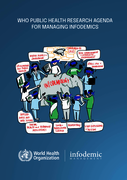
WHO Public Health Research Agenda for Managing Infodemics
Geneva: World Health Organization (WHO) (2021), xii, 53 pp.
"The five research streams are listed below. For each stream, three top research questions were identified, resulting in a list of 15 top priority research questions for the public health research agenda for infodemic management. Further, we listed for each subcategory a second tier of important res
...
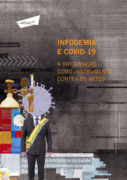
Infodemia e COVID-19: A informação como instrumento contra os mitos
Artigo 19 Brasil (2021), 48 pp.
"O presente relatório propôs, através de uma análise de transparência passiva e ativa, um diagnóstico quanto à transparência e a garantia do direito de acesso à informação pública de saúde, em período sensível de calamidade no Brasil - a pandemia do novo coronavírus. O contexto de in
...
The COVID-19 Story: Unmasking China's Global Strategy
International Federation of Journalists (IFJ) (2021), 7 pp.
"China has used Covid to benefit its global image through the activation of existing media dissemination channels overseas and the use of new tactics such as disinformation and misinformation. China’s largescale medical diplomacy campaign has also provided propaganda wins in many developing countr
...
Myths and Misconceptions on Covid-19: ‘Congo Check’ and ‘Talato’ Verification Experiences
Frontiers in Communication, volume 6, issue 627214 (2021), 21 pp.
"This paper asks: How do fact-checkers combat/halt Covid-19 myths and misconceptions in the Democratic Republic of Congo and the Central African Republic? How do they engage in social media networks toward sense-giving and sharing corrective information? It discusses two cases of online media projec
...

Misconceptions, Misinformation and Politics of COVID-19 on Social Media: A Multi-Level Analysis in Ghana
Frontiers in Communication, volume 6, issue 613794 (2021), 13 pp.
"The study showed a changing pattern in the misconceptions and misinformation about COVID-19. Initially myths were largely on causes and vulnerability. It was widely speculated that black people had some immunity against COVID-19. Also, the condition was perceived to cause severe disease among the e
...

Pacific Crises: COVID, Climate Emergency and West Papua
Pacific Journalism Review, volume 27, issue 1-2 (2021), pp. 1-174
MENA Monitor: Arabic COVID-19 Vaccine Misinformation Online
London: Institute for Strategic Dialogue (ISD) (2021), 19 pp.
"Conspiracy theories about COVID-19 and the subsequent development and rollout of COVID-19 vaccines are rampant across Arabic-language Facebook pages and groups. They are also linked to a larger network of anti-vaccination websites, Twitter accounts and YouTube channels across the web. Researchers f
...

COVID-19 Discourse on Twitter in Four Asian Countries: Case Study of Risk Communication
Journal of Medical Internet Research, volume 23, issue 3: e23272 (2021), 17 pp.
"COVID-19, caused by SARS-CoV-2, has led to a global pandemic. The World Health Organization has also declared an infodemic (ie, a plethora of information regarding COVID-19 containing both false and accurate information circulated on the internet). Hence, it has become critical to test the veracity
...

The Sputnik V vaccine: An international success for Russia? An analysis of the way Russian state-owned media RT and Sputnik/SNA present information and use methods of disinformation in the examples of Germany, France, Great Britain, Serbia, Slovakia and Kazakhstan
Berlin: The Greens-EFA in the European Parliament (2021), 41 pp.
"This analysis examines the methods of disinformation being used to prove Russia's scientific lead, while portraying Western compet-itors in a very negative light. Sputnik V is an instrument of "soft power" through which Russia is trying to gain influence worldwide. In order to evaluate how successf
...
Combating Disinformation in the Arab World. Case Study: The COVID-19 Pandemic
Arab Reporters for Investigative Journalism (ARIJ); Friedrich Naumann Foundation (2021), 43 pp.
"In this paper, ARIJ proposes the following recommendations which target the greater media community. This includes media institutions concerned with the press, unions, press unions and donors who support this venture. We maintain that disinformation is a product of a social and political environmen
...
Silenced and Misinformed: Freedom of Expression in Danger During COVID-19
London: Amnesty International (2021), 38 pp.
"[...] governments have put up barriers to activities like reporting and sharing opinions and used the pandemic as a pretext to muzzle critical voices. Amnesty International is concerned that Covid-19 related restrictions are not just temporary measures but are part of an ongoing onslaught on human
...

Social Media and the COVID-19 Pandemic: The Dilemma of Fake News Clutter Vs. Social Responsibility
Journal of Arab & Muslim Media Research, volume 14, issue 1 (2021), pp. 25-45
"This article examines the relationship between fake news and social media as increasingly important sources of news, at a time when mainstream media no longer have exclusive control over news production and dissemination. It has been evident that few media outlets and professionals tend to draw con
...
A intersecção entre desinformação, religião e pandemia: A atuação de canais religiosos no YouTube no contexto da COVID-19
Tropos: Comunicação, Sociedade e Cultura, volume 10, issue 1 (2021), 30 pp.
"Este artigo discute a interseção entre desinformação e religião a partir de canais do YouTube tendo como cenário a pandemia de COVID-19. Para tanto, são analisados 75 materiais audiovisuais postados em dois canais do YouTube – do Pastor Silas Malafaia e do Instituto Plinio Corrêa de Olive
...
Media and the Coronavirus Pandemic in Africa (Part One)
Journal of African Media Studies, volume 13, issue 2 (2021), pp. 133-299
Types, Sources, and Claims of COVID-19 Misinformation
Oxford: Reuters Institute for the Study of Journalism (2020), 13 pp.
"In this RISJ factsheet we identify some of the main types, sources, and claims of COVID-19 misinformation seen so far. We analyse a sample of 225 pieces of misinformation rated false or misleading by factcheckers and published in English between January and the end of March 2020, drawn from a colle
...
