
Filter
99
Featured
Free Access
59
Key Guidance
1
Top Insights
1
Topics
Digital Media Censorship, Control & Filtering, Internet & Social Media Censorship
20
Surveillance, Surveillance Technologies, Spyware
15
Disinformation, Misinformation, Fake News
10
Government Propaganda
9
Authoritarian Regimes: Media Systems & Landscapes
8
Censorship
7
Foreign Disinformation, Foreign Information Manipulation Operations, Foreign Propaganda
7
Propaganda
7
Independent & Oppositional Media in Authoritarian Regimes
6
Media Freedom, Press Freedom
6
Press Freedom & Communication Rights Violations
5
Russia: Foreign Information Operations, International Broadcasting, Public Diplomacy
5
Russia-Ukraine War <2014-
4
Countering Hate Speech, Disinformation & Propaganda
4
Nazism
4
China: Transnational Information Operations, International Broadcasting, Public Diplomacy
4
Media Capture, Vested Political & Other Interests in the Media
4
Media / Communication Control
3
Foreign Government Communication Interventions
3
Public Diplomacy, Cultural Diplomacy
3
Information Warfare, Psychological Warfare
3
War Propaganda, Propaganda in Conflicts
3
Big Digital Platforms, Big Tech Companies
3
COVID-19 Communication
3
Media & Communication Policies
3
Digital Activism, Cyber Advocacy
2
Audiences & Users
2
Freedom of Expression Online, Internet Freedom
2
Indirect Censorship, Soft Censorship
2
Self-Censorship
2
Social Media
2
Telegram
2
Twitter & Microblogs
2
Government-Sponsored Disinformation
2
Political Economy of Media
2
Journalism Education & Training
2
Journalists Dealing with Risks & Threats, Resilience & Wellbeing of Media Workers
2
Democracy / Democratization and Media
2
Election Campaigns: Social Media
2
Political Communication
2
Public & State Press
2
Public Media, State Media
2
Taliban
2
Islamist Communications & Media
2
Posters
1
Civic Engagement, Citizen Participation, Civil Society & Digital Communication
1
Civic Engagement, Citizen Participation, Civil Society & Media
1
Digital & Social Media Use, Internet Use
1
Media Use: Political Information
1
Media Use: Public Service & State Media
1
News Consumption & Information Sources of Media Users
1
Authoritarian Discourse
1
Media Law & Regulation: Authoritarian Regimes
1
Book Policies (National & International)
1
Textbooks, Textbook Development, Publishing & Research
1
Election Campaigns
1
Celebrities, Idols, Stars
1
Public Film Policies, Film Legislation, Public Film Funding
1
Cybersecurity, Digital Safety, Privacy, Right to Privacy
1
Exile Journalism, Exile Media
1
Legal Threats to Media Freedom
1
Internet Censorship Circumvention Tools & Strategies
1
Impunity for Crimes Against Journalists & Media Personnel
1
Secret Services, Intelligence Services
1
State Influence on the Media
1
Communication Strategies
1
Government Communication Strategies
1
Government / State Advertising: Allocation Policies & Regulation
1
Military: Communication Strategies & Practices
1
Conflict Reporting, Armed Conflict Reporting
1
Human Rights Protection & Violations: Media Representation & Reporting
1
Discourse & Discourse Analysis
1
Narratives, Narrative Structures
1
Algorithms & Big Data
1
Data Governance, Data Justice, Data Sovereignty
1
Digital Ethics, AI Ethics, Social Media Ethics, Data & Information Ethics
1
Google
1
Internet Shutdowns
1
Digital Journalism, Online Journalism
1
Social Media in Political Communication
1
Search Engines
1
Blogging, Blogs
1
Bots
1
Content Moderation & Regulation: Social Media
1
Democratization & Digital Media / Social Media
1
Facebook
1
Weibo (Microblogging Website, China)
1
YouTube
1
VK (Russian Social Network)
1
Digitalization, Digital Transformation
1
LGBT & Communication / Media
1
Minorities & Disadvantaged Groups: Reporting & Media Representation
1
Uyghurs, Uighurs
1
Health Disinformation & Misinformation
1
Digital Economies & Markets
1
Primary Education
1
Universidad Nacional de La Plata (La Plata, Argentina)
1
Humour, Parody, Satire
1
Political Parody and Satire
1
Codes of Journalistic Ethics
1
Fact-Checking & Verification of Sources
1
Gender Norms & Roles
1
Men, Male Identity, Masculinity
1
History of Media & Communication
1
Foreign Correspondents
1
Media Assistance: Journalism Exchange Programmes
1
Media Assistance: Transnational Exchange & Cooperation
1
Collaborative Journalism, Journalism Cooperation
1
Media Assistance: Journalism Education & Training
1
Xinhua (News Agency, China)
1
Political Reporting
1
Protests, Protest Movements, Protest Reporting & Media Representation
1
COVID-19 Pandemic: Effects on Journalism, Media & Communication
1
Media Landscapes, Media Systems, Media Situation in General
1
Press Landscapes
1
Human Rights Protection
1
Human Rights Violations
1
Internet Governance, Internet Policies
1
Nationalisation of Media
1
Migration & Refugees Reporting & (Social) Media Representation
1
Khashoggi, Jamal (1958-2018)
1
Arab Spring (2010-2012)
1
Communism, Marxism
1
Fascism
1
Totalitarianism
1
National Identity & Media, Nationalism & Communication
1
Political Parties: Communication Strategies
1
Public Opinion
1
Public Spheres
1
Media Psychology, Communication Psychology
1
Persuasive Communication
1
COVID-19 Pandemic: Economic, Political and Social Effects
1
China Global Television Network, CGTN (formerly China Central Television, CCTV)
1
RT (Russian International Broadcaster, formerly Russia Today)
1
Youth & Digital Media
1
Language
Document type
Countries / Regions
Authors & Publishers
Media focus
Publication Years
Methods applied
Journals
Output Type

The Unfreedom Monitor: Zimbabwe Country Report
Amsterdam: Global Voices Advox (2022), 28 pp.
"The government of Zimbabwe and the ruling ZANU PF party are bent on ensuring that the status quo is preserved at all costs. As evidenced by findings in the Civic Media Observatory, the digital sphere has been identified as a threat to the country’s national security, insofar as deposing the curre
...
The Informational Dictator's Dilemma: Citizen Responses to Media Censorship and Control in Russia and Belarus
PONARS Eurasia (2022), 9 pp.
"The findings described in this memo strongly suggest that "softer" strategies of media cooptation are more effective than harsher, more coercive approaches to media control. In Russia, where the Kremlin has-until very recently-used a combination of commercial pressure and political influence to pus
...
Media and Democratic Backsliding: Lessons from the Turkish Case
Athens; Berlin: Hellenic Foundation for European & Foreign Policy (ELIAMEP); Centre for Applied Turkey Studies (CATS) (2022), 7 pp.
"In Turkey, the AKP came to power in 2002 at a time marked by a relatively pro-European Union and pluralistic outlook in politics. The democratic backsliding in Turkey has been more obvious since 2007 and the start of the AKP’s second term in power. It deepened especially after the 2016 coup attem
...
Is Telegram a “harbinger of Freedom”? The Performance, Practices, and Perception of Platforms as Political Actors in Authoritarian States
Post-Soviet Affairs, volume 38, issue 1-2 (2022), pp. 125-145
"This paper examines the practices, performance, and perceptions of the messaging platform Telegram as an actor in the 2020 Belarus protests, using publicly available data from Telegram’s public statements, protest-related Telegram groups, and media coverage. Developing a novel conceptualization o
...
Russia's Vigilante YouTube Stars: Digital Entrepreneurship and Heroic Masculinity in the Service of Flexible Authoritarianism
Europe-Asia Studies, volume 74, issue 7 (2022), pp. 1166-1189
"Combating illegal parking and drinking in public is the raison d’être of Russia’s best-known law-and-order youth initiatives, StopKham and Lev Protiv. These initiatives enforce and promote neotraditional morals amongst young people by challenging alleged offenders on camera and uploading the e
...
Authoritarians on a Media Offensive in the Midst of War: The Informational Influence of Russia, China, Turkey, Iran and the Gulf States in Southeast Europe
Konrad-Adenauer-Stiftung (KAS) (2022), iii, 127 pp.
"The publication analyzes the emerging trends of foreign authoritarian-state disinformation in the context of the war in Ukraine in a comparative manner focusing on 7 states of Southeast Europe (Bulgaria, Croatia, Serbia, Bosnia and Herzegovina, North Macedonia, Montenegro and Albania). It examines
...

Russische Medien in Deutschland. Die Bundestagswahlen 2021 – Zwischen Einflussnahme und Desinformation
Potsdam: Friedrich Naumann Stiftung (2022), 29 pp.
"Während in Russland immer mehr unabhängige Medien der staatlichen Kontrolle unterworfen und als „ausländische Agenten“ gebrandmarkt werden, nutzen die russischen Staatsmedien die Meinungs- und Pressefreiheit in Deutschland, um ungehindert Desinformation zu verbreiten. Nach acht Jahren Berich
...

Russlands unabhängiger Journalismus: Der harte Überlebenskampf unter totalitären Repressionsmaßnahmen
Potsdam: Friedrich Naumann Stiftung (2022), 39 pp.
"Der Journalist und Verleger Sergej Parkhomenko ist ein international gefeierter Menschenrechtsverteidiger, Oppositionsaktivist und unter den russischen Medienschaffenden einer der wichtigsten Partner für das Internationale Journalisten- und Mediendialogprogramm (IJMD) der Friedrich-Naumann-Stiftun
...
Winning the Web: How Beijing Exploits Search Results to Shape Views of Xinjiang and COVID-19
Washington, DC: Brookings Institution (2022), 47 pp.
"For months, our team has been tracking how China has exploited search engine results on Xinjiang and COVID-19, two subjects that are geopolitically salient to Beijing — Xinjiang, because the Chinese government seeks to push back on condemnation of its rights record; COVID-19, because it seeks to
...

Choosing Propaganda: Media Selection and Politics in Putin's Russia
Los Angeles: Doctoral Thesis University of California (2022), xiv, 160 pp.
"The results of this dissertation suggest that most Russians are aware, at least to some degree, of the biases of state media. Nonetheless, they still consider these sources to provide valuable information. This, in part, stems from beliefs about the access these news outlets have to information and
...
Digital Authoritarianism in the Middle East: Deception, Disinformation and Social Media
London: Hurst & Company (2022), 303 pp.
"By the time readers arrive at the end of Jones’s astonishing examination of social media in the Middle East, they will be completely persuaded that it is now impossible to tell whether anything they read online is true. Replete with bots and sock puppets, trolls and dupes, this online world is bo
...

The Great Firewall of China: How to Build and Control an Alternative Version of the Internet
London: Zed Books (2021), xv, 423 pp.
"China's 'Great Firewall' has evolved into the most sophisticated system of online censorship in the world. As the Chinese internet grows and online businesses thrive, speech is controlled, dissent quashed, and attempts to organise outside the official Communist Party are quickly stamped out. Update
...
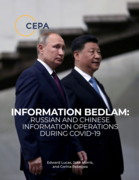
Information Bedlam: Russian and Chinese Information Operations During Covid-19
Center for European Policy Analysis (CEPA) (2021), 20 pp.
"Based on a literature review through January 2021, evaluated at an expert seminar, this policy brief provides a baseline analysis of changing tactics, narratives, and distribution strategies in Russian and Chinese information operations (IOs) relating to the covid-19 pandemic. Key findings: China c
...
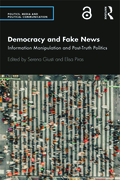
Democracy and Fake News
London; New York: Routledge (2021), xiv, 232 pp.
"This book explores the challenges that disinformation, fake news, and post-truth politics pose to democracy from a multidisciplinary perspective. The authors analyse and interpret how the use of technology and social media as well as the emergence of new political narratives has been progressively
...
Cyber Capabilities and National Power: A Net Assessment
London et al.: International Institute for Strategic Studies (IISS) (2021), 174 pp.
"This report sets out a new methodology for assessing cyber power, and then applies it to 15 states: Four members of the Five Eyes intelligence alliance – the United States, the United Kingdom, Canada and Australia; Three cyber-capable allies of the Five Eyes states – France, Israel and Japan; F
...

Cyber Capabilities as a New Resource of Power Conflicts in the Digital Sphere
International Reports (Konrad-Adenauer-Stiftung), issue 1 (2021), pp. 95-105
"Interestingly, traditional sources of power, such as military and economic strength, are not a prerequisite for success in cyberspace. It is true that the premier league of cyber powers also includes many traditional major powers in its ranks. But states need very few resources to build their cyber
...
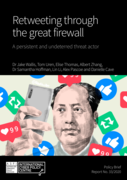
Retweeting Through the Great Firewall: A Persistent and Undeterred Threat Actor
International Cyber Policy Centre Australian Strategic Policy Institute (ASPI) (2020), 56 pp.
"This report analyses a persistent, large-scale influence campaign linked to Chinese state actors on Twitter and Facebook. This activity largely targeted Chinese-speaking audiences outside of the Chinese mainland (where Twitter is blocked) with the intention of influencing perceptions on key issues,
...

Pillars of Russia's Disinformation and Propaganda Ecosystem
Washington, DC: U.S. Department of State (2020), 76 pp.
"Russia has operationalized the concept of perpetual adversarial competition in the information environment by encouraging the development of a disinformation and propaganda ecosystem that allows for varied and overlapping approaches that reinforce each other even when individual messages within the
...
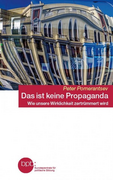
Das ist keine Propaganda: Wie unsere Wirklichkeit zertrümmert wird
Bonn: Bundeszentrale für politische Bildung (bpb), Sonderausg. (2020), 295 pp.
"Auf der ganzen Welt nutzen unterschiedlichste Akteure die Wirkungsmechanismen der digitalen Medien aus, um durch gezielte Desinformationskampagnen die öffentliche Meinung zu beeinflussen. Dies, so lautet die zentrale These von Peter Pomerantsev, bedrohe Demokratien und Demokratisierungsprozesse. W
...
I Know What You Mean: Information Compensation in an Authoritarian Country
International Journal of Press/Politics, volume 26, issue 3 (2020), pp. 587-608
"How do people address information deficiency caused by rigid control of information in authoritarian regimes? We argue that there exists an internally oriented information compensation approach through which people can glean extra information from official messages domestically. This approach does
...
