
Filter
202
Featured
Free Access
99
Key Guidance
1
Top Insights
2
Topics
Female Journalists & Media Workers
72
Self-Censorship
24
Safety of Journalists, Safety Risks of Media Workers
14
Journalists Dealing with Risks & Threats, Resilience & Wellbeing of Media Workers
13
Gender-Based Online Harassment & Sexual Threats
9
Cyberbullying, Cyberharassment
7
Gender-Based Harassment, Intimidation & Violence
7
Media Freedom, Press Freedom
6
Countering Defamation & Harassment
6
Safety of Journalists: Law & Public Policies
5
Press Freedom & Communication Rights Violations
4
Countering Hate Speech, Disinformation & Propaganda
4
Hate Speech, Hate Speech in Social Media
3
Media Law & Regulation
3
Chilling Effects (Discouragement of Legitimate Exercise of Legal Rights)
2
Impunity for Crimes Against Journalists & Media Personnel
2
Surveillance, Surveillance Technologies, Spyware
2
Russia-Ukraine War <2014-
2
Conflict Reporting, Armed Conflict Reporting
2
Sports Reporting
2
Foreign Correspondents
2
Protests, Protest Movements, Protest Reporting & Media Representation
2
Working Conditions of Journalists & Media Personnel
2
Authoritarian Regimes: Media Systems & Landscapes
1
Independent & Oppositional Media in Authoritarian Regimes
1
Cybersecurity, Digital Safety, Privacy, Right to Privacy
1
Digital Media Censorship, Control & Filtering, Internet & Social Media Censorship
1
Media / Communication Control
1
Censorship
1
Countering Press Freedom Violations by Legal Actions
1
Killings of Journalists & Media Personnel
1
Violence Against Journalists & Media Personnel
1
Alternative Communication & Media
1
Trauma, Coping with Trauma, Trauma Therapy
1
Twitter & Microblogs
1
LGBT & Communication / Media
1
Minority Journalists
1
Disinformation, Misinformation, Fake News
1
Disinformation & Misinformation Law & Regulation
1
Self-Regulation of Media
1
Gender Representation & Stereotypes in the Media
1
Gender-Sensitive Journalism
1
Women's Rights
1
COVID-19 Communication
1
Indigenous Journalists & Communicators
1
Russia: Foreign Information Operations, International Broadcasting, Public Diplomacy
1
European Union (EU)
1
Associations & Networks of Journalists
1
Investigative Journalism
1
Journalism Education & Training
1
Local Television
1
COVID-19 Pandemic: Effects on Journalism, Media & Communication
1
Media Landscapes, Media Systems, Media Situation in General
1
Criminal Law & Criminal Prosecution
1
Human Rights Violations
1
Law Enforcement, Litigations, Legal Practice, Case Law, Jurisdiction
1
Legal Protection
1
Migration & Refugees Reporting & (Social) Media Representation
1
Hindu Nationalism
1
Democracy / Democratization and Media
1
Media Capture, Vested Political & Other Interests in the Media
1
Taliban
1
COVID-19 Pandemic: Economic, Political and Social Effects
1
Language
Document type
Countries / Regions
Authors & Publishers
Media focus
Publication Years
Methods applied
Journals
Output Type

“It Comes With the Job”: How Journalists Navigate Experiences and Perceptions of Gendered Online Harassment
International Journal of Communication, volume 17, issue 2023 (2023), pp. 5128-5148
"This article examines how online abuse is experienced and tackled by journalists in Portugal, and addresses the prevalence of online harassment and violence against women journalists and their perceptions of the issue. Theoretically, the article bridges the research on online harassment and gender
...
Becoming a Target: Journalists’ Perspectives on Anti-Press Discourse and Experiences with Hate Speech
Journalism Practice, volume 18, issue 2 (2023), pp. 283-300
"In many parts of the world, journalists work in increasingly hostile environments. To better understand the characteristics and implications of hostility against the press in a hybrid regime, this study explores how journalists in Serbia perceive and experience anti-press hate speech. Based on 20 i
...

Swedish journalists' perceptions of legal protection against unlawful online harassment
Frontiers in Sociology, volume 8, issue 1154495 (2023), 12 pp.
"This study examined journalists' perceptions regarding the legal system's ability to protect them against online harassment. By utilizing open-ended survey responses from respondents with varying levels of trust in the legal system, the findings suggested a need for increased technical proficiency,
...
Unprepared for Reality: Early-Career Journalists Ill-Equipped for Hostility in the Field
Journalism & Mass Communication Educator, volume 78, issue 3 (2023), pp. 301-316
"Scholarly calls surrounding the need to prepare journalism students for hostile encounters and harassment are emerging. Using in-depth interviews with 28 early-career journalists from across the United States, this project underscores a need for content related to hostility within journalism course
...
Harassment’s Toll on Democracy: The Effects of Harassment Towards US Journalists
Journalism Practice, volume 17, issue 8 (2023), pp. 1607-1626
"Journalists in democratically “free” countries have faced harassment from those external to the newsroom for decades, though that has recently increased in the United States by many accounts. To assess the effects of such harassment in the United States, 32 journalists were interviewed and more
...
Online safety of diverse journalists: A report prepared for Media Diversity Australia
Media Diversity Australia; Griffith University; Macquarie University (2023), 69 pp.
"Overall, our study found that many journalists and media workers from minority backgrounds were experiencing online harassment and abuse from members of the public, and that often, this behaviour was considered ‘part of the job’ in the modern, digital environment. While we found some employers
...

The “Price You Pay” and the “Badge of Honor”: Journalists, Gender, and Harassment
Journalism & Mass Communication Quarterly, volume 100, issue 1 (2023), pp. 193–213
"This article utilizes theoretical concepts of sensemaking and affective events theory to analyze and interpret what type of harassment events journalists experience from readers, viewers, and strangers, and their subsequent emotional responses. Findings indicated journalists experience three forms
...
Conceptualizing Journalists’ Safety around the Globe
Digital Journalism, volume 11, issue 7 (2023), pp. 1211-1229
"Killings, as the most extreme form of violence against journalists, receive considerable attention, but journalists experience a variety of threats from surveillance to gendered cyber targeting and hate speech, or even the intentional deprivation of their financial basis. This article provides a co
...
Not just words: How reputational attacks harm journalists and undermine press freedom
Top Insights
Vancouver: Global Reporting Centre; and Media Writing University of British Columbia School of Journalism (2023), 105 pp.
"Journalists’ reputations are under assault around the world. Among journalists we surveyed, 63% reported at least monthly attacks on their individual reputations — and 19% reported facing them daily. Rates were even higher for attacks on the reputations of their news outlets or the broader news
...
Social media and online hostility: Experiences of women in Irish journalism
Dublin: Irish Research Council; Dublin City University (2023), 60 pp.
"The public’s increased access to journalists via social networks is arguably the defining shift in audience-media relations over the past two decades. While some laud this potential for dialogue, the reality is that many journalists face targeted hostility, with women often subjected to particula
...

Safety concerns and awareness of safety measures among female journalists reporting elections in Nigeria
Seybold Report, volume 18, issue 7 (2023), pp. 2402-2419
"Female journalists often face a dual challenge when reporting on elections, grappling with routine attacks both as women and as professionals. This study aims to explore the safety concerns of female journalists covering elections in Lagos state, Nigeria, and investigate their attitudes towards the
...

Online harassment of journalists in Nigeria: Audience motivations and solutions
Media International Australia (2023), 16 pp.
"This study investigates the motivations for the hostility towards the press by the audience and how to control online harassment of journalists in Nigeria. Data for this study are from online and face-to-face semi-structured interviews of 54 Nigerians in Nigeria. Finding shows that perceived journa
...

“I thought You Are Beautiful”: Uganda Women Journalists’ Tales of Mob Violence on Social Media
Digital Journalism, volume 11, issue 10 (2023), pp. 1962-1981
"This article contributes to our understanding of the notion of mob censorship from the Ugandan context by examining the nature and consequences of harassment targeting women journalists on social media. Drawing on research about online harassment and censorship, we link mob violence in physical spa
...
Hostility Toward the Press: A Synthesis of Terms, Research, and Future Directions in Examining Harassment of Journalists
Digital Journalism, volume 11, issue 7 (2023), pp. 1230-1249
"While there is an upsurge of research examining hostility toward the press from those external to the newsroom, there continues to be a lack of critical and robust theoretical foundation and agenda for such inquiry in countries considered to have a democratically free press. Therefore, the objectiv
...
Field Manual against Online Harassment
PEN America (2023)
"Whether you’re experiencing or witnessing online abuse, this Field Manual offers concrete strategies for how to defend yourself and others. We wrote this guidance with and for those disproportionately impacted by online abuse: writers, journalists, artists, and activists who identify as women, BI
...
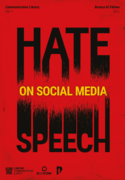
Hate Speech on Social Media: A Global Approach
Covilhã (PO); Qutio (EC): LabCom; University of Beira Interior; PUCE Publications Centre (2023), 302 pp.
"Hate speech is more complex and diverse on social media. It spreads at high speed and can impact behaviors beyond the borders where it originates. Hate is ubiquitous, interactive, and multimedia. It is available 24/7, reaching a much larger audience. On social media, haters can be anonymous and fin
...
Journalism in Cameroon: A High-Risk and Dangerous Profession?
In: The Routledge Companion to Journalism in the Global South
Bruce Mutsvairo, Saba Bebawi, Eddy Borges-Rey (eds.)
London; New York: Routledge (2023), pp. 461-476
"These are challenging times for practicing journalism safely in Cameroon. Death in pretrial detention is one extreme form of silencing journalists, although arbitrary arrests, intimidation, harassment, and trumped-up charges are also used, not only during turbulence and armed conflicts, but also in
...
How online harassment affects Korean journalists? The effects of online harassment on the journalists’ psychological problems and their intention to leave the profession
Journalism, volume 25, issue 4 (2023), pp. 900-920
"This study examined the effects of online harassment on journalists’ psychological trauma and their intention to leave work. It also investigated whether journalists’ psychological trauma mediates the effects of online harassment on their intention to leave the profession and whether gender mak
...

Le journalisme face aux réseaux de la haine au Brésil: Les attaques en ligne contre la presse lors des élections 2022
Paris: Reporters Without Borders (2023), 23 pp.
The Digitization of Harassment: Women Journalists’ Experiences with Online Harassment in the Philippines
Journalism Practice, volume 17, issue 6 (2023), pp. 1198-1213
"Through interviews with women journalists in the Philippines, this study documents and examines their experiences with online harassment. Three main themes stand out. First, we find that online harassment against journalists follows a systematic process that starts from the top, is followed through
...
