
Filter
244
Featured
Free Access
123
Inspiring Practice
1
Key Guidance
9
Top Insights
9
Topics
Journalists: Professional Identity & Values
50
Editorial Independence
45
Journalists: Trust in Public Institutions
44
Labour Market for Journalists
44
Ethics in Media & Communication
29
Codes of Journalistic Ethics
18
Journalism
17
Self-Regulation of Media
15
Media Law & Regulation
15
Digital Ethics, AI Ethics, Social Media Ethics, Data & Information Ethics
14
Media Freedom, Press Freedom
10
Journalism Education & Training
9
Journalistic Quality
9
Suicide Reporting & Media Representation
8
Disaster & Humanitarian Crisis Reporting
7
Disinformation, Misinformation, Fake News
7
Investigative Journalism
7
Advertising Ethics
6
Accountability & Transparency of the Media
6
Sensationalist Journalism, Yellow Press
6
Victim-Sensitive Reporting
6
Journalists Dealing with Risks & Threats, Resilience & Wellbeing of Media Workers
6
Conflict Reporting, Armed Conflict Reporting
5
Human Rights Protection & Violations: Media Representation & Reporting
5
Discrimination-Sensitive Language, Minority-Sensitive Journalism
5
Objectivity & Veracity of Reporting
5
Working Conditions of Journalists & Media Personnel
5
Politics and Media
5
Non-Western Communication Approaches
5
Cybersecurity, Digital Safety, Privacy, Right to Privacy
4
Ethics in Public Relations
4
Citizen Journalism, Community Journalism
4
Conflict-Sensitive & Peace Journalism
4
Crime & Violence Reporting
4
War Reporting
4
Digital Journalism, Online Journalism
4
Image Ethics, Ethics in Photojournalism
4
Press Councils
4
Journalism Concepts & Cultures
4
Safety of Journalists, Safety Risks of Media Workers
4
Diversity & Pluralism in Media / Communication
4
Media Landscapes, Media Systems, Media Situation in General
4
Confidential Sources, Whistleblowing, Protection of Journalists' Sources
4
Migration & Refugees Reporting & (Social) Media Representation
4
Al-Jazeera
4
Self-Censorship
3
Countering Hate Speech, Disinformation & Propaganda
3
Media Ownership
3
Climate Change Communication, Climate Journalism
3
Bribery & Corruption in Journalism
3
Female Journalists & Media Workers
3
Gender Representation & Stereotypes in the Media
3
Foreign Correspondents
3
Journalism Education Curricula
3
Journalism Sources
3
Journalistic Skills
3
News
3
News Values, News Selection Criteria
3
Democracy / Democratization and Media
3
Framing
3
Public Media, State Media
3
Trust in the Media, Credibility of Media
2
Celebrities, Idols, Stars
2
Communication Rights
2
Freedom of Expression
2
Freedom of Expression Principles
2
Crisis Communication
2
Public Diplomacy, Cultural Diplomacy
2
Community Radios
2
Foreign Conflict Reporting, International War Reporting
2
Trauma: Media Representation & Reporting
2
Development Journalism & Media Representation of Development Issues
2
Minorities & Disadvantaged Groups: Reporting & Media Representation
2
Health Disinformation & Misinformation
2
Gaming: Ethical Issues
2
Ethics in Nonprofit & Community Journalism
2
Fact-Checking & Verification of Sources
2
Gender-Based Harassment, Intimidation & Violence: Media Representation & Reporting
2
Gender-Sensitive Journalism
2
Decolonial & Non-Western Approaches
2
COVID-19 Communication
2
History of Media & Communication
2
Foreign News, International News
2
Globalisation of Media
2
Constructive Journalism, Solution-Oriented Journalism
2
Journalism Studies & Research
2
Local Journalism
2
News Agencies
2
Photojournalism
2
Radio Journalism
2
Business & Economics Journalism
2
Corruption Reporting & Role of Media in Curbing Corruption
2
Election Reporting
2
Poverty & Impoverished People: Reporting & Media Representation
2
Sexual Abuse Reporting, Sexual Violence Reporting
2
Media & Communication Policies
2
Ombudsmen
2
Corporate Social Responsibility
2
Public Spheres
2
Radio
2
Buddhism and Communication
2
Islam and Communication
2
Reality & Communication, Truth & Media
2
Television
2
Philosophies of Communication & Media
2
Advertising
1
Editorial Independence: Influence of Advertisers
1
Government Advertising, State Advertising
1
Print Media Advertising
1
Advocacy
1
Audiences & Users
1
Audience Research
1
News Consumption & Information Sources of Media Users
1
Catholic Communication Ethics, Catholic Media Ethics
1
Child Abuse
1
Child Abuse: Digital Media
1
Child Abuse Reporting
1
Christian Communication Ethics, Christian Media Ethics
1
Christian Ethics
1
Cinema
1
Documentaries, Television Documentaries, Web Documentaries
1
Data Protection: Law & Regulation
1
Plagiarism
1
Press Freedom & Communication Rights Violations
1
Community Radio Journalism & Production Skills
1
Oral Cultures & Traditions, Oral History, Oral Testimonies
1
Conflict Areas: Media Systems, Media Landscapes, Role of Media
1
Hate Speech, Hate Speech in Social Media
1
Transitional Justice Reporting
1
Violence in the Media
1
Contents of Media
1
Media Monitoring, Media Observatories
1
Media Cultures
1
Cyberbullying, Cyberharassment
1
Data Governance, Data Justice, Data Sovereignty
1
Digital Media Startups
1
Digital & Information Literacy
1
Digital Tools
1
Internet / Social Media Law & Regulation
1
Social Media
1
Facebook
1
Digital Economies, Digital Societies
1
Artificial Intelligence
1
AI Ethics
1
Digital Philosophies
1
Digitalization, Digital Transformation
1
Homeless People
1
LGBT & Communication / Media
1
Disaster & Humanitarian Crisis Communication
1
Disaster Risk & Preparedness Communication, Disaster Prevention Communication
1
Environmental Disinformation & Misinformation
1
Identifying & Researching Disinformation
1
Documenting Human Rights Violations
1
Economics of Media
1
Media Viability & Financial Sustainability
1
Political Economy of Media
1
Print Media Economics
1
Environmental Education
1
Ethics in Entertainment
1
Infotainment, Politainment
1
Biodiversity Communication
1
Environmental Communication in Social Media, User-Generated Contents
1
Environmental Journalism
1
Water Resources Management, Water Access & Supply
1
Bioethics
1
Editorial Guidelines
1
Journalism Ethics: Covering Vulnerable Persons
1
Journalistic (In)Dependence
1
Sexuality: Media Representation, Sexually Explicit Media Content, Pornography
1
Responsibility
1
Ubuntu (Ethical Concept of Southern African Origin)
1
Gender-Based Harassment, Intimidation & Violence
1
Gender-Sensitive Language
1
Addiction Reporting, Media Representation & Prevention
1
Health Journalism
1
History of Journalism
1
History of War Reporting
1
Ethnicity in Communication
1
International Communication
1
Glocalization of Media
1
Council of Europe
1
Associations & Networks of Journalists
1
Civic Journalism, Public Journalism
1
Undercover Journalism
1
Media Assistance: Journalism Education & Training
1
Journalistic Genres
1
Journalistic Research Methods
1
Journalistic Style & Language
1
Freelance Journalists & Media Workers
1
Safety of Journalists: Law & Public Policies
1
Radio News
1
Print Journalism
1
Radio Interviews
1
Reporting & Media Representation: Specific Issues
1
Court Reporting & Media Representation of Judicial System
1
Death & Grief: Reporting & Media Representation
1
Protests, Protest Movements, Protest Reporting & Media Representation
1
Islam: Media Representation & Reporting
1
COVID-19 Pandemic: Effects on Journalism, Media & Communication
1
Media, Mass Media
1
Mindfulness, Mindful Communication
1
Media & Information Literacy
1
Media System Analyses & Typologies
1
Post-Socialist Media Systems & Landscapes
1
Press Landscapes
1
Radio Landscapes
1
Television Landscapes
1
Law Enforcement, Litigations, Legal Practice, Case Law, Jurisdiction
1
Law & Regulation: Protection of Confidential Sources & Whistleblowers
1
Radio Law & Regulation
1
Right to Reply, Right of Recitification
1
Television Law & Regulation
1
Truth & Reconciliation Commissions
1
Financing Media, Financial Media Management
1
People with Disabilities: Reporting & Media Representation
1
Public Interest
1
Agenda Setting
1
Influence of Media on Politics
1
Political Transition and Media
1
Public Opinion
1
Press
1
Magazines
1
Newspapers
1
Public Service Broadcasting
1
Gatekeeping Function of Media
1
Media Effects
1
Persuasive Communication
1
Buddhism
1
Confucianism
1
Islamophobia
1
Islamic Cultures: Role of Media
1
Muslim Media
1
Research in Media & Communication
1
Comparative Approaches & Methods in Communication Research
1
Interviewing (Journalistic Genre)
1
Science Communication & Research Dissemination
1
Discrimination
1
Disappeared People, Missing People
1
Domestic Violence
1
Civil Society
1
Dalits
1
Robots, Robotics
1
Television Reports
1
Suburbs, Poor Districts, Slums, Shanty Towns
1
Urban Areas
1
Language
Document type
Countries / Regions
Authors & Publishers
Media focus
Publication Years
Methods applied
Journals
Output Type

Journalists in Romania
Worlds of Journalism Study (2016), 6 pp.
"Romanian journalists said that objectivity is the most important attribute of their work. They strongly believe that their job is to report events exactly the way they happened, without any external or internal intervention. The low standard deviations in these cases indicate that there is a high l
...

Journalists in Sudan
Worlds of Journalism Study (2016), 4 pp.
"With regards to professional role orientations, Sudanese journalists found it most important to support national development, to be a detached observer, to advocate for social change, and to influence public opinion. The relevance of these roles was fairly undisputed among the interviewed journalis
...

Journalists in India
Worlds of Journalism Study (2016), 6 pp.
"The top five roles, in order of importance both by mean scores and by percent who said “extremely” and “very” important, for Indian journalists, were: report things as they are (88.4%), educate the audience (85.5%), provide analysis of current affairs (84.7%), let people express their views
...

Journalists in Estonia
Worlds of Journalism Study (2016), 7 pp.
"Four “classic” roles: to report things as they are, to be a detached observer, to educate the audience and provide news that attracts the largest audience are fairly unanimously seen as the most important among Estonian journalists, as the relatively low standard deviations suggest. Especially
...

Journalists in Kenya
Worlds of Journalism Study (2016), 8 pp.
"It is fairly informative how journalists view their roles in the Kenyan society. Kenyan journalists found it most important to report things the way they are, to educate the audience and to promote tolerance and diversity. The relevance of these roles was fairly undisputed among the interviewed jou
...

Journalists in Latvia
Worlds of Journalism Study (2016), 7 pp.
"When it comes to professional role orientation, Latvian journalists are almost unanimous that journalists should report things as they are and act as detached observers. Interviewed journalists also found it important to provide analysis of current affairs, to educate the audience, to let people ex
...

Journalists in Sierra Leone
Worlds of Journalism Study (2016), 6 pp.
"In their professional role orientations, Sierra Leonean journalists found it most important to educate the audience, let people express their views, report things as they are, support national development and advocate for social change. The respondents believe it is not their job to convey a positi
...

Journalists in the Philippines
Worlds of Journalism Study (2016), 6 pp.
"In terms of professional role orientations, Filipino journalists found it most important to report things as they are, educate the audience, and advocate for social change. Most journalists were in strong agreement in the importance of these roles, as reflected by the relatively low standard deviat
...
Affirmative Duties: The Institutional and Individual Capabilities Required in Disaster Coverage
Journalism Studies, volume 17, issue 2 (2016), pp. 216-230
"Most analysis of media coverage of disaster has a normative edge. This paper outlines a philosophical basis for establishing normative standards for news coverage of natural hazards and human-based risk. It begins with a top-down, or system-oriented, epistemological approach to disasters and risk.
...

Journalists in Croatia
Worlds of Journalism Study (2016), 5 pp.
"Journalists in Croatia primarily see their roles in the classical (western) "watchdog" function of providing analysis of current affairs, monitoring and scrutinizing political leaders, and business. These values are followed by public-forum roles of the media through letting people express their vi
...

Journalists in Mexico
Worlds of Journalism Study (2016), 7 pp.
"With regards to professional role orientations, the vast majority of journalists in Mexico found it extremely or very important to report things as they are, followed in second place by the role of promoting tolerance and cultural diversity, and the role of advocating for social change in third pla
...
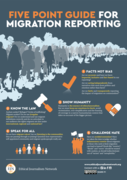
Five Point Guide for Migration Reporting
Ethical Journalism Network (EJN) (2016), 1 p.

Reporting on Gender-Based Violence in the Syria Crisis: Facilitator’s Guide
United Nations Population Fund (UNFPA) (2016), 73 pp.
"The purpose of the training workshop in this manual is to improve the skills of media professionals and communication officers in reporting gender-based violence in humanitarian crisis settings; to enhance the quality of reporting by instilling ethical principles; and to increase awareness among th
...
Ética y autorregulación periodísticas en México: Conceptualización, historia, retos y documentos
México, DF: Comisión de Derechos Humanos del Distrito Federal (2016), 476 pp.
Ética de los medios de comunicación
Barcelona: Herder (2016), 176 pp.

Journalists in Botswana
Worlds of Journalism Study (2016), 6 pp.
"The top six roles, all with means above 4.5 and standard deviations below 1, for Botswana journalists, were a mix of those aligned with a liberal press (e.g., report things as they are) and those relevant to development journalism (e.g., support national development). “Report things as they areâ€
...

Journalists in Indonesa
Worlds of Journalism Study (2016), 6 pp.
"With regards to professional roles, Indonesian journalists found it most important to report things as they are, educate their audience, promote tolerance and cultural diversity, let people express their opinions and advocate for social change. Interviewed journalists also found it very important t
...

Journalists in South Africa
Worlds of Journalism Study (2016), 6 pp.
"With regard to professional role orientations, South African journalists found it most important to report things as they are (92.5%), to educate the audience (86.8%), and to let people express their views (84.6%). The relevance of these roles was fairly undisputed among the interviewed journalists
...

Journalists in the Czech Republic
Worlds of Journalism Study (2016), 6 pp.
"The differences between the most and least important roles according to Czech journalists are very big. While almost 100 percent of journalists viewed their role to “report things as they are” as very or even the most important, only 1.4 percent of interviewed journalists perceived “support o
...
Guía para el tratamiento periodístico responsable de noticias policiales
Buenos Aires: Defensoría del Público (2016), 106 pp.
"La organización del texto que sigue recorta, con fines analíticos, diez nudos críticos de la tarea periodística en materia de cobertura de casos policiales. Para su exposición se han tomado materiales que fueron objeto de reclamos ante esta Defensoría o que fueron seleccionados de los monitor
...
