
Filter
199
Featured
Free Access
86
Inspiring Practice
1
Key Guidance
8
Quick Overview
1
Top Insights
5
Topics
Safety of Journalists, Safety Risks of Media Workers
61
Conflict Reporting, Armed Conflict Reporting
20
Working Conditions of Journalists & Media Personnel
18
Journalism Education & Training
15
War Reporting
14
Harassment & Intimidation of Journalists
13
Female Journalists & Media Workers
12
Foreign Correspondents
10
COVID-19 Pandemic: Effects on Journalism, Media & Communication
10
Media Freedom, Press Freedom
9
Trauma: Media Representation & Reporting
9
Disaster & Humanitarian Crisis Reporting
8
Self-Censorship
6
Crime & Violence Reporting
6
Journalism Ethics
6
Killings of Journalists & Media Personnel
4
Violence Against Journalists & Media Personnel
4
Photojournalism
4
Genocides
3
Conflict-Sensitive & Peace Journalism
3
Foreign Conflict Reporting, International War Reporting
3
Trauma, Coping with Trauma, Trauma Therapy
3
Documenting Human Rights Violations
3
Gender-Based Online Harassment & Sexual Threats
3
Emergency Medical Aid
3
Investigative Journalism
3
Death & Grief: Reporting & Media Representation
3
User-Generated Contents
3
Authoritarian Regimes: Government Communication Strategies
2
Censorship
2
Press Freedom & Communication Rights Violations
2
Crisis Communication
2
Military: Communication Strategies & Practices
2
Citizen Journalism, Community Journalism
2
Iraq War (2003)
2
Extremism & Terrorism Reporting
2
Human Rights Protection & Violations: Media Representation & Reporting
2
Cyberbullying, Cyberharassment
2
Countering Defamation & Harassment
2
Journalism
2
Journalistic Quality
2
Journalists: Professional Identity & Values
2
Protests, Protest Movements, Protest Reporting & Media Representation
2
Migration & Refugees Reporting & (Social) Media Representation
2
Conflict & War Photography
2
Media Capture, Vested Political & Other Interests in the Media
2
Resilience
2
Digital Activism, Cyber Advocacy
1
Audience Feedback, Interaction & Participation
1
Authoritarian Regimes: Media Systems & Landscapes
1
Children: Media Representation & Reporting
1
Cybersecurity, Digital Safety, Privacy, Right to Privacy
1
Editorial Independence
1
Media Assistance: Freedom of Expression & Safety of Journalists
1
Indirect Censorship, Soft Censorship
1
Surveillance, Surveillance Technologies, Spyware
1
Strategic Lawsuits Against Public Participation (SLAPP)
1
Boko Haram
1
Wars
1
Conflict Areas: Media Systems, Media Landscapes, Role of Media
1
Conflict-Sensitive Radio Journalism, Radio in Conflict Prevention & Transformation
1
Violence in the Media
1
War Propaganda, Propaganda in Conflicts
1
Media Criticism
1
Collective Memory & Media, Media Representation of History
1
Media Assistance Projects & Programs: Case Studies
1
Disasters, Disaster Relief, Disaster Prevention
1
Data Journalism, Computer-Assisted Investigative Reporting
1
Digital Journalism, Online Journalism
1
Journalistic Social Media Use
1
Prisoners & Communication / Media
1
Disaster & Humanitarian Crisis Communication
1
Earthquakes, Floods, Tsunamis, Natural Disasters
1
Humanitarian Aid
1
International Humanitarian Crisis Reporting, Foreign Disaster Reporting
1
Disinformation, Misinformation, Fake News
1
Climate Change Communication, Climate Journalism
1
Gender-Based Harassment, Intimidation & Violence
1
Counselling
1
COVID-19 Communication
1
Mental Health (General)
1
Suicide Reporting & Media Representation
1
Indigenous Journalists & Communicators
1
Foreign News, International News
1
Influence of Media on Foreign & International Policies
1
Information Sources of Journalists
1
Journalism Education Curricula
1
Media Assistance: Journalism Education & Training
1
Journalistic Skills
1
Journalistic Style & Language
1
Freelance Journalists & Media Workers
1
Safety of Journalists: Law & Public Policies
1
Stringers & Fixers (Journalism)
1
Local Journalism
1
Newsroom Management
1
Business & Economics Journalism
1
Court Reporting & Media Representation of Judicial System
1
Forced Labour & Human Trafficking: Reporting & Media Representation
1
Television Journalism
1
Witnesses, Witness Testimonies
1
Metaphors
1
Local Television
1
Media Assistance
1
Media Assistance: Financial Sustainability & Management
1
Media Assistance: Local Journalism & Media
1
Media Landscapes, Media Systems, Media Situation in General
1
Transition Countries: Media Systems & Media Landscapes
1
Forced Migration, Forced Displacement
1
Military
1
Populism
1
Right-Wing Extremism
1
Democracy / Democratization and Media
1
Public Spheres
1
Emotions in the Media, Emotional Functions & Messages of Media
1
Memory, Memorizing
1
Taliban
1
Islamist Communications & Media
1
Research Methods
1
Crimes, Criminality, Organized Crime
1
Rohingya
1
Open Source Software
1
Language
Document type
Countries / Regions
Authors & Publishers
Media focus
Publication Years
Methods applied
Journals
Output Type

Rationalizing the Gap: How Journalists in a Nondemocratic Regime Make Sense of Their Professional Work
International Journal of Communication, volume 14 (2020), pp. 4781-4802
"This article investigates how news professionals in a nondemocratic regime rationalize their institutional roles and daily reporting practices, negotiate boundaries of their work, and make sense of their professional activities. This study used qualitative interviewing to explore personal experienc
...

Professional Autonomy and Structural Influences: Exploring How Homicides, Perceived Insecurity, Aggressions Against Journalists, and Inequalities Affect Perceived Journalistic Autonomy in Colombia
International Journal of Communication, volume 14 (2020), pp. 3054-3075
"Journalistic autonomy has been studied more frequently in countries with secure democracies in terms of journalists’ perceptions of freedom and independence to work in the midst of the controls, pressures, and influences perceived in the newsrooms. Based on objective variables and on a national s
...
Journalism in Violent Times: Mexican Journalists' Responses to Threats and Aggressions
In: Handbook of Research on Combating Threats to Media Freedom and Journalist Safety
Sadia Jamil (ed.)
Hershey, PA: IGI Global (2020), pp. 278-297
"The aim of this chapter is to describe Mexican journalists' responses to constant threats and aggressions. In doing so, it draws on 93 semi-structured interviews conducted in 23 of the most violent states of the country. The results indicate that violence against news workers has a twofold set of i
...
You need a thick skin in this game: Journalists’ attitudes to resilience training as a strategy for combatting online violence
Australian Journalism Review, volume 42, issue 1 (2020), pp. 93-11.
"In recent years, resilience training has been recommended as a way to protect news workers from the impact of reporting on traumatic events. However, do journalists see it as a useful tool in dealing with online abuse and harassment? This article explores Australian journalists’ conceptions of re
...

‘A modern-day equivalent of the Wild West’: Preparing journalism students to be safe online
Journalism Education, volume 10, issue 1 (2020), pp. 69-82
"Journalists are increasingly becoming the target of online abuse; the backlash over the death of TV presenter Caroline Flack and coverage of the Black Lives Matter protests are just two recent examples. Yorkshire Evening Post editor Laura Collins has highlighted how female journalists face the brun
...

Fear, trauma and local journalists: Implications for media development and peacebuilding
In: Journalist Safety and Self-Censorship
Ingrid Fadnes, Anna Grøndahl Larsen, Roy Krøvel (eds.)
London; New York: Routledge (2020), pp. 148-163
"In many transitional and conflict societies self-censorship is employed as a coping mechanism or survival strategy (Skjerdal, 2010; Tapsell, 2012). Recent research has examined self-censorship by journalists in countries in which there have been and continue to be media support and safety intervent
...
Post-Trauma Psychopathology in Journalists: The Influence of Institutional Betrayal and World Assumptions
Journalism Practice, volume 15, issue 7 (2020), pp. 955-973
"Journalists are often exposed to potentially traumatic content through their profession. High levels of exposure have been found to predict high levels of psychopathology among journalists, including posttraumatic stress, alcohol use, and depressive symptoms. Predictors of such outcomes have not be
...
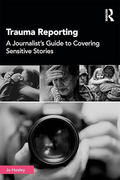
Trauma Reporting: A Journalist's Guide to Covering Sensitive Stories
Key Guidance
London; New York: Routledge (2020), xii, 205 pp.
Trauma Reporting provides vital information on developing a healthy, professional and respectful relationship with those who choose to tell their stories during times of trauma, distress or grief. Amid a growing demand and need for guidance, this fascinating book is refreshingly simple, engaging and
...
Could Combat Stress Affect Journalists’ News Reporting? A Psychophysiological Response
Applied Psychophysiology and Biofeedback, volume 45, issue 4 (2020), pp. 231-239
"Covering war conflicts may compromise the psychological and physical health of journalists because chronic exposure to these environments has been related to depression, memory dissociative processes, and post-traumatic stress disorder; however, acute effects have not been studied yet. Thus, a comb
...
Emotionality and Professionalism: Exploring the Management of Emotions by Journalists Reporting on Genocide
Sociology, volume 54, issue 3 (2020), pp. 609-625
"The dynamic nature of reporting requires journalists to interrogate their emotions as well as their sense of professionalism. This article focuses on the complex relationship between emotionality and professionalism mediated by journalists who reported on cases of genocide. This extraordinary confl
...
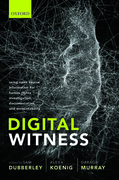
Digital Witness: Using Open Source Information for Human Rights Investigation, Documentation, and Accountability
Key Guidance
Oxford: Oxford University Press (2020), xvi, 360 pp.
Commitment Amid Conflict: The Experience of Central African Journalists Covering Their Country's War
In: Media and Mass Atrocity: The Rwanda Genocide and Beyond
Allan Thompson (ed.)
Waterloo, Ontario: Centre for International Governance Innovation (2019), pp. 275-289
"The trend in international newsgathering is to greater reliance on local journalists and fixers to provide crucial information to a global audience. At the same time, these local journalists are themselves becoming targets of violence. Increasingly, local journalists are being killed in the line of
...
“They don't trust us; the don't care if we're attacked”: Trust and risk perception in Mexican journalism
Communication & Society, volume 32, issue 1 (2019), pp. 147-158
"Drawing from 93 semi-structured, in-person interviews with journalists from 23 states, this article analyzes the relation between trust and risk perception in Mexican journalism. It focuses on how Mexican journalists perceive and experience public trust placed in them as social actors, and how it i
...
Fear, trauma and local journalists: Cross-border lessons in psychosocial support for journalists
International Media Support (IMS) (2019), 16 pp.
"95 per cent of journalists killed in armed conflict are locally based journalists. While there has been increasing focus on the physical and digital safety issues these journalists face, there has been less attention towards the need for psychosocial support. Addressing psychosocial needs of local
...
Covering Trauma: Impact on Journalists
Dart Center for Journalism & Trauma (2019), 8 pp.
"An overview of current research on the occupational hazards for journalists covering traumatic events, the risk factors that aggravatethose effects, and some suggestions for mitigating those factors." (Introduction)
Socio-Psychological Effects on Media Professional Standards during Military Operations in Pakistan
Global Social Sciences Review, volume 4, issue 2 (2019), pp. 269-275
"While using qualitative and quantitative techniques, this study analyzes the issues and challenges faced by the journalists while working in the areas going under military operations in Khyber Pakhtunkhwa (KP) and FATA. Based on the hierarchy of influences model, a survey was conducted in Wazirista
...

Afghan journalists in a balancing act: Coping with deteriorating safety
Conflict & Communication Online, volume 18, issue 1 (2019), 16 pp.
"Afghan journalists have been experiencing a deteriorating situation, due to a multitude of threats. They operate in a situation of low popular literacy, as well as low media literacy. Threats from Taliban and other insurgents cause many journalists to live in constant fear. This article is based on
...
Coping with Audience Hostility. How Journalists’ Experiences of Audience Hostility Influence Their Editorial Decisions
Journalism Studies, volume 20, issue 16 (2019), pp. 2422-2421
"In digitalized media societies, many journalists encounter audience hostility in publicly visible channels. Scholars theorized on the spiral process of the influence of audience feedback on journalists’ editorial work. In this spiral, audience feedback on past news coverage influences ongoing new
...
Turkey: How to deal with threats to journalism?
In: Transnational Othering – Global Diversities: Media, Extremism and Free Expression
Elisabeth Eide, Kristin Skare Orgeret, Nil Mutluer (eds.)
Göteborg: Nordicom (2019), pp. 171-190
"Journalism has always been an unsafe practice in modern Turkey. However, ties between the political system and democracy have been severed by the recent witch-hunt following the most recent failed coup, in 2016, and the subsequent societal collapse triggered by the administration of the state of em
...
Journalists and mental health: The psychological toll of covering everyday trauma
Newspaper Research Journal, volume 40, issue 2 (2019), pp. 239-259
"Journalists are often first responders and eyewitnesses to violent news events. Trauma reporting can take its toll, resulting in mental health effects. Addressing the solution requires understanding the problem. This multimethod study used a national survey of journalists (N = 254) that shows that
...
