
Filter
13
Topics
Digital & Social Media Use: Youth
3
Muslim Digital Media & Online Communities
3
Youth & Religious Communication: Catholic Church
3
Religious Media Use, Religious Media Audiences
2
Digital Media, Internet & Religion
2
Digital & Social Media Use: Children
1
Internet & Social Media Use: Women
1
Media Use: Migrants & Diasporas
1
Mobile Phone Use: Youth
1
Television Use: Youth
1
Catholic Digital Media Presence & Online Communities
1
Youth Catechesis, Youth & Catholic Church
1
Digital Media Socialisation
1
Bible, Biblical Theology
1
Christian Social Media Presence & Online Communities
1
Pentecostal Churches & Communication
1
Storytelling
1
Clothing & Fashion
1
Digital Inclusion
1
Cyberfaith / Virtual Spirituality
1
Religious Apps
1
Podcasts
1
Blogging, Blogs
1
Instagram
1
Gaming, Video Games
1
Gender & Religious Communication
1
Satellite Television
1
Muslim Missonary Activities
1
Muslim Television Broadcasting
1
Civil Society
1
Castes
1
SMS
1
Suburbs, Poor Districts, Slums, Shanty Towns
1
Visual Cultures
1
Youth and Media
1
Youth & Digital Media
1
Language
Document type
Countries / Regions
Authors & Publishers
Media focus
Publication Years
Journals
Output Type

An Ecosystemic Approach to Digital Christianity: How Faith and Identity Formation Evolve Among Youth in Singapore
Religion and Social Communication, volume 23, issue 2 (2025), pp. 322-346
"This sociological and ethnographic study develops and employs an ecosystemic approach to examine the effects of digitalization on religious beliefs and practices among young Christians in a Pentecostal megachurch in Singapore. Through extensive fieldwork and qualitative data analysis, this paper un
...
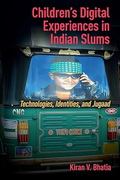
Children's digital experiences in Indian slums: Technologies, identities, and Jugaad
Amsterdam: Amsterdam University Press (2024), 175 pp.
"This book departs from the universalising and rescue narratives of poor children and technologies. It offers complex stories on how children's social identities (gender, caste, and religion), cultural norms, and personal aspirations influence their digital experiences. How do children challenge, ci
...
Becoming Tapestry: A Multimodal Ethnographic Podcast Exploring Storytelling and Belonging in a Faith-Adjacent Foster Youth Mentoring Network
Doctoral Thesis Teachers College Columbia University (2022), v, 108 pp.
"In this study of Tapestry, a church-run foster youth mentoring network, and St. Sebastian’s Summer Camp, a predominantly Latinx church-run community day camp, I develop and document one promising pairing in response to this quandary: an adapted form of Digital Storytelling (Lambert, 2012) as a co
...
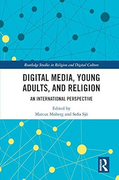
Digital Media, Young Adults, and Religion: An International Perspective
London; New York: Routledge (2020), xi, 179 pp.
"Utilising results of an unprecedented global study, this volume explores the ways in which young adults in seven different countries engage with digital and social media in religiously significant ways. Presenting and analysing the findings of the international research project Young Adults and Rel
...
Creative and Lucrative Da'wa: The Visual Culture of Instagram Amongst Female Muslim Youth in Indonesia
Asiascape: Digital Asia, volume 5, issue 1-2 (2018), pp. 68-99
"Social media have become part of the private and public lifestyles of youth globally. Drawing on both online and offline research in Indonesia, this article focuses on the use of Instagram by Indonesian Muslim youth. It analyzes how religious messages uploaded on Instagram through posts and caption
...
Religion and Global Media: Impact of Arabic TV Channels on Lowland Eritrean Youth
Journal of Arab & Muslim Media Research, volume 9, issue 2 (2016), pp. 221-236
"Satellite TV channels from the Middle East started beaming into Eritrea from 1996, and the Eritrean youth are avid consumers of the global messages from across the borders. Following an in-depth interview method as a research technique, using an unstructured, openended questionnaire, the present st
...
Hijabers: How Young Urban Muslim Women Redefine Themselves in Indonesia
International Communication Gazette, volume 76, issue 4-5 (2014), pp. 377-389
"This paper analyzes the dissemination of ‘Hijaber’ style through different forms of cyber media (blogs and social network sites) in order to determine how young, computer savvy Muslim Indonesians explore their gender and religious identities while working in the ‘creative economy’ through c
...
»Und Gott chillte«? Überlegungen zu neueren Bibelprojekten aus literaturwissenschaftlicher Sicht
In: Das Buch in den Büchern: Wechselwirkungen von Bibel und Literatur
Andrea Polaschegg, Daniel Weidner (eds.)
München: Fink (2012), pp. 135-149
"Martin Dreyer, der 1965 geborene Gründer der Jesus Freaks, startete 2004 das Volxbibel-Projekt, dessen sprachlicher Duktus im oben angeführten Zitat ironisch aufgegriffen wird. Anders als bei kommunikativen Übersetzungen der letzten fünfzig Jahre (bspw. Hoffnung für alle 3 oder Gute Nachricht
...
Religion, the Making of Goddess and Video Game in an Oral Tradition
Religion and Social Communication, volume 10, issue 1 (2012), pp. 39-72
Cibersacro: Novas relações entre os jovens católicos e a cibercultura
In: Mutirão de Cultura América Latina e Caribe. Fevereiro 2010, PUCRS, Brasil
Henrique de Freitas Lima (ed.)
Porto Alegre: Conferencia Episcopal Latinoamericana (CELAM); Conferência Nacional dos Bispos do Brasil (CNBB); OCLACC (2011), pp. 186-197
God Texting: Filipino Youth Response to Religious SMS
Religion and Social Communication, volume 8, issue 1-2 (2010), pp. 43-82
"Religious forwarded messages take the form of points for reflection and reminders of religious feasts. In other cases, the messages ask recipients to pray and re-send the same messages in exchange for Divine favor. This study explores the youth's first response to these messages. It aims to learn u
...
Von Chatraum bis Cyberjihad: Muslimische Internetnutzung in lokaler und globaler Perspektive
Würzburg: Ergon (2009), xiii, 215 pp.
E-Generation: The Communication of Young People in Asia
Manila: Logos (Divine Word) Publications (2003), 208 pp.
"This book contains the main presentations and final statement of the Fourth Bishops Institute for Social Communication (BISCOM IV) on E- Generation: The Communication of Young People in Asia. It reflects not only the actual BISCOM presentations but also serves as documentation for everybody interes
...
