
Filter
44
Featured
Free Access
11
Top Insights
1
Topics
Collective Memory: Violent Conflicts & Wars
13
Holocaust
8
Dealing With the Past
7
Hate Speech, Hate Speech in Social Media
6
Collective Memory & Media, Media Representation of History
6
Perpetrators
5
Foreign Conflict Reporting, International War Reporting
5
Conflict Reporting, Armed Conflict Reporting
4
Racism in Communication & Media
4
Radio-Télévision Libre des Milles Collines (RTLM)
4
Political Cartoons & Comics
3
Documentaries, Television Documentaries, Web Documentaries
3
War & Political Violence in Cinema
3
Literature
3
Journalists Dealing with Risks & Threats, Resilience & Wellbeing of Media Workers
3
Transitional Justice
3
Media Use: Minorities & Disadvantaged Groups
2
Conflicts and Media
2
Extremist & Terrorist Communication Strategies and Media
2
Human Rights Protection & Violations: Media Representation & Reporting
2
Trauma: Media Representation & Reporting
2
Museums
2
Racism
2
Gender-Based Harassment, Intimidation & Violence: Media Representation & Reporting
2
Colonial Legacies
2
Colonial Period
2
Nazism
2
Africa: Foreign Media Representation & Image Abroad
2
Foreign Correspondents
2
Human Rights
2
Propaganda
2
Press
2
Radio
2
Memory, Memorizing
2
Sexual Violence & Abuse, Rape
2
Ethnic Groups, Ethnic Minorities
2
Afrodescendants
2
Conflict Coverage: Children's Books & Educational Materials
1
Children & Childhood
1
Faith-Based Film Literacy Education
1
Conflict Coverage: Cinema & Audiovisual Media
1
Film and Religion, Religion in Motion Pictures
1
Bible Films, Movie Christs & Antichrists
1
Historical Films
1
Violence in the Media: Film
1
Film Studies & Research
1
Censorship
1
Media Freedom, Press Freedom
1
Citizen Journalism, Community Journalism
1
Oral Cultures & Traditions, Oral History, Oral Testimonies
1
Storytelling
1
Civil Wars
1
Conflict Prevention, Mediation & Reconciliation: Role of Media
1
Crime & Violence Reporting
1
Enemy Images
1
Hate Speech Legislation & Regulation
1
Media Assistance in Conflict Regions & Fragile Countries
1
Trauma, Coping with Trauma, Trauma Therapy
1
Wars & Political Violence in Arts & Literature
1
War Reporting
1
Arts
1
Collective Identities & Media
1
Poetry
1
Influence of Media on Development Aid
1
Social Media
1
Video & Foto Online Communities
1
Flickr
1
YouTube
1
Disinformation, Misinformation, Fake News
1
Conspiracy Narratives, Conspiracy Theories
1
Digital & Online Archives
1
Documenting Human Rights Violations
1
Economic Policies
1
Teaching & Teaching Methods
1
Ethics in Media & Communication
1
Decolonial & Non-Western Approaches
1
Decolonisation & Independence (General)
1
First World War (1914-1918)
1
History of Media: 19th Century
1
Local History & Memory
1
Ethnicity in Communication
1
Intercultural Dialogue
1
Developing Countries Reporting & Representation in Foreign / International Media
1
Foreign Countries: Reporting & Media Representation
1
Media Law & Regulation: International Standards & Practices
1
Colonialism
1
United Nations (UN)
1
Court Reporting & Media Representation of Judicial System
1
Media Landscapes, Media Systems, Media Situation in General
1
Media Law & Regulation
1
Law Enforcement, Litigations, Legal Practice, Case Law, Jurisdiction
1
Photography
1
Documentary Photography
1
Politics
1
Government
1
National Identity & Media, Nationalism & Communication
1
Public Media, State Media
1
Media Effects
1
Prejudices
1
Buddhism and Communication
1
Fundamentalisms (Religious)
1
Hinduism and Communication
1
Muslim Cinema & Film Representation of Islam
1
Antisemitism
1
Social Conflicts, Social Problems
1
Violence
1
State Violence
1
Civil Society
1
Language
Document type
Countries / Regions
Authors & Publishers
Media focus
Publication Years
Methods applied
Journals
Output Type
Perpetrators in Documentaries on Genocide
Edinburgh: Edinburgh University Press (2026), 268 pp.
"Perpetrators in Documentaries on Genocide is a wide-ranging comparative study that analyses how numerous genocides and their perpetrators have been presented in documentary film. Spanning seven 20th-century genocides across three continents and combining interviews with filmmakers, distant reading,
...
Ruanda 1994 bis heute: Vom Vorhof der Hölle zum Modell für Afrika - Wahrheit und Schein in Ruanda
Bonn: Bundeszentrale für politische Bildung (bpb), Sonderausg. (2025), 170 pp.
"1994 kam es in Ruanda zu einem Völkermord, bei dem radikale Angehörige der Bevölkerungsgruppe der Hutus innerhalb von drei Monaten Hundertausende Menschen aus der Tutsi-Minderheit wie auch viele gemäßigte Hutus umbrachten. Gut 30 Jahre später gilt Ruanda vor allem in Europa und den USA als Vo
...
African Media Portrayals of the 1994 Genocide Against the Tutsi
International Journal of Communication, volume 18 (2024), pp. 2436-2455
"Much has been written about the media coverage of the 1994 genocide against the Tutsi. However, with few exceptions, much of this work has often focused on how the journalism fields from the global North framed the genocide, with little work on how African fields covered it. This article eschews th
...
‘They blame the messenger’: Re-examining the critique of journalists reporting on genocide in Rwanda and Srebrenica
Journalism, volume 25, issue 10 (2024), pp. 2117–2134
"Reporting on cases of genocide presents distinct complexities and challenges for journalists, who must negotiate practical, professional, and emotional experiences that challenge traditional expectations of their role. Previous research has provided strident critiques of this reporting, arguing Wes
...
Historical Media Memories of the Rwandan Genocide: Documentaries, Films, and Television News
Edinburgh: Edinburgh University Press (2024), xii, 297 pp.
"The Rwandan genocide is the second most audio-visually recreated genocide after the Holocaust, with approximately 200 films and documentaries produced in 39 countries between 1994 and 2021. Historical Media Memories of the Rwandan Genocide studies the construction, the development, and the recreati
...
Aber ich lebe: Vier Kinder überleben den Holocaust. Nach den Erinnerungen von Emmie Arbel, David Schaffer, Nico Kamp und Rolf Kamp
Bonn: Bundeszentrale für politische Bildung (bpb), Sonderausg. (2023), 175 pp.
"Es gibt kaum noch Zeitzeugen des Holocaust. Die letzten erzählen von ihrer Erinnerung als Kinder in den Konzentrationslagern der Nationalsozialisten und über die Verfolgung und Ermordung ihrer Familien. Um diese Erinnerungen vor dem Vergessen zu bewahren, haben die Zeichnerinnen Barara Yelin, Mir
...
Denial of Genocides in the Twenty-First Century
Lincoln: University of Nebraska Press (2023), xvi, 400 pp.
"Throughout the twenty-first century, genocide denial has evolved and adapted with new strategies to augment and complement established modes of denial. In addition to outright negation, denial of genocide encompasses a range of techniques, including disputes over numbers, contestation of legal defi
...
In the Shadow of Genocide: Justice and Memory Within Rwanda
London; New York: Routledge (2023), xxix, 281 pp.
"This book brings together scholars and practitioners for a unique inter-disciplinary exploration of justice and memory within Rwanda. It explores the various strategies the state, civil society, and individuals have employed to come to terms with their past and shape their future. The main objectiv
...
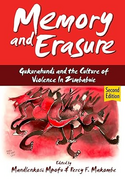
Memory and Erasure: Gukurahundi and the Culture of Violence in Zimbabwe
Bulawayo; Harare: Centre for Innovation and Technology (CITE); Weaver Press (2022), xxxi, 153 pp.
"Memory and Erasure brings together young and established Zimbabwean scholars and activists who explore with fresh eyes the failure to overcome the terrible legacies of this period. At its heart is recognition that justice cannot be achieved while Gukurahundi’s perpetrators remain in power and sti
...
Deutschland postkolonial? Die Gegenwart der imperialen Vergangenheit
Berlin: Metropol Verlag, 2., aktual. und erw. Aufl. (2021), 610 pp.
"Der Umgang mit der Kolonialgeschichte, die hierzulande lange im Schatten der Aufarbeitung des Nationalsozialismus und des Holocaust stand, unterliegt gegenwärtig einem grundlegenden Wandel. Zwar zählt auch Deutschland faktisch zu den postkolonialen Gesellschaften Europas, doch ist diese Tatsache
...
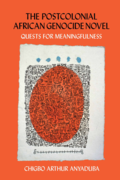
The Postcolonial African Genocide Novel: Quests for Meaningfulness
Liverpool: Liverpool University Press (2021), vii, 269 pp.
Gukurahundi: Das Laute Schweigen
Zimbabwe im Fokus, issue 72 (2021), pp. 5-15
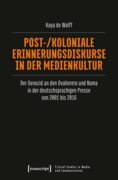
Post-koloniale Erinnerungsdiskurse in der Medienkultur: Der Genozid an den Ovaherero und Nama in der deutschsprachigen Presse von 2001 bis 2016
Bielefeld: transcript (2021), 476 pp.
"Die Debatten um die Anerkennung des Ovaherero- und Nama-Genozids (1904-1908) im heutigen Namibia haben in den letzten beiden Jahrzehnten wachsende öffentliche Aufmerksamkeit erhalten. Kaya de Wolff hat die deutschsprachige Presseberichterstattung in den Jahren 2001 bis 2016 über den Umgang mit de
...
Vom Vorurteil zur Gewalt: Politische und soziale Feindbilder in Geschichte und Gegenwart
Freiburg et al.: Herder (2020), 479 pp.

Die fotografische Inszenierung des Verbrechens: Ein Album aus Auschwitz
Bonn: Bundeszentrale für politische Bildung (bpb), Sonderausg. (2020), 303 pp.
"1944 entstanden im Vernichtungslager Auschwitz-Birkenau eine Vielzahl von Fotografien, die zumeist den SS-Fotografen Bernhard Walter und Ernst Hoffmann zuzuordnen sind. Erhalten blieben die Bilder in Form eines Albums im Besitz der Holocaust-Überlebenden Lili Jacob, die es auf Vermittlung Serge Kl
...
Perpetrator Cinema: Confronting Genocide in Cambodian Documentary
New York: Columbia University Press (2020), xxii, 285 pp.
"Perpetrator Cinema explores a new trend in the cinematic depiction of genocide that has emerged in Cambodian documentary in the late twentieth- and early twenty-first centuries. While past films documenting the Holocaust and genocides in Yugoslavia, Rwanda, and elsewhere have focused on collecting
...
Emotionality and Professionalism: Exploring the Management of Emotions by Journalists Reporting on Genocide
Sociology, volume 54, issue 3 (2020), pp. 609-625
"The dynamic nature of reporting requires journalists to interrogate their emotions as well as their sense of professionalism. This article focuses on the complex relationship between emotionality and professionalism mediated by journalists who reported on cases of genocide. This extraordinary confl
...
Sharing the Burden of Stories from the Tutsi Genocide. Rwanda: Écrire par Devoir de Mémoire
Cham: Palgrave Macmillan (2020), xii, 300 pp.
"This book deals with literary representations of the genocide against the Tutsi in Rwanda. Its focus is a transnational, polyphonic writing project entitled Rwanda: écrire par devoir de mémoire (Rwanda: Writing by Duty of Memory), undertaken in 1998 by a group of nine African authors. Anna-Marie
...
Mass Violence and Memory in the Digital Age: Memorialization Unmoored
Cham: Palgrave Macmillan (2020), xviii, 246 pp.
"This volume explores the shifting tides of how political violence is memorialized in today's decentralized, digital era. The book enhances our understanding of how the digital turn is changing the ways that we remember, interpret, and memorialize the past. It also raises practical and ethical quest
...

Twenty Years After 'Leave None to Tell the Story', What Do We Now Know About the Genocide of the Tutsi in Rwanda?
Journal of Humanitarian Affairs, volume 2, issue 2 (2020), pp. 40-47
"In 1999, Human Rights Watch (HRW) and the International Federation for Human Rights (FIDH) published an extensive account of genocide in Rwanda, Leave None to Tell the Story. Based on interviews and archival work conducted by a team of researchers and written primarily by Alison Des Forges, Leave N
...
