
Filter
51
Featured
Free Access
46
Key Guidance
1
Top Insights
2
Topics
Digitalization, Environment & Sustainable Development
9
Artificial Intelligence
8
ICT Regulation
6
Mobile Phones, Smartphones
6
Cybersecurity, Digital Safety, Privacy, Right to Privacy
5
Mobile Phone Markets
5
Telecommunication Infrastructure
5
Energy Supply, Electricity
4
Digitalization, Digital Transformation
3
Sustainable Development Goals (SDG)
2
Alternative Economy, Solidarity Economy, Social Economy Businesses, Fair Trade
2
Sustainable Development
2
Computers
2
Digital Divide, Digital Inequalities
1
Digital & Social Media Use: Youth
1
Christian Social Media Presence & Online Communities
1
Data Protection: Law & Regulation
1
Plagiarism
1
Telecentres, Community Telecentres, Internet Cafés
1
Rumours & Rumour Management
1
Big Digital Platforms, Big Tech Companies
1
Digital Criticism
1
Digital Labour, Digital Work
1
Spam & Scam
1
AI Criticism
1
AI & Democracy / Democratization
1
AI & Social Justice
1
ICT Economics
1
ICT Industries & Markets
1
ICT Policies
1
World Summit on the Information Society (WSIS)
1
Digital Economies & Markets
1
Commodities, Raw Materials, Extractive Industries, Mining
1
Solar Energy, Renewable Energy
1
Small Enterprises, Micro Businesses, Small & Medium Enterprises (SME)
1
Climate, Climate Change, Climate Change Adaptation
1
Climate Change Communication, Climate Journalism
1
Wastes & Recycling
1
Feminism & Communication
1
Internet Governance, Internet Policies
1
Starting Media Outlets, Creation of Digital Businesses
1
Data Collection, Data Collection Methods
1
Buen Vivir / Good Living
1
Informatics
1
Language
Document type
Countries / Regions
Authors & Publishers
Media focus
Publication Years
Methods applied
Journals
Output Type
Towards the harmonization of data collection: A baseline study for e-waste in East Africa
Geneva: ITU (2023), x, 38 pp.
"This study enabled countries in East Africa to produce national statistics on e-waste generated that are harmonized and comparable across countries because the same methods and tools have been used in the assessment. In addition, households and businesses surveys were piloted in Kenya and Burundi t
...
National E-waste Monitor Botswana
Geneva: ITU (2023), viii, 29 pp.
"This report examines the overall statistics of electronic and electrical equipment (EEE) placed on the market (POM) and e-waste generation in Botswana. The main findings indicate that 21 097 tonnes of EEE were placed on the market in Botswana in 2020 generated by demand from households and business
...
National E-waste Monitor Namibia
Geneva: ITU (2023), ix, 28 pp.
"Namibia currently lacks the capacity to monitor e-waste, which makes e-waste hard to track and hampers the setting and assessment of targets that are necessary to move to a more sustainable and circular economy. In line with policy objectives, a draft national policy on management of waste electric
...

Circular and Sustainable Public Procurement ICT Equimpent Guide
ITU; GovStack (2023), 86 pp.
"This is a guide for governments and other public sector organizations that procure information and communications technology (ICT) equipment, systems and services. It sets out the systems and process requirements for ICT procurement in a way that supports the transition to circular and sustainable
...

Die Ökobilanz: Verbraucht Künstliche Intelligenz mehr Ressourcen, als sie einsparen kann?
Berlin: Algorithm Watch (2023), 42 pp.
"Wer KI als Lösung präsentiert, muss auch Beweise dafür liefern. Wir zeigen in der zweiten Ausgabe unseres SustAIn-Magazins, dass KI-Systeme in der Energieversorgung durchaus den Einsatz von erneuerbaren Energien verbessern können. Aber ihr Potenzial kann nur ausgeschöpft werden, wenn eine dafÃ
...
Digitale Selbstbestimmung und Nachhaltigkeit: Verbraucher·innen verloren zwischen Informationslücken und fehlender Regulierung
Digital Autonomy Hub (2022), 9 pp.
Is AI Good for the Planet?
Cambridge; Medford, MA: Polity Press (2022), vii, 128 pp.
"Artificial intelligence (AI) is presented as a solution to the greatest challenges of our time, from global pandemics and chronic diseases to cybersecurity threats and the climate crisis. But AI also contributes to the climate crisis by running on technology that depletes scarce resources and by re
...
Digitale Medien und Nachhaltigkeit: Medienpraktiken für ein gutes Leben
Wiesbaden: Springer VS (2022), xi, 277 pp.
"Wie nutzen Individuen, Nichtregierungsorganisationen und Unternehmen digitale Medien, um zu einer nachhaltigen Gesellschaft beizutragen? Die Autorin rekonstruiert in dieser Open-Access-Publikation die sozial-ökologischen Folgen aktueller Digitalisierungsprozesse und zeigt anhand dreier Fallstudien
...
Künstliche Intelligenz: So lässt sie sich nachhaltiger gestalten
Berlin: Algorithm Watch; Institut für ökologische Wirtschaftsforschung (iöw); DAI-Labor (2022), 58 pp.
"Eine Zahl taucht immer wieder in der Diskussion zur Nachhaltigkeit von KI auf: Die Emissionen, die in der Forschungs- und Entwicklungsphase großer Sprachmodelle anfallen, entsprechen den Emissionen von fünf Autos während ihrer gesamten Laufzeit. Diese Zahl stammt aus einer wegweisenden Analyse v
...
Strategy Paper for Circular Economy: Mobile devices
London: GSMA (2022), 51 pp.

Regional E-Waste Monitor for the Arab States
Bonn: United Nations Environment Programme (UNEP); United Nations Institute for Training and Research (UNITAR); ITU; United Nations University (UNU) (2021), 103 pp.
"The key statistical findings for the region are that electrical and electronic equipment (EEE) placed on the market (POM) increased by 30 per cent from 3.2 megatons (Mt), or 8.8 kilograms per inhabitant (kg/inh), in 2010 to 4.1 Mt (or 9.5 kg/inh) in 2019. The Arab States mostly import, rather than
...

Digital solutions for a circular electronics value chain: A thought paper for International E-Waste Day 2021
Geneva; Brussels: ITU; WEEE Forum; GSMA; Sofies Group (2021), 38 pp.
"This paper has shown the diverse application of digital technologies across the electronics value chain, from raw material production and EEE manufacturing to post-consumer e-waste collection, logistics and recycling. Around the world, there is growing interest in digital technologies - particularl
...
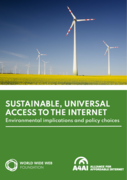
Sustainable, Universal Access to the Internet: Environmental Implications and Policy Choices
Washington, DC: Alliance for Affordable Internet (A4AI); World Wide Web Foundation (2021), 29 pp.
"This report analyses how governments are building climate and carbon factors into their broadband policies, looks at the consequences of inaction, and suggests policy recommendations towards a greener internet. We compiled publicly available documents for the national broadband plans from the 100 l
...

Klimarelevante Auswirkungen der Digitalisierung: Empfehlungen zur Reduzierung des digitalen CO2-Fußabdrucks
Bonn: Deutsche Gesellschaft für Internationale Zusammenarbeit (GIZ) (2021), 34 pp.
"Wie gezeigt wurde, fällt, über den gesamten Produktzyklus hinweg betrachtet, die Herstellung der digitalen Endgeräte, bzgl. der Menge verursachter Treibhausgasemissionen, besonders schwer ins Gewicht. Für Nutzer*innen liegt somit der größte Hebel für eine Reduzierung der Emissionen im Kauf v
...
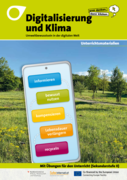
Digitalisierung und Klima: Umweltbewusstsein in der digitalen Welt. Unterrichtsmaterialien
Wien: Saferinternet.at (2020), 26 pp.
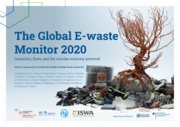
The Global E-waste Monitor 2020: Quantities, Flows, and the Circular Economy Potential
United Nations University (UNU); United Nations Institute for Training and Research (UNITAR); International Solid Waste Association (ISWA); ITU (2020), 119 pp.
"Higher levels of disposable incomes, growing urbanization and mobility, and further industrialization in some parts of the world are leading to growing amounts of EEE. On average, the total weight (excluding photovoltaic panels) of global EEE consumption increases annually by 2.5 million metric ton
...
Global Information Society Watch 2020. Technology, the Environment and a Sustainable World: Responses from the Global South
Top Insights
Association for Progressive Communications (APC); Swedish International Development Cooperation Agency (Sida) (2020), 268 pp.
"The world is facing an unprecedented climate and environmental emergency. Scientists have identified human activity as primarily responsible for the climate crisis, which together with rampant environmental pollution, and the unbridled activities of the extractive and agricultural industries, pose
...

Klimaschutz durch digitale Technologien – Chancen und Risiken: Kurzstudie
Berlin: Telekommunikation und neue Medien Bitkom Bundesverband Informationswirtschaft (2020), 58 pp.
How Green is Your Smartphone?
Cambridge: Polity Press (2020), 160 pp.
"Contrary to widespread claims, consumer electronics and other digital technologies are made in ways that cause some of the worst environmental disasters of our time - conflict-minerals extraction, fatal and life-threatening occupational hazards, toxic pollution of ecosystems, rising energy consumpt
...
